Eight Strangers, One Villa: What Feel.Travel Sells Remote Workers in Malaga
Feel.Travel sells nine nights in a villa near Málaga to up to eight remote workers and a leader. We read its press story, terms, prices and listings, checked its claims against outside sources, and set out what a guest pays, who is legally responsible and where the company's own account runs ahead of the record.
By Anna Kuznetsova · Updated 28 NOV 2026
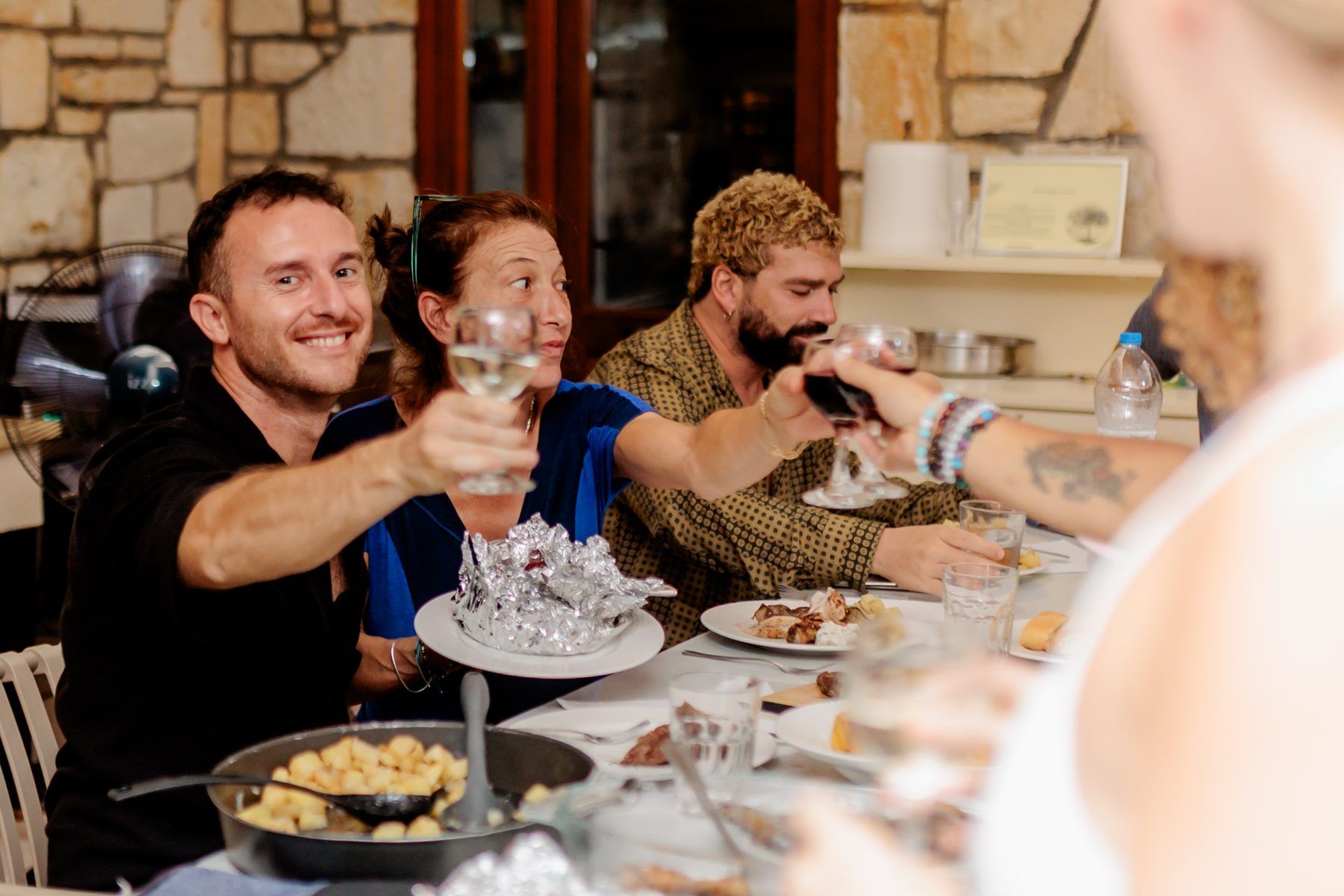
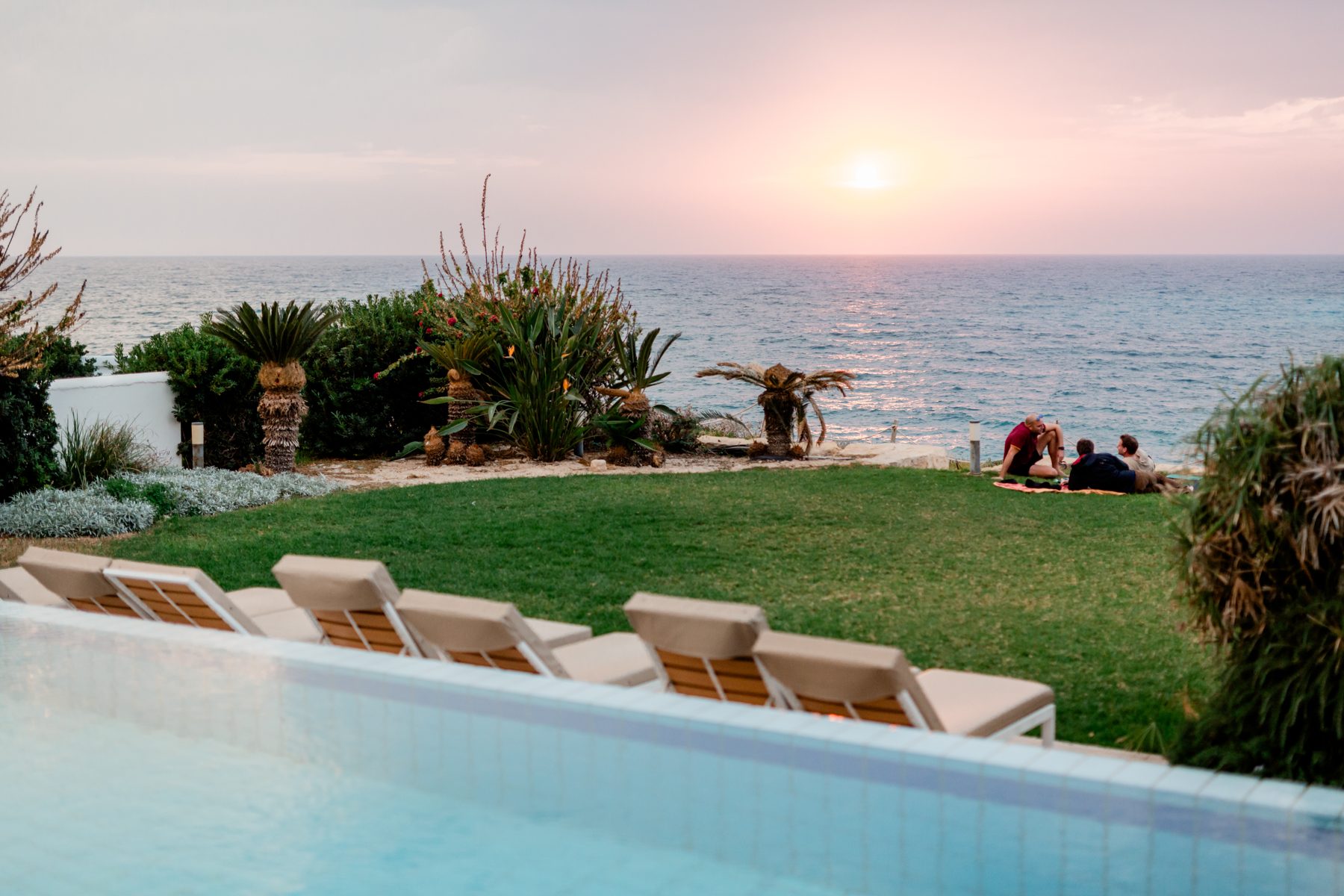
Dinner on Feel.Travel's retreat in Crete, 2026. The Málaga trip is a different villa. Photo: Stefanie Reindl Photography, supplied by Feel.Travel.
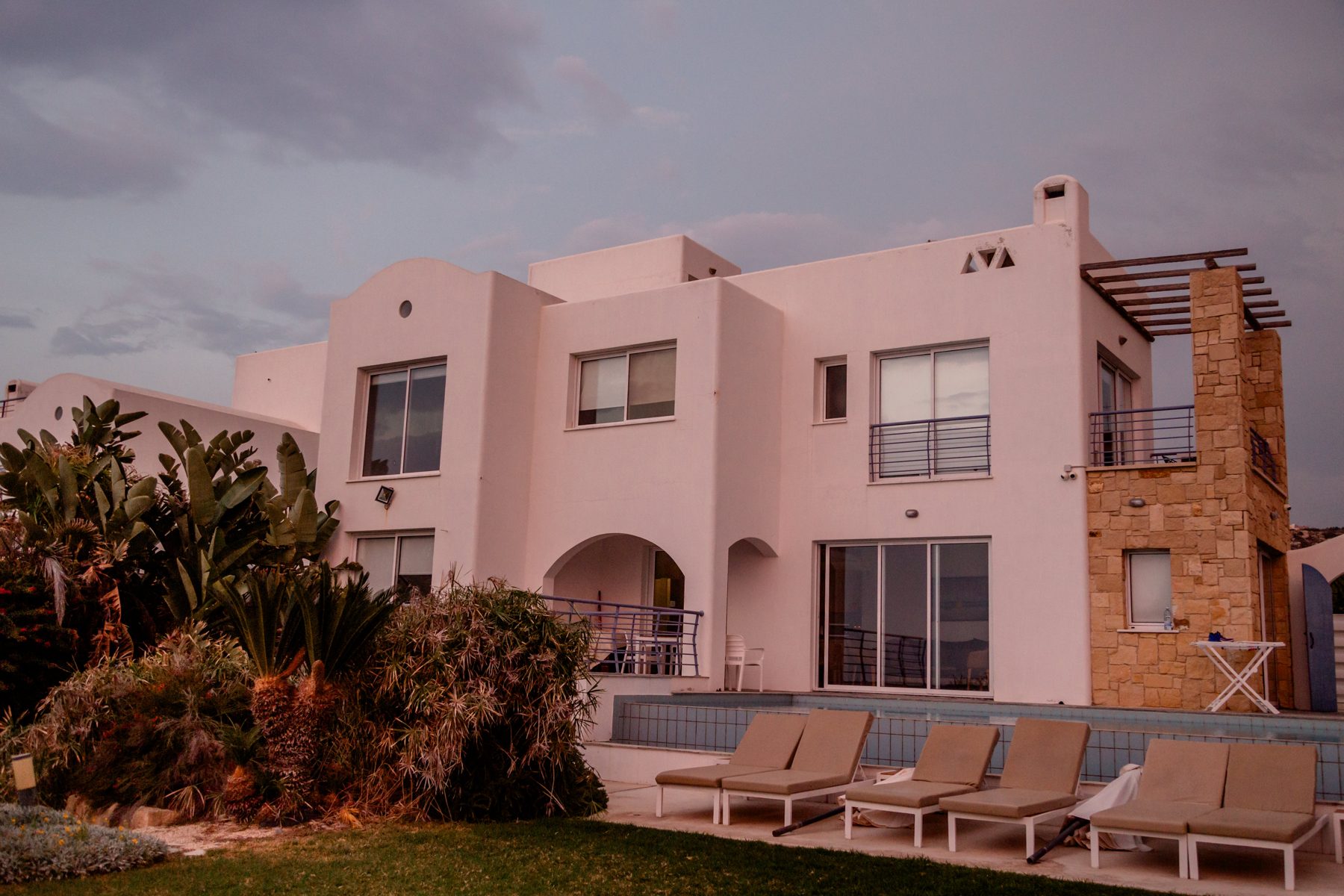
On Saturday 5 December, up to eight remote workers will arrive at a villa in Alhaurín de la Torre, inland from Málaga, and stay for nine nights. The house has six bedrooms spread across a main building and an annex, and the listing says nearly every bedroom has its own desk. It adds 1,000 square metres of garden, a heated pool and a connection it puts at 509 Mbps. A shared room costs €680 for the stay and a private room €890, as listed on 28 November. Flights are not included. Nor, beyond the first night's barbecue, are most meals.
The group will be led by the company's founder, Nico Estinto. What the guests are buying is less the house than the other people in it. The trip page on Feel.Travel lists seven guests signed up so far, aged between 28 and 59, with one private room and one shared room still available.
Feel.Travel sells what its founder calls a cure for loneliness, and it sells it to people who already have a job, a laptop and no fixed office. We read the company's press story, the photographs it supplied, its public terms and its trip listings, and checked its claims against outside sources. This piece sets out what the product is, what it costs, who is legally responsible for it and where the company's own account runs ahead of the record.
What nine nights buy
The Málaga listing is a useful specimen because it is detailed. The price covers nine nights in the villa, one rental car, a welcome barbecue on the first evening and what the company calls a curated itinerary of the city, the white villages and the coast. Items on that itinerary include a Christmas lights and tapas night, a day in Ronda and the villages, a day in Granada and the Alhambra, and a sea and water sports day that depends on the weather. The listing states plainly that none of this is fixed and that the group can reshape it once it is on the ground.
Beyond that, guests pay for themselves. Groceries and the nights the group cooks together are split through the Splitwise app. Eating out in Alhaurín, the page says, is inexpensive. A shared room works out at about €76 a night and a private room at about €99, which is how the site quotes it. For comparison, our survey of co-working spaces on the Costa del Sol found monthly desk plans starting at around €90 before VAT. The two are different purchases. A desk rents a chair, and a trip rents a household, so the desk is the smallest part of what is being sold.
The terms are firmer than the tone. A reservation costs nothing, according to the company's how-it-works page, and a card is charged only once the trip reaches its minimum group size. Guests can drop out free until then. After confirmation the rules tighten. The terms say that 30 per cent of the price is charged when a trip is confirmed and the rest 30 days before check-in. A guest who cancels more than 30 days out is refunded, less the payment fees actually incurred. Within 30 days there is no refund unless the guest transfers the place to someone else or the place is resold, in which case the refund is again less the fees. The Málaga page carries a banner to that effect: refund only with a replacement, because check-in is less than 30 days away. The company explains the rule by saying that accommodation for a small group is already committed by then.
Feel.Travel is also running a Black Friday offer of up to €250 off, which ends on 1 December. It did not apply to the Málaga trip when we looked. Several other departures on the same listing page, including Marrakech, Essaouira, Tromsø and Paphos, carried reductions of between €200 and €250.
How a trip is built
The company's public description of the format is consistent from page to page. A trip is a fixed-date edition in one house, usually seven to fourteen days. The group is small. The how-it-works page says "about 6-14" people, while the press story supplied to us says 7 to 15. The Málaga trip is at the small end, with a cap of eight guests plus the leader. Every guest talks to the TripLeader by video before booking, and the TripLeader decides whether the applicant fits. A group chat opens about two weeks before departure, so that day one is not a room of strangers.
The TripLeader is the organising idea. On Feel.Travel's own definition, the role is closer to running a house than running a tour: setting the tone, making introductions, keeping the wifi and the household rhythm in order and noticing when something needs fixing. The company trains its leaders through a free bootcamp, according to the press story, and says it reviews each trip before it goes on sale.
Mornings are for work. That is the structural difference from a holiday, and the company is blunt about it. In a comparison with the Italian group-travel firm WeRoad published on its blog on 10 November, Estinto argues that anyone taking annual leave should take a WeRoad trip, because trying to work during it would waste the trip. A coworking trip, he writes, is for people who are not taking leave. One is what you do with your holiday, in his phrase, and the other is what you do with the other fifty weeks. The argument is commercial, and it rests on a point the post makes directly: most remote workers have more freedom over where they work than over how much time they can take off.
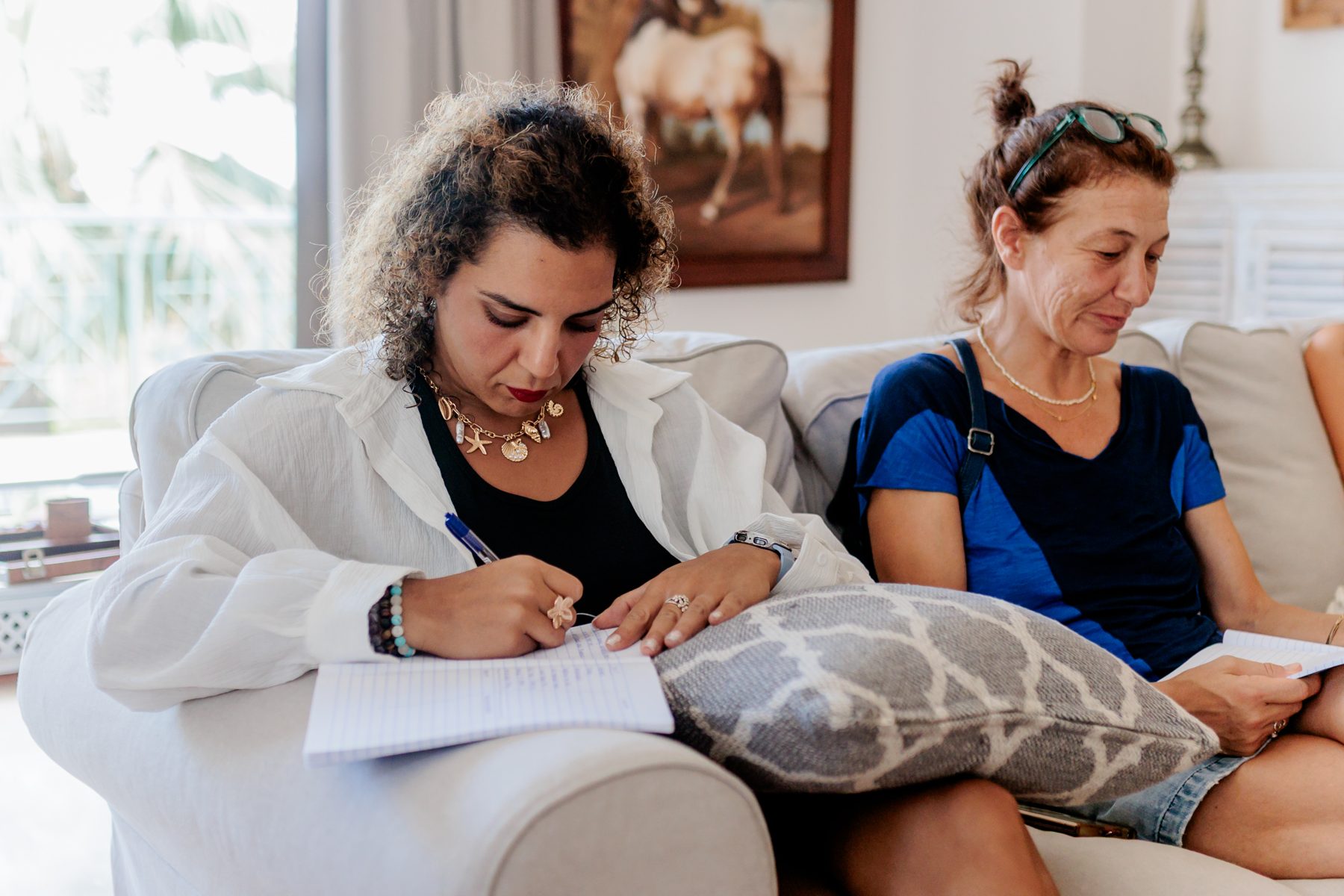
The format has a clear boundary. The company says a coworking trip is not an open coliving membership, and that its trips are fixed-date groups with a defined guest list. That makes the product more predictable and less flexible than a coliving house where residents come and go. It also means that the quality of the experience depends heavily on a single person and a single group of seven or eight, which no amount of villa inspection can guarantee.
A founder's account, and what can be checked
The press story begins in Sicily. In its telling, a storm was battering the island and a handful of remote workers who had only met on video calls sat down together in a rented villa for the first time. Estinto, who grew up in Naples, had recently lost his father and, the story says, the life he had built around his family. "Nobody eats alone, nobody celebrates alone, nobody struggles alone," he says of the city he came from. The sentence also appears on the company's Our Story page, where the founder describes the dark period after his father's death and the decision to rent a villa for two weeks and see what happened.
"From day one we had dinner together every night. By day fourteen, nobody wanted to leave," he remembers in the press story. The experiment became Coworking With Nico, then a training programme for other hosts, then Feel.Travel. The company's own timeline puts the first villa weeks in 2020 and 2021, more destinations in 2022, trained TripLeaders in 2023 and the Feel.Travel brand and platform in 2024 and 2025.
Much of this can be corroborated, though not all of it. Estinto's professional profile lists Coworking With Nico from September 2020 to April 2025 and describes the full launch of the Feel.Travel platform in May 2025. A January 2024 press release carried by Benzinga describes the Sicilian first venture, the bad weather and the group of strangers who bonded anyway. A listing that survives on the JoinMyTrip platform shows him hosting a two-week "home office" stay in a villa near Syracuse in October 2021, with four bedrooms and a 100-metre walk to the sea. That listing is one early trip, not proof of the first one, and the date, the storm and the emotional account rest on the founder's word. They are plausible, consistent across several of his own accounts and not contradicted by anything we found.
One detail in the press story needed correcting. It describes Olaf Maack, who is quoted in the document, as a co-founder, investor and advisor. Feel.Travel's own Our Story page lists him as an angel investor and advisor and does not call him a co-founder. We have used the description on the company's website. It matters because his comment is that of an investor in the business. "I backed Nico early because I saw what happened to people on his trips," he says in the press story. "They arrived as strangers and left as a group of friends."
The numbers, read carefully
The press story arrives with a table of figures. Some are easy to check because the company repeats them on its public site. Feel.Travel's footer states 700 or more travellers since 2020 and a community of more than 130,000, the latter counted across Facebook groups and channels. It displays a 4.6 rating on Trustpilot and a 5.0 on Google. Those are the company's self-reported figures, and we did not audit the review platforms.
Others need more caution. The press story says the company has run more than 100 trips. An older partnership page on the company's join.feel.travel site gave 52 trips. Estinto's July 2025 post on LinkedIn said 80 or more across Europe. His own TripLeader profile on the Málaga listing credits him with 52 successful trips. The figures are not directly comparable, since some count Estinto's own trips and others the company's, and the Our Story page counts 10 or more TripLeaders where the press story counts 15 or more. The progression from 52 to 80 to 100 is plausible given the dates. It is a company total, and we could not verify it independently.
The repeat-booking rate is the claim that carries the most weight, because it speaks to whether the product works. The company says 65 per cent of guests book another trip. We did not find the figure on the public pages we read. For comparison, WeRoad's own site says that six in ten of its travellers book another trip, and it has more than 400,000 travellers to Feel.Travel's 700 or so. A repeat rate in the same range does not prove the claim, but it makes it less surprising.
The headline price also needs a footnote. The press story says trips start from around €700 for nine nights. The Málaga trip is listed from €680, and other departures range from €500 for Tenerife, after a €50 Black Friday reduction, to €990 for Tromsø, after a €250 reduction. Tenerife and Tromsø are nine and eight nights respectively. The €700 headline fits the Málaga departure. It understates Norway, listed at €990 after a €250 reduction.
Who is legally on the hook
The most useful change the company describes is legal. Since 2026, the press story says, every trip is sold as a package through a licensed travel organiser, so that guests get the protection of EU package travel law. The terms of service on the website confirm the arrangement and name the organiser. Every trip sold on Feel.Travel is a package arranged by Leaving Now di Kiru SRL of Aversa, Italy, which the terms describe as a travel organiser licensed under Italian law, licence number 3196. Feel.Travel, which is operated by Komundio Ltd of Nicosia, acts as the organiser's disclosed agent: it publishes and promotes the trips, takes payment and books suppliers on the organiser's behalf. The terms say that bookings made before 6 October 2026 remain under the previous terms.
The legal basis is Directive (EU) 2015/2302, which defines an organiser as a trader who combines and sells packages and makes that trader responsible for the performance of all the travel services in the package. In practice, the terms say, the organiser must fix problems on the spot where it can, offer price reductions or compensation where it cannot and, if guests are unable to return as planned because of extraordinary circumstances, pay for necessary accommodation for up to three nights per guest. The terms also state that the organiser holds the insurance and insolvency protection the rules require. Liability is limited to three times the total price of the booking, except for personal injury and for damage caused intentionally or through negligence.
None of this is glamorous, and it is the part of the business that a guest is least likely to read. It is also what separates a commercial group trip from a favour among friends. A trip that combines a villa, a rental car and a guided programme at one price appears to meet the directive's definition of a package, and the company has chosen to say so in plain terms. Readers considering a booking should read the terms and the standard pre-contract information form that the rules require before they pay.
Why Málaga
Estinto's affection for the city is on the record, and it is the stronger part of the pitch. On the trip page he writes that he first came to Málaga seven years ago, then moved there and lived in the city for more than two years. His press story says he returned to Málaga after his father's death. The Benzinga release mentions an Erasmus year in the city. The listing is built around December in Málaga, when the city lights its streets, which is a fair thing to sell to someone whose alternative is a grey northern winter.
The wider picture is more modest than the marketing. Eurostat data cited by Euronews show that 7.9 per cent of employed people in Spain usually worked from home in 2025, against an EU average of 8.8 per cent. Spain is not a country where remote work is the norm. Yet the country now grants far more teleworker residence permits than it did three years ago. According to figures from the Observatorio Permanente de la Inmigración, as compiled by Spain Visa Submit, Spain granted 28,324 residence authorisations to international teleworkers in 2025, up from 9,386 in 2023. Málaga was the fourth province by volume, with 3,283. Those numbers include family members and renewals, and they exclude consular visas, so they overstate the count of working adults. They still describe a population that needs somewhere to work and someone to eat dinner with.
Málaga's push for tech employers adds to the pull. Our report on Talent Land España, the three-day event held at FYCMA from 24 to 26 November, looked at what such gatherings can realistically do for the city's labour market and employers. A coworking trip is a short version of the move those employers hope to encourage. It lets a worker test the climate, the neighbourhoods and the social life before committing to a lease. That is an inference from the format and not a finding about Feel.Travel's guests, whose jobs and plans we have not surveyed.
The Costa del Sol also has a remote economy of its own, made up of freelancers who serve clients wherever they happen to be. Wellyington, a web design and development practice based in Estepona, says it works with businesses from Marbella and Málaga to Nerja and Gibraltar, either in person or at a distance. Work that does not depend on an office is already part of the local economy. What Feel.Travel adds is the packaging: a fixed price, a vetted group and a leader.

The choice of house also matters. The company says it inspects every villa and picks for wifi and workspace as much as for the view, and the Málaga listing's emphasis on a desk in each bedroom bears that out. Our guide to what makes a short-term rental work approached the question from the owner's side and found that guests judge a stay by sleep, cleanliness and working basics, fast and reliable Wi-Fi among them, well before they notice design.
The people in the numbers
The press story gives two guest accounts. Alessandro, from Italy, and Cristina, from Spain, met as strangers on a Feel.Travel trip in Cyprus. Four years later, the story says, they are still together and share a home in Barcelona. Tomhas, from Ireland, joined a trip to Málaga at a low point in his life, moved to the city for good afterwards and built a new life and business there. "Nico gave me my mojo back," the press story quotes him as saying.
These accounts are supplied by the company, and we have not spoken to the people in them. We have left out some of the personal detail in Tomhas's story, including a health claim that is his own to make and that we could not test. What the examples show is the kind of outcome the company wants to be known for: friendships and relocations, not itineraries. The company also says it can arrange interviews with past guests and TripLeaders on request.
The founder's closing line in the press story is the one the whole business rests on. "Remote work gave us freedom," he says, "but freedom without connection is just a different kind of loneliness." It is an observation about the structure of modern work, delivered by someone who sells a remedy, and it should be read that way. It is also true that many people who can work from anywhere work in the same room every day.
WeRoad, a funding round and a conference in Malta
The press story's most ambitious claim concerns WeRoad. At what it calls the European Startup Summit in Malta in May 2026, it says, Estinto fell into conversation with people from WeRoad. After a follow-up call in October, the two companies are working on bringing Feel.Travel's coworking experiences to WeRoadX, WeRoad's marketplace for trips designed by partners.
Parts of that can be confirmed. The event is the EU-Startups Summit, held over two days in Valletta in early May 2026, and the organiser's page, which carries the 2026 line-up, lists WeRoad's chief operating officer, Andrea Lamperini, among its speakers. The press story gives the event a slightly different name, and we have used the organiser's. WeRoad is a Milan company founded in 2017 by Paolo De Nadai, Fabio Bin and Erika De Santi. Its site reports more than 400,000 travellers since launch and a Series C round in May 2026 led by Airbnb. WeRoadX is real and established: WeRoad has described it as a curated marketplace in which experienced coordinators design, price and sell their own trips, and said in March 2024 that it accounted for about 30 per cent of its business.
What we could not find is any public announcement of a collaboration between the two companies. We found no mention of one on Feel.Travel's pages, and its 10 November blog post describes WeRoad as a different product serving a different use of time, not as a partner. We therefore report the collaboration as the company's own statement of work in progress. If it goes ahead, it would put coworking trips in front of a far larger audience of people who already like to travel in groups.
The same caution applies to the company's plan to raise its first funding round. The press story says it is preparing one to grow the team and the platform. That is an intention and not an event, and we found no public record of a round.
What comes next
Beyond trips, the press story sets out four plans. The first is a network of global meetups run by past guests as City Hosts, offering free coworking mornings, run clubs and aperitivos in cities from Vienna and Brussels to London, Barcelona and Bali. The second is corporate trips, meaning retreats for remote and hybrid teams and trips that companies can offer staff as a benefit. The third is a Feel.Travel app for bookings, community and event listings, and the splitting of costs on a trip. The fourth is a yearly membership, in which a guest would pay once and move between villas and trips through the year.
On the booking side, the picture on 28 November was narrower than the press story suggests. The company's Spain hub lists two upcoming trips, the Málaga departure on 5 December and a Three Kings' Day stay in Tenerife from 2 to 11 January 2027. The wider search page showed 14 trips in all, including Marrakech from 23 January, Essaouira from 30 January, northern lights in Tromsø from 13 February and a singles-themed week in Paphos from 6 March. Others, in Crete, Kefalonia, Kyoto and Gotland, appear in the site's sitemap. The press story's list of published 2027 trips names Egypt, Norway, Morocco, Madeira, Málaga, Crete and Tenerife. We could not confirm all of them on the site: Egypt is not among the countries its search filter offers. Estinto's covering note also mentions a second Málaga trip focused on flamenco and Andalusia, from 20 to 29 March 2027. It was not listed on the Spain hub. That may simply mean it has not been published yet. Readers who want to join should check the listing before making plans.
What the trade should take from it
For hospitality operators on the Costa del Sol, the interest lies in the supply chain. Feel.Travel's model depends on villas with real workspaces, dependable connectivity and owners who are comfortable hosting a group of eight for nine nights in the low season. A December departure shows how it works in practice: a large villa let to a single group for nine nights. The company also opens its platform to outside hosts: TripLeaders who start on its own trips can design and sell their own on the platform for a 15 per cent commission, according to the press story, and brands or creators with an audience can do the same.
That is a distribution channel, not a guarantee. A fixed commission is only worth paying if the groups fill, and the one hard data point available, seven guests signed up a week before departure on a trip the site marks as confirmed, is encouraging without being conclusive. Villa owners, boutique hotels and private venues on this coast that host groups, and want to be considered for the Mistral & Marea directory, can apply to be listed in the Salons.
The deeper point is about what remote work has done to demand. When the office stopped being a place, the things it supplied by accident, such as colleagues, a lunch table and someone to talk to, became products. Feel.Travel is one of several businesses selling them back. Whether its version works depends on the leader, the group and a villa on a December evening. Its terms and prices are public and its record can be partly checked, and we have checked what we could. It is also a bet that people will pay not to eat alone, which is the sentence from Naples that its founder keeps returning to.
Feel.Travel supplied the press story and the photographs used in this article. Prices, dates and availability were read from the company's website on 28 November 2026 and may change.
From the journal
Related articles
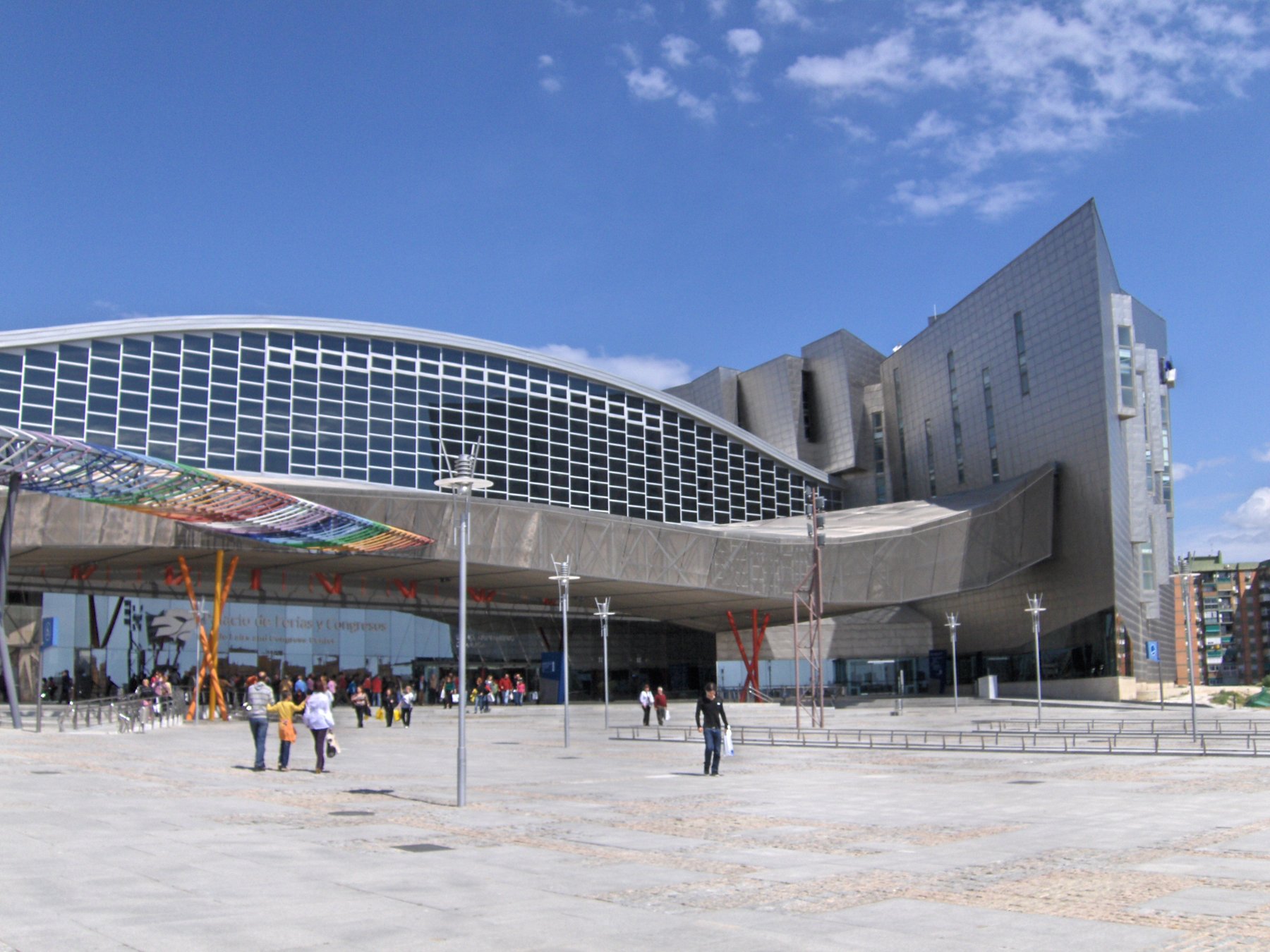
FYCMA: Málaga's Trade Fair and Congress Centre, and the Case for Building Bigger
Málaga's municipal trade fair and congress centre reported 147 events and 283,936 attendees in 2025 and now plans a 12,000-square-metre hall. A look at the building, its self-reported figures, its place in the ICCA table and the limits an extension would and would not solve.
16 NOV 2026
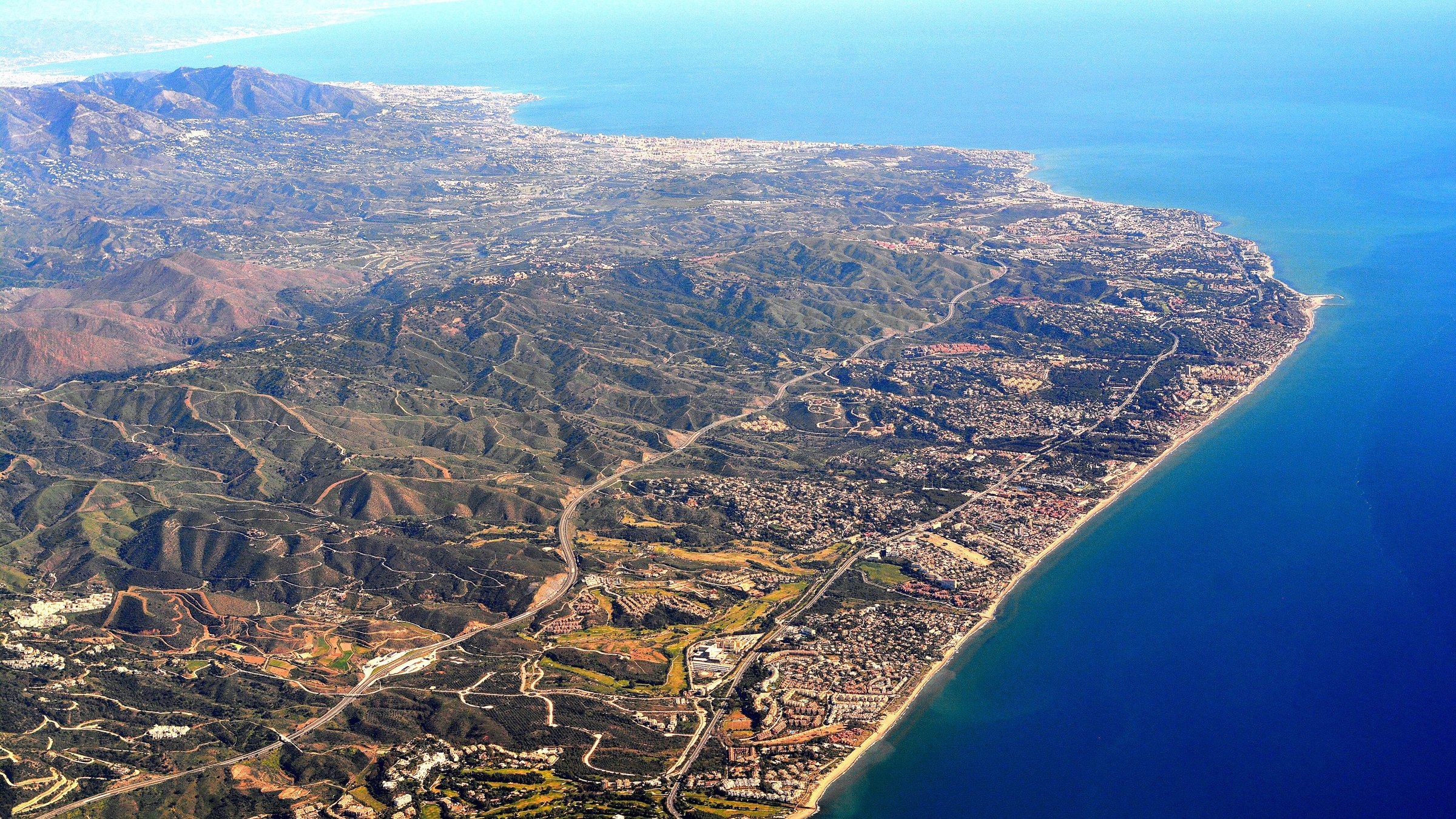
Costa del Sol at 50: A New Brand and the Long Fight Against Seasonality
Turismo Costa del Sol unveiled its new identity in May and took it to Madrid and Barcelona this week, marking 50 years since the 1976 Patronato. INE data show why the push for year-round visitors matters: August still brings three times January's hotel nights, and most of this year's growth came in January, March and April.
20 NOV 2026

Marbella Is Going After the World's Biggest Spenders: How DUCO Spain & Portugal 2026 Signals a New Era for Luxury Tourism
An operational breakdown of DUCO 2026 in Marbella: connecting 170 luxury travel advisers with regional hospitality to drive year-round, high-yield tourism.
27 OCT 2026