The Tesla Roadster Finally Shows Up, Upside Down and Briefly Airborne
A white Tesla Roadster drove itself up a tall ramp until the road was above its roof, stayed stuck there inverted, then flipped in the air and landed. Later it posted 0-60 in 0.81 seconds. Musk’s line afterward: “Well, not anymore.”
By Wellington Almeida · Updated 16 OCT 2026
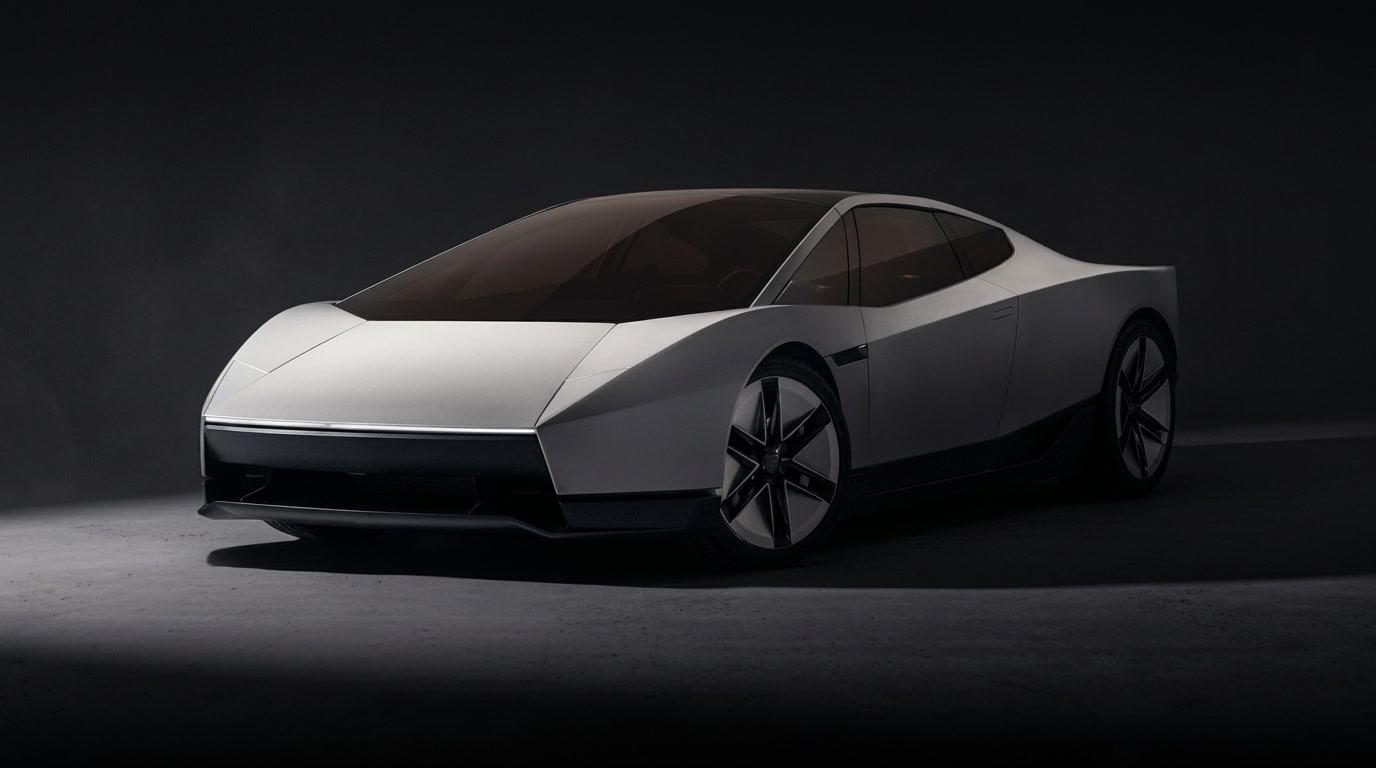
The Tesla Roadster
On the evening of October 15, 2026, at SpaceX’s rocket test site outside Waco, Texas, a white Tesla Roadster drove itself up a tall inverted ramp until it hung completely upside down, stuck to the surface by a fan system under the car. It then launched off the top, used thrusters to roll upright while airborne, and settled back onto the pavement in a cloud of exhaust. Later in the same demonstration it launched itself over a lineup of other Tesla vehicles—Model 3, Model Y, Cybertruck, Cybercab, and Semi—flipping once in mid-air before landing and driving away. The prototype also posted a 0-60 mph run in 0.81 seconds with its rear thrusters firing.
Elon Musk, standing nearby, called the result a collaboration between “the world’s best car company and the world’s best rocket company.” He had earlier quoted Peter Thiel’s old line that the future was supposed to bring flying cars and instead delivered 140 characters. After the car landed, Musk added, “Well, not anymore.”
The car that performed these maneuvers is the second-generation Roadster, first shown as a red prototype in November 2017 during the Tesla Semi event. At the time Tesla claimed 0-60 mph in 1.9 seconds, a top speed above 250 mph, up to 620 miles of range from a roughly 200 kWh pack, seating for four in a 2+2 layout, and a base price around $200,000. Production was targeted for 2020. That date slipped repeatedly. Tesla shifted resources toward the Model 3, Model Y, Cybertruck, and later full self-driving and robotaxi development. Reservation holders who paid $50,000 deposits (or $250,000 for a Founders Series) waited through multiple announced delays. Some eventually sought refunds; a few, including tech reviewer Marques Brownlee and OpenAI’s Sam Altman, publicly described friction in the process before receiving their money back. Tesla reopened reservations on similar terms in September 2026, again asking $50,000 for a Performance reservation ($5,000 by card, $45,000 by wire within ten days) and higher amounts for the limited Thrust version. Final purchase prices have still not been announced. Production is now targeted for 2028. Musk added the word “actually” when stating the year.
The vehicle that appeared in Texas is smaller and more extreme than the 2017 concept. It is a two-seat coupe at most (one seat in the highest configuration), finished in a single aerospace-inspired color called Ano White. Tesla describes the paint as derived from coatings used on rockets for ultraviolet protection, cryogenic resistance, electrostatic dissipation, and corrosion resistance. Gold-tinted glass is meant to echo spacesuit visors, with titanium accents elsewhere. The body is low and wedge-shaped, with a full-width rear light bar, concealed headlights, and an exposed rear diffuser that houses fans and thruster nozzles. Design chief Franz von Holzhausen has referenced both classic supercar proportions and the SR-71 Blackbird. The cockpit uses a yoke with steer-by-wire, brake-by-wire, and throttle-by-wire. Seats are molded into the chassis structure. Tesla calls it a pilot’s car. The demonstration vehicle drove itself for safety; Musk has said the production Roadster will be the only Tesla still intended primarily for human drivers.
Suction Fans and Cold-Gas Thrusters
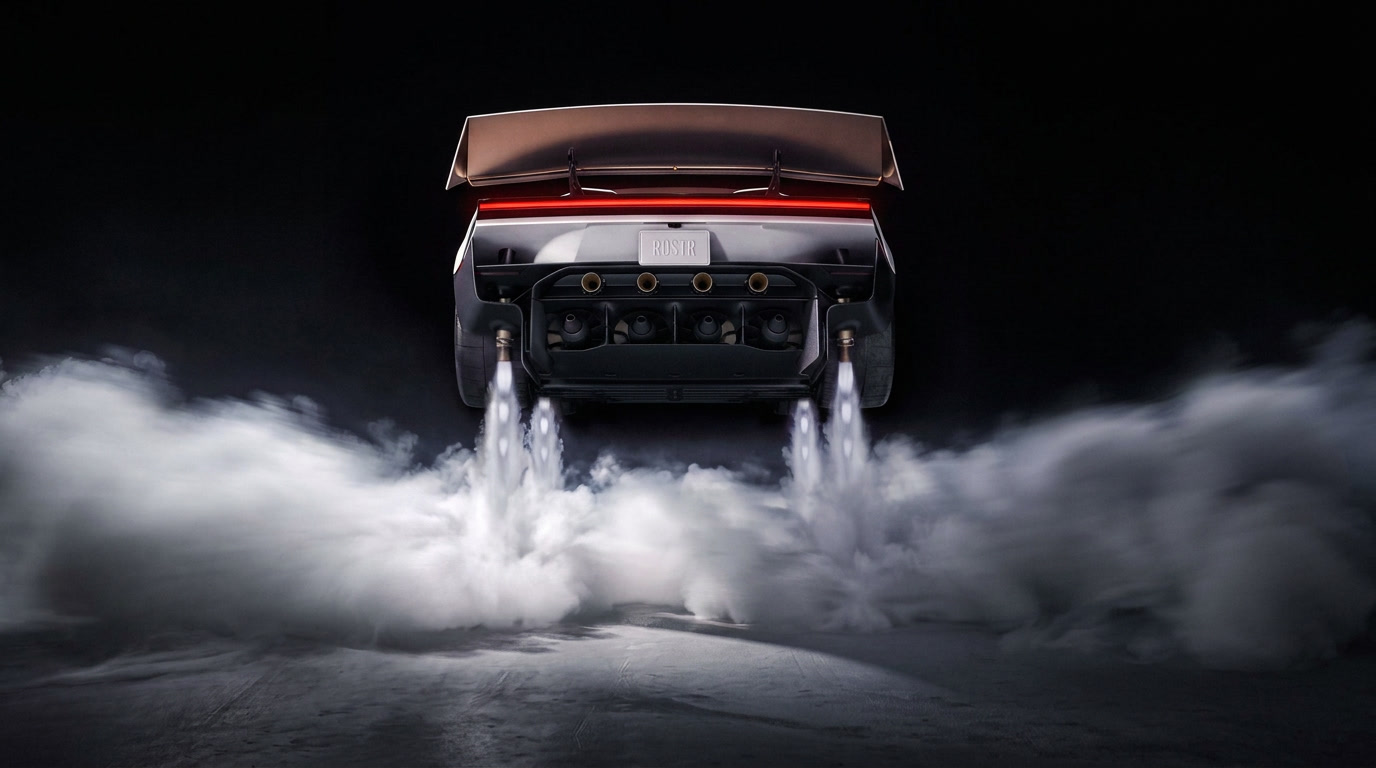
Two systems account for the stunts. The first is a multi-mode fan and ground-sealing arrangement under the car. Fans extract air from the underbody, creating a pressure difference that generates downforce even when the vehicle is stationary. Tesla states the system can produce enough suction to hold the car upside down at rest. Musk said it can “pull up to two g’s” and joked that it could “suck the chrome off a trailer hitch.” On the inverted ramp the onboard display showed more than 4,700 kg of downforce. On a track the same system is meant to allow cornering loads above 2 g, compared with the roughly 1.26 g that tires alone typically provide. The system has two operating modes: at low speeds it seals and sucks hard for traction under acceleration or in slow corners; at higher speeds it opens front and rear airflow paths. An active rear wing, actuated by hardware related to the Optimus robot program, adjusts between high-downforce and low-drag settings. Tesla claims the passive aero package approaches Formula 1 levels of downforce.
The second system is a cold-gas thruster package developed with SpaceX. Two carbon-overwrapped pressure vessels store approximately 250 kg of compressed air in a combined volume of 600 liters. The air feeds up to ten nozzles. The car can recharge its own tanks; no separate propellant is required. On the Thrust configuration, rear-mounted thrusters supplement the electric drivetrain for short bursts of acceleration. On the Rocket configuration, additional nozzles around the perimeter allow upward thrust, lateral control, and rotational movement in the air. Tesla states the thrusters produce more than 80 kN of force—enough, in principle, to support more than 8,000 kg against gravity. Exhaust from the nozzles is supersonic, producing visible shock diamonds in the plume. During the demonstration the thrusters were used both for the mid-air flip and for controlled landings. Musk has described the production car as able to “puff itself up” for maneuvers “whenever you’d like,” though he has also said he is “not sure it’s necessarily legal in all jurisdictions” and that the car is “not necessarily a safety-optimized car.”
Under the floor sits a new high-voltage battery and drive unit that Tesla says delivers 1 MW of power—one-third more than the Model S Plaid with half the mass. Exact battery capacity and curb weight have not been released. Range is quoted as more than 300 miles across the configurations, a substantial reduction from the 620-mile figure given in 2017. Top speed is listed as over 230 mph; Musk has said the team wants to approach half the speed of sound, roughly 383 mph. The 0.81-second 0-60 run was measured on a limited pad with thrusters engaged. Musk said the production car should improve on that number, provided it does not “detach the retina of the person inside.”
Three Configurations
Tesla lists three versions, which it treats as a base car plus optional “augments.”
The Performance trim is described as road-ready. It seats two, includes the active aerodynamics and multi-mode suction system, and is claimed to reach 60 mph in under 1.6 seconds. Reservations are open with the $50,000 deposit.
The Thrust trim is race-ready, also seats two, and adds the rear cold-gas thrusters. Tesla claims 0-60 mph in under 0.9 seconds. It is marked limited release; the reservation amount is higher, reported as $250,000 in some accounts.
The Rocket trim is invite-only. It seats one, adds the full perimeter thruster array, and is claimed to reach 60 mph in under 0.59 seconds. Tesla’s site notes that this version is “air ready,” that it can fly, and that it is not approved for public road use. It will not be available in all regions.
All three share the suction system and the quoted range and top-speed figures. Final pricing, exact production location, and certification details remain unpublished. Tesla has not clarified how original 2017 reservation holders will be treated relative to new deposits.
Context and Constraints
The demonstration took place outdoors because the ramp and flight path required open space; an earlier date in early October had been postponed for weather. The event was livestreamed on X. After the runs, Musk teased further demonstrations, including an attempt at Evel Knievel’s Snake River Canyon jump.
The Roadster arrives at a moment when Tesla’s main commercial focus has shifted toward unsupervised driving, the Cybercab robotaxi, and Optimus robotics. Musk has previously described the sports car as a “small potato situation” that would not move the company’s financial needle in a major way. Its role is largely that of a halo product and, in Musk’s phrasing, “the best of the last of the human-driven cars.” Regulatory questions around thruster use on public roads, the legality of the suction system in certain jurisdictions, and crashworthiness of a vehicle optimized for extreme acceleration and cornering rather than conventional safety margins are unresolved. Independent verification of the acceleration, top-speed, and downforce claims has not yet occurred; the figures presented so far come from Tesla’s own instrumentation and statements at the event.
Comparisons to earlier fan-assisted cars are inevitable. The 1978 Brabham BT46B used a large rear fan for downforce before it was banned in Formula 1. More recent track cars such as the McMurtry Spéirling have demonstrated fan-based suction for extreme cornering. The Roadster combines that approach with electric power and cold-gas thrusters derived from rocket work. Whether the combination will set production-car track records, as Musk has predicted, depends on the final street-legal or track-only specifications that emerge by 2028, the actual vehicle mass and tire performance, and how long the compressed-air reserves last under repeated use.
For the people who reserved a Roadster in 2017, the Texas demonstration supplies the first clear visual evidence that a car bearing that name now exists in a form capable of the stunts long promised. It also confirms that the vehicle has changed substantially from the four-seat, 620-mile, 1.9-second concept shown nine years earlier. Production remains more than a year away, prices are unknown, and the highest-performance versions are restricted by invitation or by the requirement that they not be used on public roads. The car that stuck itself to an inverted ramp and flipped over a row of Teslas is real. Whether the version that eventually reaches customers will match the demonstration hardware, and under what conditions owners will be allowed to use the thrusters, is still open.
From the journal
Related articles
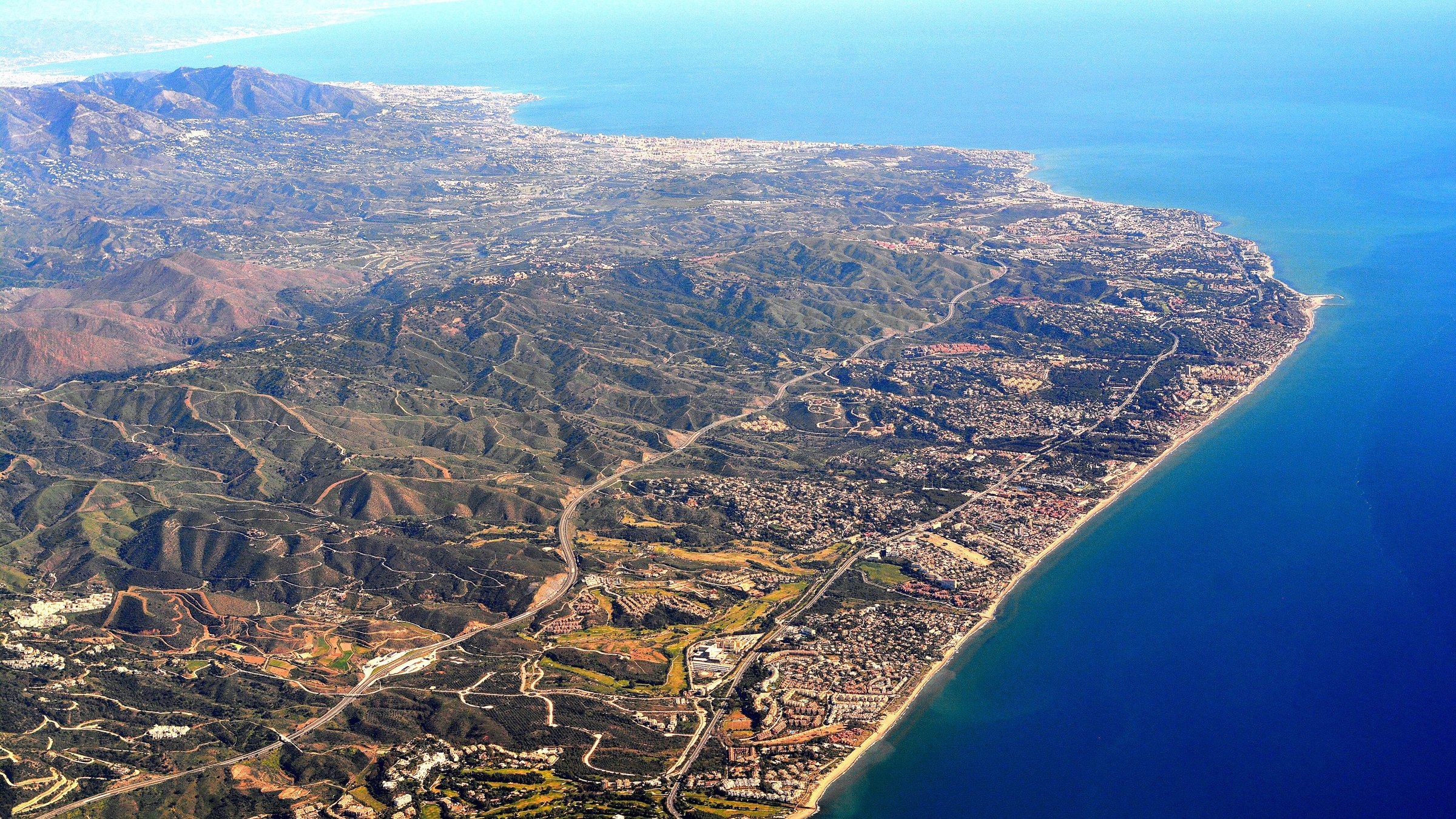
Costa del Sol at 50: A New Brand and the Long Fight Against Seasonality
Turismo Costa del Sol unveiled its new identity in May and took it to Madrid and Barcelona this week, marking 50 years since the 1976 Patronato. INE data show why the push for year-round visitors matters: August still brings three times January's hotel nights, and most of this year's growth came in January, March and April.
20 NOV 2026
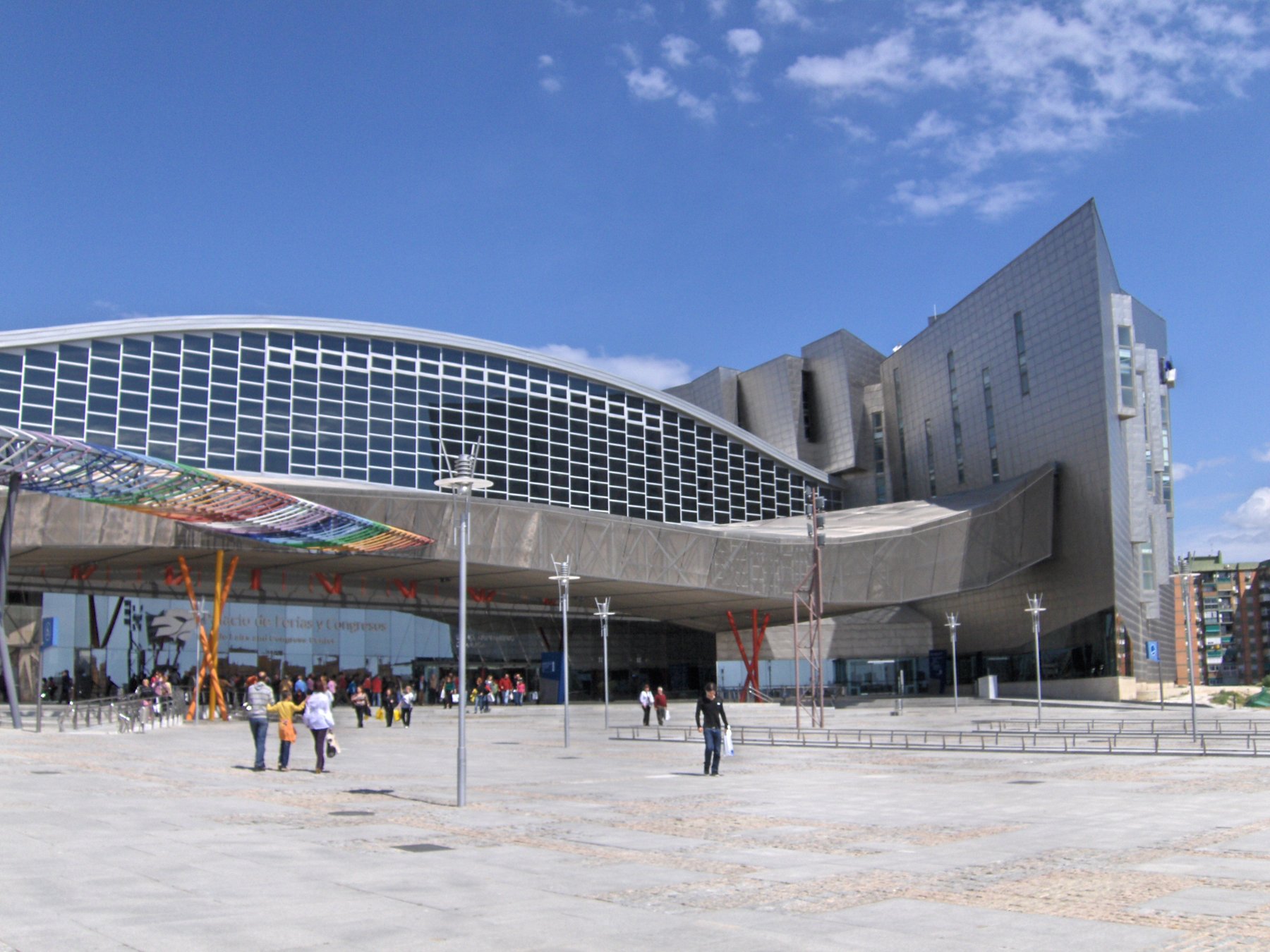
FYCMA: Málaga's Trade Fair and Congress Centre, and the Case for Building Bigger
Málaga's municipal trade fair and congress centre reported 147 events and 283,936 attendees in 2025 and now plans a 12,000-square-metre hall. A look at the building, its self-reported figures, its place in the ICCA table and the limits an extension would and would not solve.
16 NOV 2026
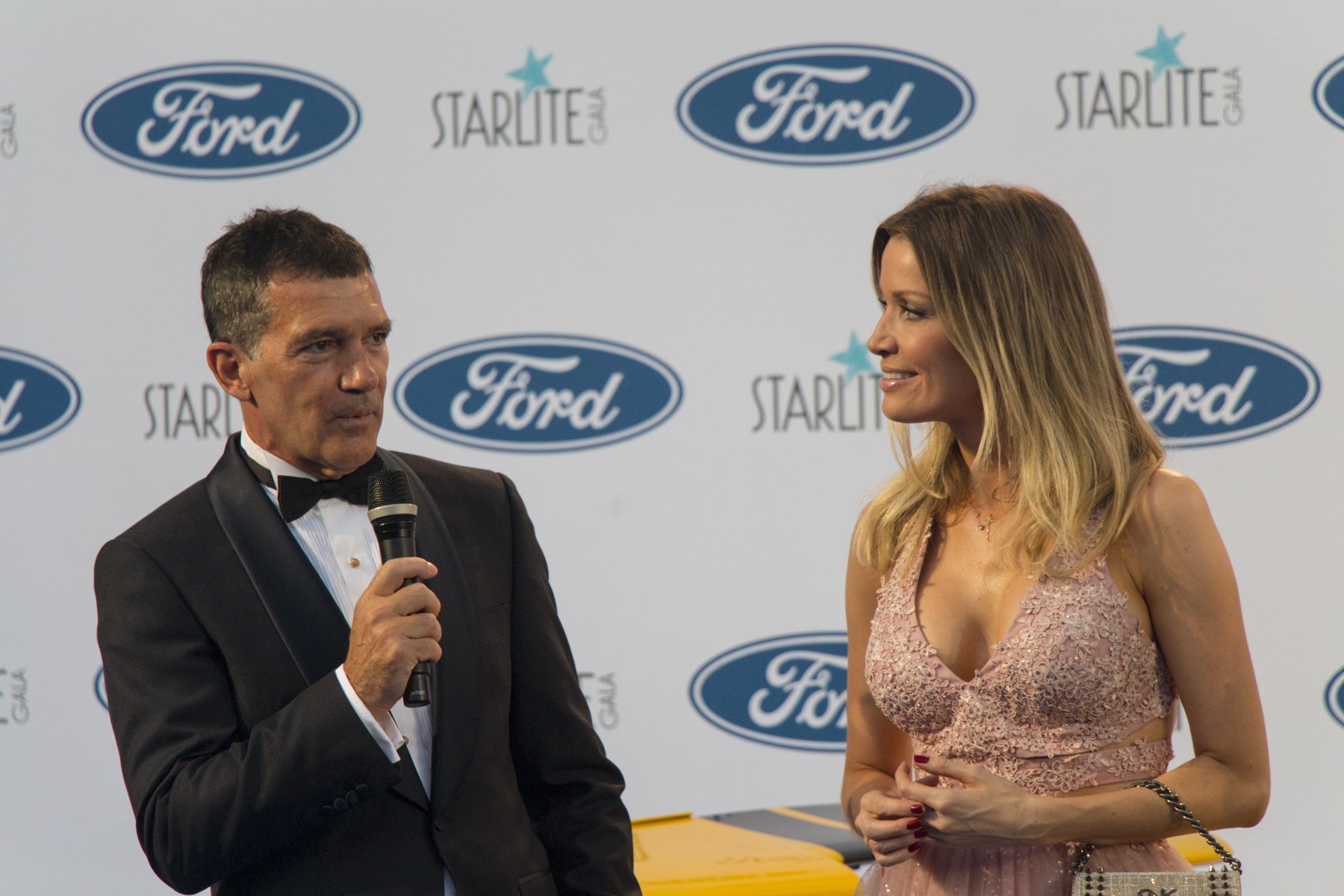
Antonio Banderas: Málaga, Marbella and the Long Way Home
From Almodóvar's Madrid to Hollywood, Cannes and an Oscar nomination, and back to the coast where he was born: a profile of Antonio Banderas, his Teatro del Soho, his years at La Gaviota in Marbella and the Starlite Gala he has co-hosted since 2010.
15 NOV 2026
Live from the coast
Related wire dispatches
Ladies European Tour Ends Its Season At La Cala From 26 November, With Málaga's Ana Peláez In A 75-Player Field
The Andalucía Costa del Sol Open de España presented by Oysho closes the Ladies European Tour season on La Cala Resort's Campo Europa, in Mijas, from 26 to 29 November. The 75 players, with no cut, compete for €700,000, and the winner takes €105,000. Casandra Alexander has already won the Order of Merit; the Rookie of the Year award is still open.
'El Plato de Málaga' Route Runs To 29 November As The Province Looks For A Signature Dish
Restaurants across Málaga province are serving original dishes made with Sabor a Málaga produce until 29 November for 'El Plato de Málaga', a Diputación route and contest held under the European Capital of Gastronomic Culture programme. Diners vote by QR code, and a jury will choose ten finalists, 'Málaga en 10 platos', for a final that names El Plato de Málaga 2026.
Rafa Tapia, Formerly Of DiverXO And Kaleja, Opens El Pase In Cártama
Málaga-born chef Rafa Tapia has opened El Pase in Cártama, in the former Mesón El Callaíto, after working at DiverXO in Madrid, Gresca in Barcelona and Kaleja in Málaga. The menu is built on traditional recipes with French influences, plus six suggestions that change weekly. The wine list, put together by Emilio of La Alacena, includes natural wines.