The Last of the Hosts: Count Rudi and the Making of Marbella
Count Rudi von Schönburg-Glauchau dies at 94, closing nearly seven decades of foundational leadership and personal hospitality at the Marbella Club.
By Wellington Almeida · Updated 20 OCT 2026
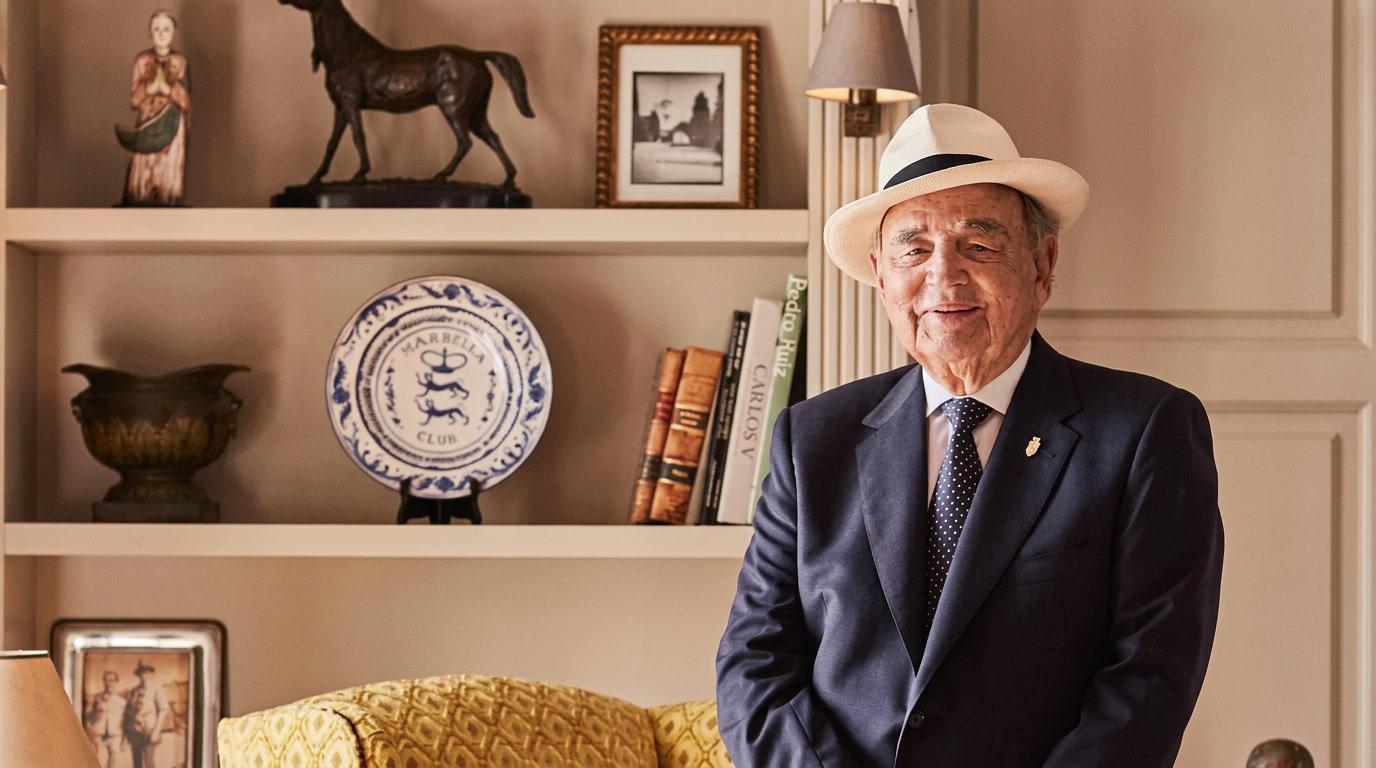
Rudolf Graf von Schönburg-Glauchau
Rudolf Graf von Schönburg-Glauchau died in Marbella on 17 October 2026 at the age of ninety-four. For nearly seven decades his name had been inseparable from the Marbella Club and from the particular form of hospitality that turned a small stretch of the Málaga coast into a destination known far beyond Spain. He arrived in late 1956, still in his mid-twenties, at the invitation of his relative Prince Alfonso von Hohenlohe. The hotel that opened in 1954 with roughly twenty rooms in an old finca was still in its earliest stage. Count Rudi stayed for the rest of his life.
He was born on 25 September 1932 at Wechselburg Castle in Saxony, into a family of German Catholic nobility whose holdings had already been reduced by the political changes of the early twentieth century. The Second World War completed the break. In May 1945, when he was twelve, the family left their property in the face of the advancing Soviet forces and resettled in the west. The experience remained with him. Years later he would describe the practical lesson he drew from it in simple terms: do not become too attached to material possessions, and trust one’s own instinct. Hospitality became the vocation that replaced what had been lost.
After completing his secondary education he trained at the École Hôtelière de Lausanne, one of the few institutions of the period that offered rigorous professional formation in hotel management. He worked in hotels in Switzerland and Germany, including a period in Hamburg, before Alfonso von Hohenlohe asked him to come south. Hohenlohe had purchased land on the coast after his father picnicked there under the pines in 1946. What began as a private retreat was turned into the Marbella Club. The place needed someone who understood operations as well as social relations. Count Rudi supplied the first; Alfonso supplied the second.
He reached Málaga on 28 December 1956. Contemporary accounts note that he initially lived in a room connected to the hotel’s garage while the property was still modest. After a two-year interval in Mexico, arranged to broaden his practical experience, he returned in 1961 as general manager. He held that post until 1983. During those years the hotel and the town around it changed character. Guests who arrived for a few nights often stayed for weeks. There were few organised entertainments on the coast. Count Rudi organised them: themed dinners, treasure hunts, informal gatherings that kept a houseful of people occupied without the structure of a conventional resort programme. The clientele included European royalty and exiled titles, Hollywood actors, and industrialists. Audrey Hepburn, the Duke and Duchess of Windsor, and others were among those whose preferences he learned and whose stays he managed. The atmosphere was deliberately less formal than the grand hotels of the French or Italian Riviera. He and Alfonso described the intention as a paradise without extravagance—a place where guests could feel at home.
The distinction mattered. Luxury at the Marbella Club in those decades was not primarily a matter of architecture or scale. It rested on recognition, discretion, and the ability to treat each arrival as if the hotel belonged to them as well. Staff who worked under him later recalled that he expected the same standard of courtesy toward employees as toward guests. His son Friedrich, who later became general manager of Rosewood Villa Magna in Madrid, has cited two practical lessons: lead by example and treat staff and guests equally. The hotel’s telephone operator of many years, María López Abecassis, has said that the interview she had with him at the age of seventeen led to a lifelong position. These are ordinary recollections, but they describe a consistent method.
In May 1971 he married Princess Marie Louise of Prussia, great-granddaughter of Kaiser Wilhelm II and a cousin of Queen Sofía of Spain. They met during a trip connected to one of the hotel’s early clients. She had trained as a paediatric nurse and continued charitable work in Marbella, particularly in support of people affected by AIDS. The couple had two children, Sophie and Friedrich. Their marriage lasted fifty-five years. In later interviews Count Rudi referred to her as the great love of his life and noted that she remained at his side during periods of illness. The family lived for many years at Quinta María Luisa, a property near the hotel; more recently they occupied an apartment in Las Brisas. He once observed that he lived in one house and slept in the other, treating the hotel and the private residence as continuous.
He left the day-to-day management of the Marbella Club in 1983 after the property changed hands. Differences of approach with the new ownership led to a period away from the hotel. Between 1983 and 1993 he worked on other projects in the area, including involvement with the development at La Zagaleta. When David Shamoon acquired control of the Marbella Club in the early 1990s, Count Rudi returned as a member of the board. He did not resume the title of general manager, but he remained a regular presence. The hotel later named a bar and a suite after him, and an avenue in Marbella carries his name.
Public recognition followed the private reputation. In 2002 King Juan Carlos awarded him the Grand Cross of the Order of Isabel the Catholic in recognition of his contribution to Spanish tourism and to relations between Spain and other European countries. He also received the Grand Cross of the Order of Merit of the Federal Republic of Germany and the Silver Medal for Tourist Merit from Spain. These honours acknowledged a role that extended beyond a single hotel. Marbella’s transformation from a small fishing town of roughly ten thousand inhabitants into an international destination was not the work of one person, yet the Marbella Club under his direction provided a visible and continuous point of reference for the clients who first established the coast’s reputation.
He remained active into advanced age. On his ninety-fourth birthday, on 25 September 2026, he celebrated at home in Las Brisas. Friends and family noted that he continued to speak of reaching one hundred and of waking each day in good spirits. Health difficulties in the final months did not alter his attachment to the place. He had said more than once that Marbella was the land in which he wished to die. The family held a private burial in the town he had chosen. A public farewell is scheduled for 31 October at the Church of the Encarnación, open to neighbours and friends. In accordance with his request, flowers were not to be sent; any equivalent sum was to be directed to Cudeca, the local foundation that cares for people with cancer.
Marbella’s mayor, Ángeles Muñoz, described him as a much-loved figure whose name forms part of the history of the town and of Puerto Banús. The Marbella Club issued a statement that treated him as the embodiment of the hotel’s character: the first general manager, a mentor, and the person whose life could not be separated from the place. Staff of different generations used the same form of address—“Señor Conde”—and recalled his habit of walking the grounds, stopping to speak to people he knew, and maintaining an interest in conversation regardless of the rank of the interlocutor. Hubertus Hohenlohe, Alfonso’s son and Count Rudi’s godson, has spoken of the steadiness of the values he received from him.
The period in which Count Rudi worked is now distant enough that its practical conditions can be stated plainly. Guests stayed longer because there was less to do outside the hotel. Staff numbers were smaller. The distinction between the private life of the manager and the public life of the house was less sharp. What he contributed was the operational discipline acquired in Lausanne combined with an ability to organise social life without making it feel organised. The result was a hotel that could receive titles and film actors while remaining recognisable as a place where people knew one another’s names. Later expansions of Marbella—larger developments, greater density of visitors, different expectations of privacy and service—changed the surrounding context. The standards he applied inside the Marbella Club remained those of a house that treated hospitality as a continuous, personal responsibility rather than a departmental function.
His published memoirs, issued in 2022 under the title that translates as “A Fortunate Man,” recorded the sequence from the castle in Saxony through the years of the hotel. The title was not ironic. He had lost the material inheritance of his family early, rebuilt a professional life in a country that was not his own, and remained in the same town for almost seventy years. The hotel that employed him at twenty-four still employed his attention at ninety-four. The people who worked with him and the guests who returned over decades treated that continuity as the measure of the place.
Condolences have been offered by the municipal authorities, by the Marbella Club, and by those who knew him through the long association of family, staff, and visitors that formed around the hotel. The practical record is the one he left: a career spent inside a single institution, a marriage of more than half a century, two children who continued in hospitality and related fields, and a town that still contains an avenue, a bar, and a suite that carry his name. The rest is the memory of those who sat at the tables he organised or received the attention he considered ordinary.
From the journal
Related articles

Antonio Banderas: Málaga, Marbella and the Long Way Home
From Almodóvar's Madrid to Hollywood, Cannes and an Oscar nomination, and back to the coast where he was born: a profile of Antonio Banderas, his Teatro del Soho, his years at La Gaviota in Marbella and the Starlite Gala he has co-hosted since 2010.
15 NOV 2026
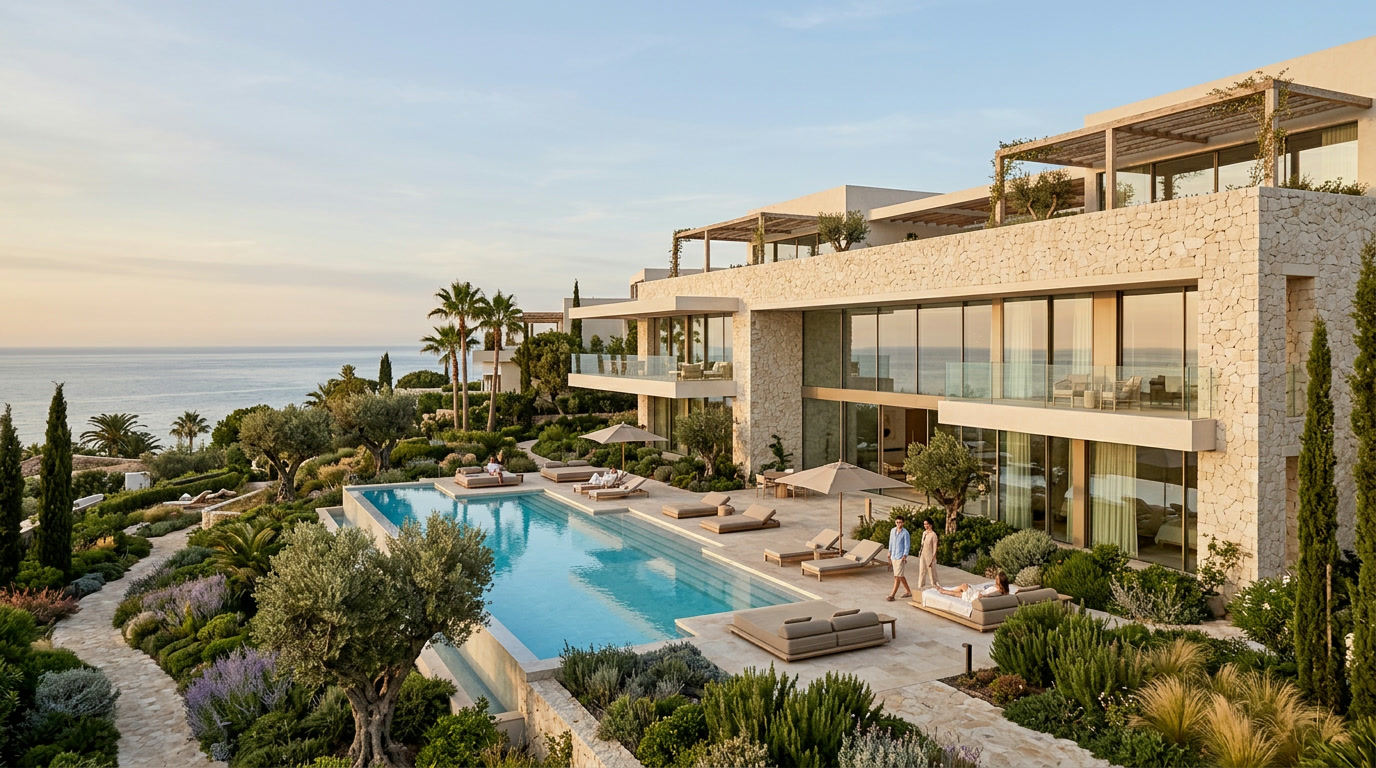
The Rise of Longevity Tourism on the Costa del Sol: How Marbella Is Redefining Luxury Through Wellness and Preventative Health
Marbella is entering a new era of luxury wellness. With Oakmond Marbella scheduled to open in 2029, combining five-star hospitality, preventative healthcare and longevity-focused facilities, the Costa del Sol is positioning itself within a growing international market. Discover how this development could reshape luxury tourism, real estate, healthcare and wellness businesses across southern Spain.
01 NOV 2026
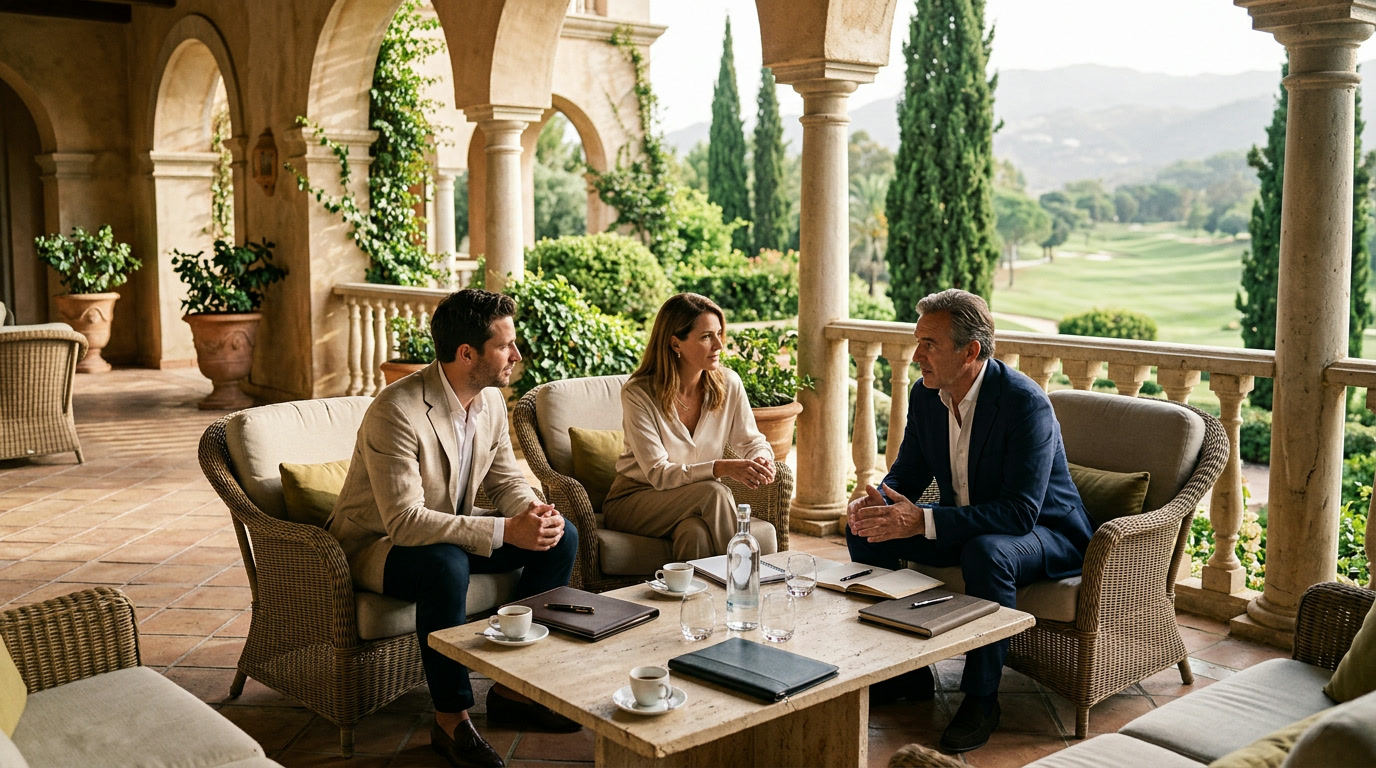
Marbella Is Going After the World's Biggest Spenders: How DUCO Spain & Portugal 2026 Signals a New Era for Luxury Tourism
An operational breakdown of DUCO 2026 in Marbella: connecting 170 luxury travel advisers with regional hospitality to drive year-round, high-yield tourism.
27 OCT 2026
Live from the coast
Related wire dispatches
Marbella Readies 3.8 Million LED Points For Christmas, With Four Giant Angels In Plaza de los Naranjos
Marbella and San Pedro Alcántara will light 3,825,784 LED points this Christmas, the town hall said on 8 November. Four large angels in Plaza de los Naranjos and a light forest on San Pedro's Avenida Marqués del Duero will each stage three musical shows a day. The council had not published a switch-on date when this dispatch was filed on 19 November.
Puente Romano Names Francesco Roccato General Manager, Returning Him to Marbella
Puente Romano Marbella has appointed Francesco Roccato as general manager. The Turin-born hotelier led the opening of Nobu Hotel Marbella between 2016 and 2018 and will oversee a multi-year investment programme covering the resort's suites, restaurants and sports facilities.
Marbella Opens Voces del Sur, A Four-Day Poetry And Flamenco Cycle, Ahead Of The 20th Sierra Blanca Festival
Marbella's Teatro Ciudad hosts Voces del Sur, a new free cycle of poetry and flamenco with Rocío Márquez, Jaime Siles and Daniel Casares, from 18 to 21 November. The 20th Festival Flamenco Sierra Blanca follows at the same theatre on the Saturday night.