Sunshine Servers, Hidden Faults: How Critical PHP Flaws Reached the Costa del Sol’s Hotels, Agencies, and Town Halls
The disclosure of the "PHP2Shell" zero-day vulnerabilities (CVE-2026-109618 and CVE-2026-109619) has triggered emergency patches and critical national alerts across Spain. Across the Costa del Sol—where tourism platforms, booking engines, municipal portals, and prime real-estate CRMs rely overwhelmingly on PHP—the runtime-level remote code execution flaws expose a dangerous operational vulnerability: a high-stakes regional economy powered by legacy stacks and unmanaged hosting.
By Wellington Almeida · Updated 22 OCT 2026
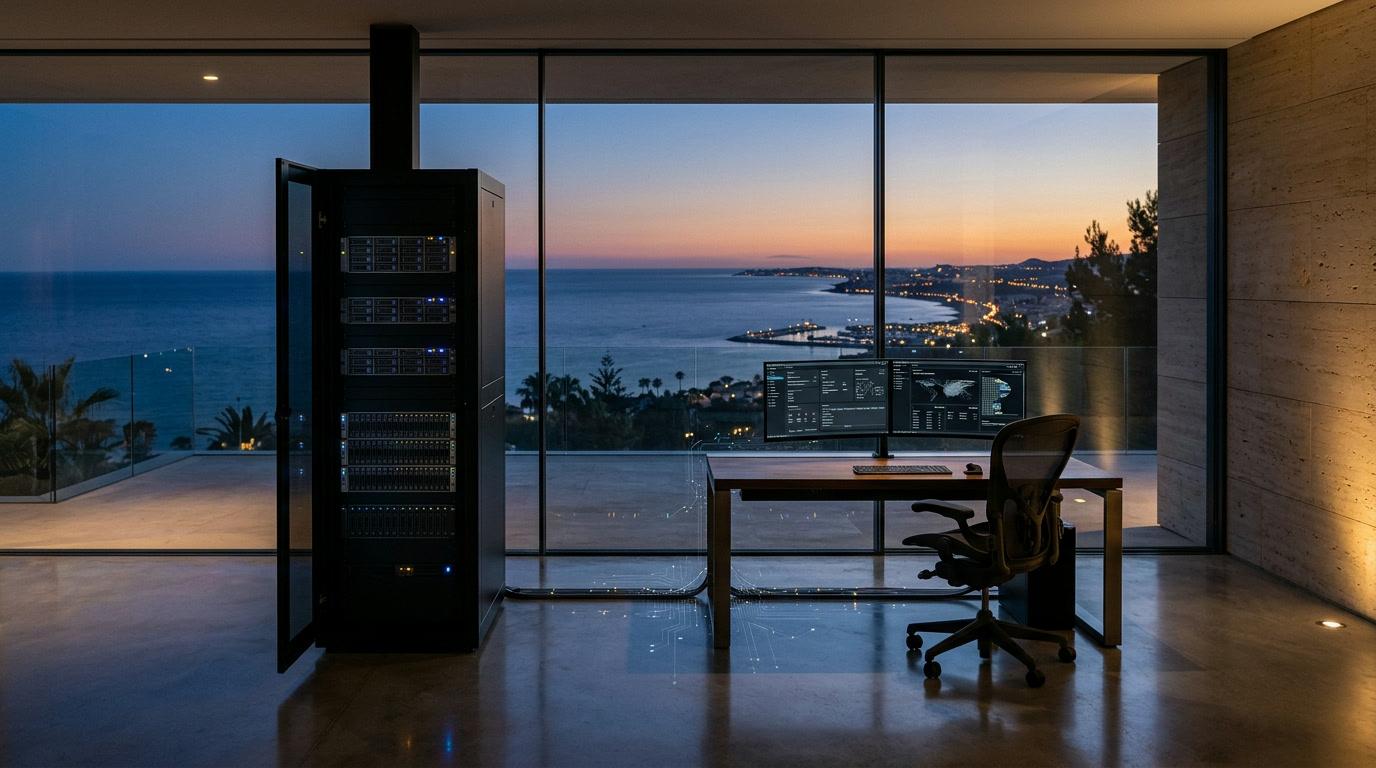
Sunshine Servers
On the morning of 21 October 2026 the PHP project released emergency patches for two vulnerabilities that had sat, in one form or another, inside the language for more than a decade. Both flaws, CVE-2026-109618 and CVE-2026-109619, carried a CVSS v4.0 score of 9.2. Both allowed an unauthenticated attacker to execute code on a web server running the interpreter. The collective name that stuck was PHP2Shell. Within hours, sensors at Cloudflare and elsewhere recorded millions of exploitation attempts. In Spain the Instituto Nacional de Ciberseguridad (INCIBE) raised its alert to critical (INCIBE-2026-762) and the Ministry of Digital Transformation told every public and private entity to update immediately.
The Costa del Sol sits at the sharp end of that instruction. The strip of coastline from Málaga westward through Torremolinos, Fuengirola, Marbella and Estepona is one of Europe’s densest concentrations of tourism infrastructure, real-estate activity and seasonal small business. Almost all of it runs, at least in part, on PHP.
What the Flaws Actually Do
The two bugs live in the PHP runtime itself, not in any particular application. CVE-2026-109618 involves out-of-memory handling. When a request pushes a worker process against its memory limit at precisely the wrong moment, PHP can leave internal request data only partially initialised. The subsequent cleanup routine then treats that half-formed data as valid, opening a path to memory corruption and, in demonstrated cases, remote code execution. On Apache with the mod_php module the attack can succeed before any application code runs. A single crafted multipart POST request is enough.
CVE-2026-109619 is a use-after-free across requests. Request-owned internal state can survive after the memory that backed it has been freed. A later request handled by the same long-lived worker may then operate on that stale state. The result can be remote code execution or the disclosure of process memory that still contains credentials, tokens or session data from earlier requests. Researchers confirmed paths on both mod_php and PHP-FPM. In PHP 8.5 an additional route involving fatal-error backtraces was demonstrated.
Both issues affect every PHP installation that serves web requests: PHP-FPM, Apache mod_php, php-cgi, FrankenPHP and LiteSpeed. Supported branches received fixes in 8.5.12, 8.4.27, 8.3.36 and 8.2.35. Older branches received source patches or distribution backports, but PHP’s own maintainers urged migration to a supported release. Where an immediate update was impossible, temporary mitigations existed—raising memory_limit, disabling session upload progress, lowering post_max_size—but none of them closed the holes completely.
The discovery path was unusual. Researchers at Calif, working with OpenAI models under the Patch the Planet programme, reported the out-of-memory path on 11 August. Wiz independently found related issues weeks later; OpenAI supplied further attack vectors in September. The flaws had been present since the PHP 5 era. Turning them into reliable unauthenticated remote code execution had required an intricate chain of conditions that human researchers had not previously assembled. Frontier models shortened that work dramatically. The PHP Foundation later noted that AI-assisted research had already produced fifteen new CVEs since the start of July.
Details leaked on 20 October, a day before the scheduled release. Exploitation attempts were already visible. Amazon’s researchers traced probes to 17 October. By the time patches landed, government sites in the Netherlands, Finland, France and Germany had taken services offline as a precaution. In Spain the response was more measured: INCIBE and the Centro Criptológico Nacional (CCN-CERT) issued urgent advisories, but there was no nationwide blackout of ministerial portals. Local administrations and universities applied overnight maintenance windows instead.
PHP’s Dominance Along the Coast
Spain has one of the highest concentrations of PHP on the public web of any European country. Measurements of .es domains and Spanish-hosted sites put the language’s share between roughly 70 and 90 per cent of sites that disclose a server-side language. WordPress, which is written in PHP, accounts for a large fraction of that total. Drupal, another PHP CMS, powers many public portals, including moncloa.gob.es. Local and regional sites follow the same pattern.
On the Costa del Sol the pattern is even more pronounced because the dominant industries—tourism, short-term rentals, restaurants, real-estate agencies—prefer platforms that are cheap to stand up, easy for non-technical staff to edit, and already equipped with booking calendars, multilingual plugins and SEO tooling. Web-design studios in Málaga, Marbella and Fuengirola advertise WordPress and WooCommerce as the default stack. Hotel sites integrate reservation engines; apartment portals sync with channel managers; estate agents pull listings from Resales Online or Infocasa via custom PHP plugins. A survey of agency portfolios in the region shows WordPress on the majority of recent hospitality, rental and property projects.
The public side is not immune. The Ayuntamiento de Málaga runs Drupal. Marbella’s municipal portal and its recently launched Plan General de Ordenación Municipal site are typical of the local-government CMS layer. Turismo Costa del Sol, the public company that promotes the province, maintains a substantial web presence. The Mancomunidad de Municipios de la Costa del Sol Occidental has tendered for new training portals. These sites handle citizen requests, tourist information, booking of public facilities and, in some cases, payment flows. Many still sit behind shared hosting or modest virtual private servers whose PHP versions are controlled by the provider rather than by an in-house systems team.
What the Flaws Mean for Local Business
A successful compromise through either CVE gives an attacker the privileges of the web process. On a typical hotel or rental site that process can read the database of reservations, the table of guest names and contact details, the payment tokens stored by a gateway plugin, and any administrative credentials saved in configuration files. It can also write new PHP files or modify existing ones, turning the site into a distribution point for further malware or a foothold into the provider’s broader network.
For a boutique hotel in Marbella or a cluster of apartments in Fuengirola the immediate commercial damage is straightforward. Direct bookings stop or become unreliable while the site is offline for emergency patching. Channel managers that rely on the same PHP backend stop updating availability, producing overbookings or empty rooms. Guest data that later appears on underground forums triggers GDPR notifications and the associated fine risk; Spanish data-protection authorities have already shown willingness to levy significant penalties for preventable breaches in the tourism sector. Reputation compounds the loss: a site that is defaced or that serves malware to visitors during the October shoulder season loses future direct traffic that is hard to recover.
Smaller operators face an additional structural problem. Many contract a local web studio for design and then rely on a low-cost Spanish or international host for the runtime. The studio may not have standing administrative access to the PHP version. The host may batch updates on its own schedule or may still be running an end-of-life branch for which only source patches exist. In the days after 21 October, Spanish hosting providers and managed-WordPress platforms pushed emergency updates; some sites still went dark for hours while workers were restarted. Operators without a clear point of contact simply waited.
Real-estate agencies face a parallel exposure. Listing databases, client enquiry forms and CRM integrations are commonly PHP-based. A compromise can leak the personal data of high-net-worth buyers—an especially attractive target—or allow an attacker to alter listing prices or inject fraudulent contact details. Because many agencies share feeds through the same regional networks, a single vulnerable importer plugin can become a vector that spreads across multiple firms.
Local Administration and Public Services
Municipal websites on the Costa del Sol are not merely informational. They host electronic registries, planning-document repositories, tourist-tax payment pages and appointment systems for civil registry offices. A remote code-execution flaw that does not require authentication is therefore a direct threat to the integrity of those services. An attacker who gains a foothold can exfiltrate citizen records, plant backdoors that survive a later patch, or simply take the portal offline during a period of high demand (school enrolment windows, tourist-tax deadlines, or emergency weather alerts).
Málaga’s use of Drupal illustrates the layered risk. Drupal itself is regularly updated, yet it still executes on the underlying PHP runtime. The same is true for any custom modules written for the Plataforma Inteligente de Destino or for the administrative platforms being rolled out under Next Generation EU funding. The Ayuntamiento’s recent digital-transformation projects have concentrated more citizen data and more automated workflows onto web-facing systems; those systems remain only as secure as the interpreter that serves them.
Smaller town halls—Benalmádena, Mijas, Estepona—often lack dedicated security teams. Their portals are maintained by external contractors or by a single municipal IT officer. When INCIBE and CCN-CERT issued the critical alert, these organisations faced the same practical question as the hotels: who controls the PHP binary, how quickly can the process be restarted, and what citizen-facing services must stay online in the meantime? Some chose brief overnight isolation of non-essential services; others waited for their hosting provider’s automated rollout. Neither choice is cost-free when the portal is the only channel for certain administrative acts.
Turismo Costa del Sol occupies an intermediate position. As a public company it is subject to the same cybersecurity expectations as the provincial administration, yet much of its external presence is marketing-oriented and therefore runs on conventional CMS platforms. A compromise there would not necessarily expose core citizen records, but it would undermine the destination’s promotional infrastructure at the start of the winter season and could provide a stepping-stone into shared provincial networks.
The Spanish Institutional Response and Its Local Translation
INCIBE’s alert was unambiguous: the flaws allow unauthenticated remote code execution with the privileges of the web process; attacks were already observed before patches were public; the only complete remedy is to apply the corrected versions and restart the workers. Temporary mitigations reduce exposure but do not eliminate it. Where an internet-facing system cannot be patched promptly, it should be isolated from public networks.
The Ministry of Digital Transformation amplified the message to both public and private entities. CCN-CERT issued a parallel advisory focused on critical infrastructure and public administrations. National police units (Brigada de Investigación Tecnológica) and the Guardia Civil’s Grupo de Delitos Telemáticos stand ready to investigate actual intrusions, but prevention remains the responsibility of system owners and their providers.
On the Costa del Sol that responsibility is fragmented. Large hotel chains and the provincial tourism company can coordinate with national providers or with in-house teams. Independent restaurants, car-rental desks at Málaga airport, and family-run real-estate offices depend on the speed of their host. Shared hosting panels that still expose PHP 7.4 or 8.0—branches for which only source patches or third-party backports exist—create a residual population that will remain vulnerable for weeks. Earlier surveys by Spanish hosts had already warned that, by early 2026, half or more of Spanish sites could be running unsupported PHP versions; the October emergency simply made the cost of that lag concrete.
Practical Constraints Unique to the Region
Three features of the Costa del Sol economy amplify the operational impact. First, the customer base is heavily international and seasonal. A site that is offline or that loses direct-booking functionality during the October–November shoulder period cannot simply postpone revenue; the visitors have already chosen alternative destinations or alternative properties. Second, many operators are micro-enterprises or sole traders whose primary language is not Spanish and whose technical contact is a WhatsApp conversation with a local web studio. Clear, multilingual instructions from hosts and from INCIBE matter more here than in a domestic market of larger firms. Third, the same PHP processes often handle both the public marketing site and the back-office tools that sync calendars or process payments. Isolating the public site does not always isolate the revenue-critical functions.
These constraints do not change the technical advice—patch, restart, verify—but they do change the speed and completeness with which that advice can be followed. Hosting providers that serve the region have, for the most part, rolled out the corrected packages. The residual risk sits with operators who do not know which version they are running, who cannot force a restart, or who are still on an end-of-life branch for which no easy binary update exists.
Longer-Term Implications
PHP2Shell is not the first critical flaw in the language, nor will it be the last. The fact that decade-old memory-management paths could be turned into reliable remote code execution by AI-assisted research simply accelerates a pressure that was already visible: the cost of remaining on unsupported versions has risen. Spanish hosting data from late 2025 already projected that a large fraction of the country’s sites would lose security updates once older branches reached end-of-life. The October episode supplies a concrete illustration of what that loss looks like when the vulnerability is unauthenticated and affects the runtime rather than a plugin.
For the Costa del Sol the practical lesson is narrower. Tourism and real-estate businesses that treat their websites as marketing brochures rather than as systems that hold guest data and process payments will continue to under-invest in the runtime layer. Local administrations that have modernised front-ends while leaving the underlying interpreter to a contractor or a shared host will face the same recurring scramble. Both groups now have a clearer picture of the exposure.
The patches exist. The institutional alerts have been issued. What remains is the unglamorous work of confirming every PHP process that faces the internet along the coast, applying the corrected versions, restarting the workers, and deciding which older installations must be rebuilt rather than merely patched. That work is already under way in the larger organisations. For the smaller ones it will take longer, and the residual risk will persist until it is finished.
From the journal
Related articles

GTA VI and the 30fps Backlash: What a Viral Disappointment Is Worth
Grand Theft Auto VI was not delayed again. What went viral was a 30fps target, a few glitch clips and missing launch features, set against a 99 Metascore and record pre-orders. What the backlash means for Take-Two's shares, Spanish retail and Malaga's games studios.
18 NOV 2026

Talent Land España: What Málaga Gets From Three Days of Courting Young Tech Talent
Talent Land España returns to FYCMA from 24 to 26 November for its third edition. Where the Mexican-born event came from, what the 2026 programme and tickets offer, who funds it, and what it can and cannot do for Málaga's talent pool, employers, hotels and housing.
17 NOV 2026

What the CIS Poll Means for Property and Luxury on the Costa del Sol
The official pre-electoral survey, released as the campaign opened, gives the PSOE 33.3 per cent and leaves the PP and Vox short of a majority. Most other recent polls do not. The election was called after Congress rejected two housing decrees. An impartial look at what each plausible outcome would mean for property and luxury on the Costa del Sol.
13 NOV 2026
Live from the coast
Related wire dispatches
Marbella Remains Málaga's Dearest Market As Coastal Asking Prices Diverge
Idealista's October figures, reported by El Español on 5 November, put Marbella at €5,974 per square metre and Estepona at €5,070, while Cómpeta recorded the province's steepest annual rise, of 31.7 per cent.
Sun&Tech by Alhambra Venture Puts 36 Founders Before Investors at FYCMA
The first Málaga Sun&Tech by Alhambra Venture opened at FYCMA on Wednesday, putting 36 founders from across Spain in front of investors, funds and family offices over two days. Mayor Francisco de la Torre said Málaga TechPark has more than 29,000 workers and nearly €4.8 billion in turnover across over 700 companies.
Ten Andalusian Start-Ups to Pitch Investors at Malaga's EEN ScaleUP Forum on 26 November
Ten Andalusian start-ups will present to investors and venture funds at the EEN-Andalucía ScaleUP 2026 forum at ESSCA's Málaga campus on Thursday 26 November. Fifteen of the 31 eligible applicants came from Málaga province, according to organisers Andalucía TRADE and ESSCA.