Sierra Nevada, Spain: A Guide to High-Altitude Rooms, Long Days on Snow, and the Drive Down to Granada
An operational guide to luxury skiing in Sierra Nevada: boutique slopeside lodging, heated outdoor pools, and high-altitude skiing 35 minutes from Granada.
By Mistral & Marea · Updated 17 OCT 2026
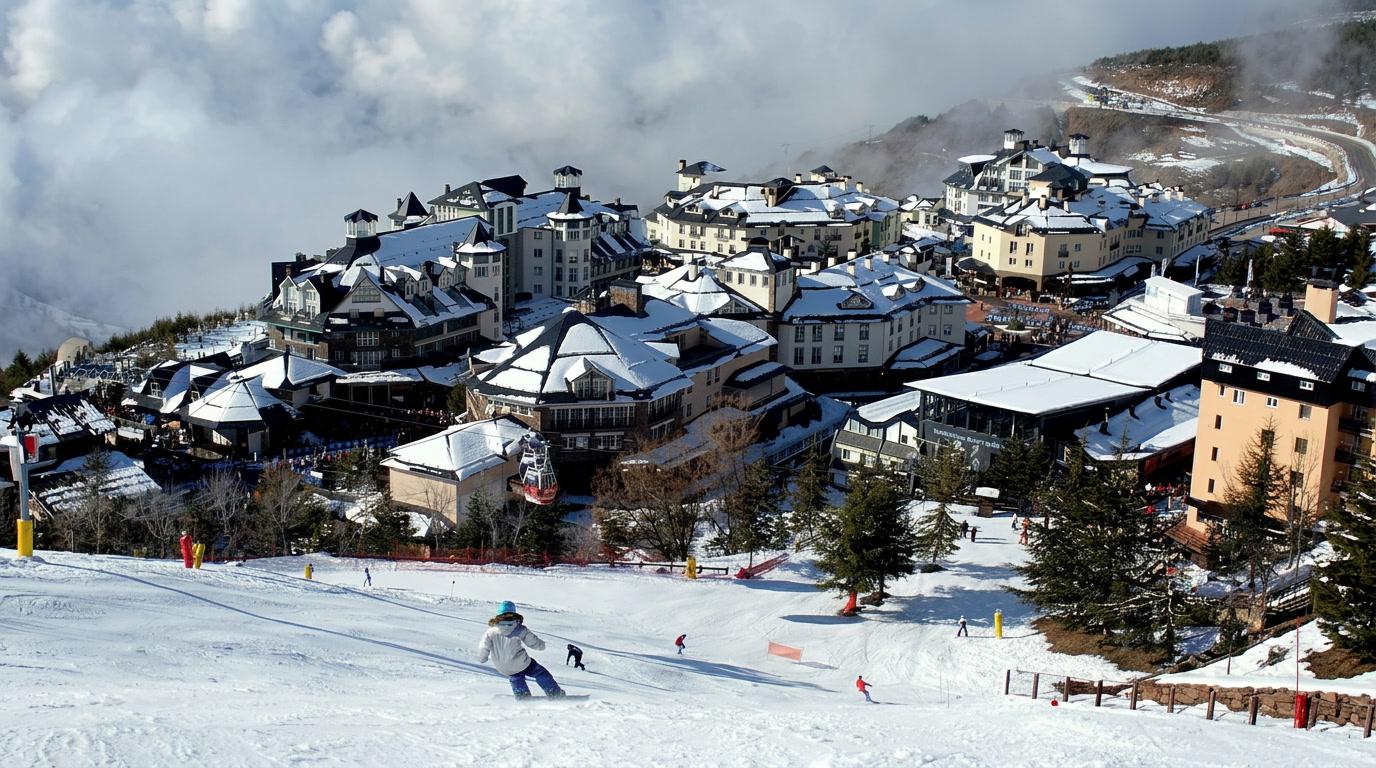
Sierra Nevada
Sierra Nevada sits on the northern slopes of Spain’s highest mountain range, roughly 35 minutes by car from Granada. The ski area begins at Pradollano, around 2,100 metres, and the highest lifts reach near 3,300 metres on Veleta. The vertical drop is 1,200 metres, the largest in Spain. Marked pistes total roughly 110–113 kilometres across more than 130 runs, served by around 20–23 lifts, including two gondolas. The resort faces generally northwest. Average annual snowfall is modest by Alpine standards, but the altitude and extensive snowmaking—hundreds of cannons covering a substantial portion of the domain—keep the season running from late November or early December into late April or early May in most years.
What distinguishes the place for visitors who prefer quiet rooms and organised days is the combination of that altitude, the frequency of clear days, and the short distance to Granada. Midwinter daylight is longer than in the Alps. Afternoons in March and April are often mild enough that people ski in lighter layers. The same road that climbs to the resort drops into the city in under an hour, so an Alhambra visit or a late lunch in the Albaicín can be fitted into a ski week without changing hotels.
Rooms That Face the Slope
The most concentrated high-end lodging is clustered around the upper part of Pradollano, close to the Maribel and Águila runs and the Parador chairlift.
El Lodge Ski & Spa is a five-star boutique property of roughly 20–21 rooms and suites, built largely in Finnish timber after a full reconstruction following a fire. It holds Small Luxury Hotels of the World membership. Direct ski-out access puts skiers onto the Maribel run within steps of the building; the return is equally short. Most rooms have balconies; many have private hot tubs. Four deluxe pool rooms open toward the heated outdoor pool. The property also includes a separate three-bedroom cabin a short walk away for guests who want more separation. The spa is small and underground, with an indoor pool, sauna, steam room, and treatment rooms using vegan products. The outdoor pool is heated to around 36 °C and remains usable through the winter; it is one of the few such pools at the resort. Dining is split across The Grill (breakfast and dinner), the Sun Deck (lunch, with fire tables and a daily DJ), a bar, and a lounge. Staff handle lift-pass collection and in-house equipment rental. Nightly rates in high season typically start in the mid-€300s to mid-€500s for a double, including breakfast, and rise for suites with tubs.
Hotel Maribel sits immediately adjacent, sharing some facilities with El Lodge under the same ownership group linked to Marbella Club and Puente Romano. It has 29 rooms and suites, including duplexes and a penthouse. Interiors use Finnish wood floors (heated), leather, faux-fur throws, and Natura Bissé amenities. Many rooms face the piste. The public areas emphasise the bar and restaurant—Maribel’s—with a gold-leaf counter, suspended fireplaces, and an outdoor terrace that functions as one of the busier après-ski decks. The spa is Nordic-leaning, with sauna, steam, indoor pool, and an outdoor hot tub. Condé Nast Traveler readers named it Spain’s best snow hotel for 2025. It suits groups or travellers who want the day to continue into dinner and music more than those seeking a quieter chalet atmosphere. Guests of either hotel can use shared elements such as the kids’ club and certain spa spaces.
The Mountains Hotel occupies a renovated building (formerly Ziryab) on the Pradollano square, about 50 metres from the Al-Andalus gondola. It is positioned as a 4-star superior eco-oriented property with a larger room count, plus 37 private residences that can be purchased and that carry full hotel service rights (spa, gym, parking). The outdoor spa area is marketed as Europe’s highest and among the largest at this elevation; it includes a central heated pool, outdoor sauna, Wellpro steam baths, and treatment space, set among fir trees. Dining covers a breakfast-and-dinner buffet, the Moose Club American-style grill with fireplace and pool table, and the Feroz panoramic terraces for live music after skiing. Assisted ski storage with boot warmers sits near the lifts. The property emphasises energy-efficiency upgrades that reduced non-renewable energy use by more than 30 percent. It works for travellers who want a more contemporary, multi-use base with easier access to the main gondola and village square rather than pure slope-side intimacy.
Vincci Selección Rumaykiyya is a conventional five-star hotel higher in the resort with slope access, a spa (Nammu), and several dining outlets, including a high terrace. It has run limited Audi winter-driving experiences—daytime snow-driving workshops and occasional night sessions on a lit circuit—paired with accommodation. These are small-group and not available every week.
Other solid options exist (Meliá properties among them), but the three or four properties above concentrate the current high-end inventory with meaningful ski access and in-house wellness.
Time on Snow
The domain is large enough for a week without repetition for intermediate skiers. Beginner terrain is concentrated lower down; intermediate and advanced runs make up the bulk. The Sulayr snowpark serves freestyle. Night skiing operates on selected weekends on the Río and Maribel sectors. Cross-country loops are limited. Off-piste is available but not the primary draw; the resort’s strength is groomed, high-altitude terrain under frequent sun.
Private instruction is widely available through hotel ski schools (El Lodge works with Iliberis) and independent operators. Multilingual instructors are standard in the higher-end hotels. Equipment rental is on-site at the boutiques; several hotels can pre-arrange fitted gear so guests walk out ready. Lift-pass prices for an adult day ticket generally fall between €55 and €69 depending on the period, with multi-day reductions. High-season weekends and Spanish holiday weeks (Christmas, Reyes, Semana Santa) produce queues; midweek and January outside school breaks are quieter.
The practical advantage of the altitude shows in March and April: snow holds on the upper mountain while lower slopes soften in the afternoon sun. Many visitors ski until early afternoon, then move to a terrace or pool. The same proximity that makes Granada accessible also means a late-season day can finish with a drive toward the coast if desired, though the return climb is long.
After the Last Lift
The heated outdoor pools and terraces are the clearest differentiator from many Alpine resorts. At El Lodge the pool sits in the snow with mountain views; Maribel and The Mountains offer comparable outdoor water at high elevation. Spa treatments are straightforward recovery options rather than elaborate destination programs. Après is concentrated on the sun decks and hotel terraces rather than a large independent bar scene. DJs appear on the Sun Deck and at Maribel’s; live music occurs on the Feroz terraces. The atmosphere is Spanish-Mediterranean more than Alpine party: longer daylight, outdoor tables in the sun, and the option to stop early.
Hotel restaurants cover the main dining needs. El Lodge’s Grill and Sun Deck emphasise seasonal and Mediterranean-leaning plates; Maribel’s mixes alpine references with a stronger social bar element. The Mountains offers buffet scale plus the Moose Club grill. Outside the hotels, Pradollano has ordinary ski-resort restaurants and cafés. For a change, the 35-minute drive to Granada opens the city’s tapas bars, the Albaicín, and restaurants that serve Granada and Andalusian cooking. Private transfers or hotel-arranged cars make this straightforward.
Beyond the Resort
Granada’s Alhambra is the obvious day trip. Private guided visits that include the Nasrid Palaces can be arranged for early or late slots to avoid peak crowds; tickets are timed and limited. The same day can include a walk through the Albaicín or Sacromonte. Further afield, the white villages of the Alpujarras on the southern slopes (Capileira, Bubión, Pampaneira) offer quieter mountain landscapes, local food, and hiking in shoulder seasons. Four-by-four or guided routes reach high viewpoints and mountain huts inside the national park and biosphere reserve. In summer the ski lifts stop, but hiking to Mulhacén (mainland Spain’s highest peak) and mountain-biking become the focus; some high-end lodging remains open or shifts character.
Helicopter access for remote skiing is not a standard product here the way it is in larger Alpine or North American resorts; private guiding and snowshoe or ski-touring options exist through local operators for those who want to leave the marked pistes.
Timing, Access, and Costs
The core ski season runs from late November/early December to late April/early May. January and February usually deliver the most reliable full coverage and colder snow. March brings longer days, more sun, and still-good upper-mountain conditions; it is often the preferred window for travellers who value light over maximum powder. April can extend into spring skiing with softer afternoons. Christmas and Easter weeks are the busiest and most expensive.
Fly into Granada (GRX) for the shortest transfer (about 45–60 minutes) or Málaga (AGP) for more international connections (roughly two hours by road or high-speed train plus transfer). Private transfers or rental cars with winter tyres/chains are standard. The final climb is steep and can close in heavy weather; check conditions. Parking at the resort is limited and often paid; many hotels offer valet or reserved spaces.
Expect high-season double rooms at the boutique properties from the mid-€300s upward per night, excluding ski packages. Private lessons, equipment, and spa treatments add to the total. The combination of hotel quality, short city access, and frequent sun keeps the overall cost below many equivalent Alpine weeks once transfers and extra activities are included, though peak holiday weeks close that gap.
A Working Five-Day Outline
Day 1: Arrive via Granada or Málaga, settle into the room, collect passes and gear, short afternoon on the lower slopes or a terrace session. Dinner at the hotel.
Day 2: Full ski day with a private instructor focused on the guest’s preferred terrain. Lunch on the Sun Deck or equivalent. Evening spa or hot tub, then hotel dinner.
Day 3: Ski the upper mountain in the morning (Veleta or Borreguiles sectors). Afternoon free or a short private transfer into Granada for the Alhambra and a late meal in the city; return after dark.
Day 4: Quieter ski morning or snowshoe option. Afternoon at the outdoor pool and spa. Evening at Maribel’s or the Feroz terraces if the group wants music, or a quieter hotel table.
Day 5: Final morning on snow or a slow breakfast with views, then departure. Optional stop in the Alpujarras or a coastal lunch if the schedule allows.
Adjustments for weather, group ability, or non-skiers are straightforward; the hotels and local operators routinely handle mixed parties.
Sierra Nevada does not replicate the scale or nightlife of the largest Alpine resorts, nor the powder reliability of the northern Rockies or the highest French stations. What it does provide, at a practical distance from an international airport and a major historic city, is high-altitude skiing under frequent sun, a small number of slope-adjacent hotels with genuine spa and terrace infrastructure, and the ability to change scenery in under an hour. For travellers who measure a ski week by the quality of the room, the reliability of the day’s plan, and the option to leave the mountain entirely when desired, the combination is specific and usable.
From the journal
Related articles
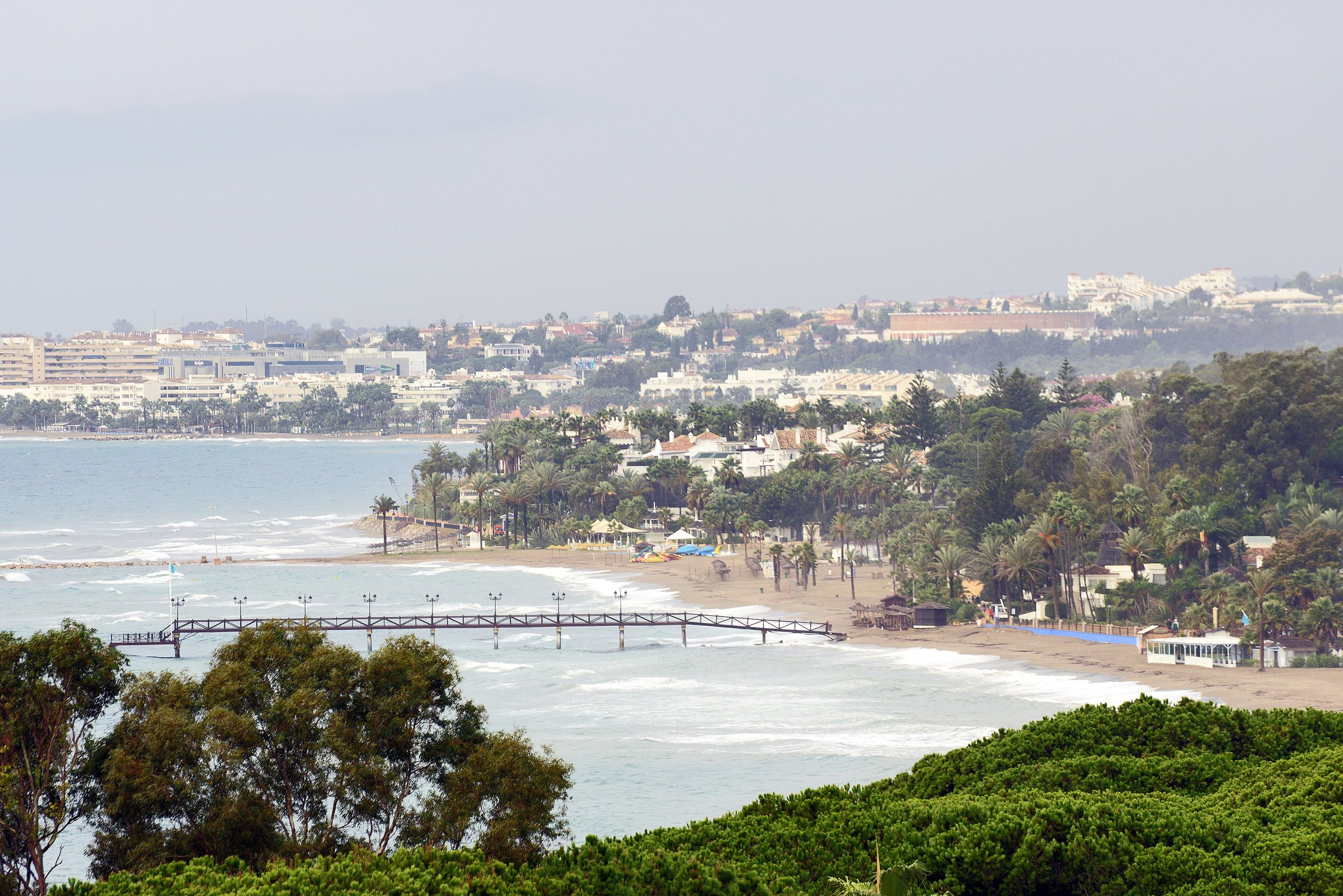
Armani, Versace and the Price of a Name on Marbella's Golden Mile
Armani's first Spanish residences and eight Versace Home villas have put fashion labels at the centre of Marbella property talk. The record is narrower than the chatter: Versace has no penthouses here, the Armani ones sit well below the coast's highs, and the top prices per square metre still go to unbranded beachfront flats.
23 NOV 2026
GTA VI and the 30fps Backlash: What a Viral Disappointment Is Worth
Grand Theft Auto VI was not delayed again. What went viral was a 30fps target, a few glitch clips and missing launch features, set against a 99 Metascore and record pre-orders. What the backlash means for Take-Two's shares, Spanish retail and Malaga's games studios.
18 NOV 2026
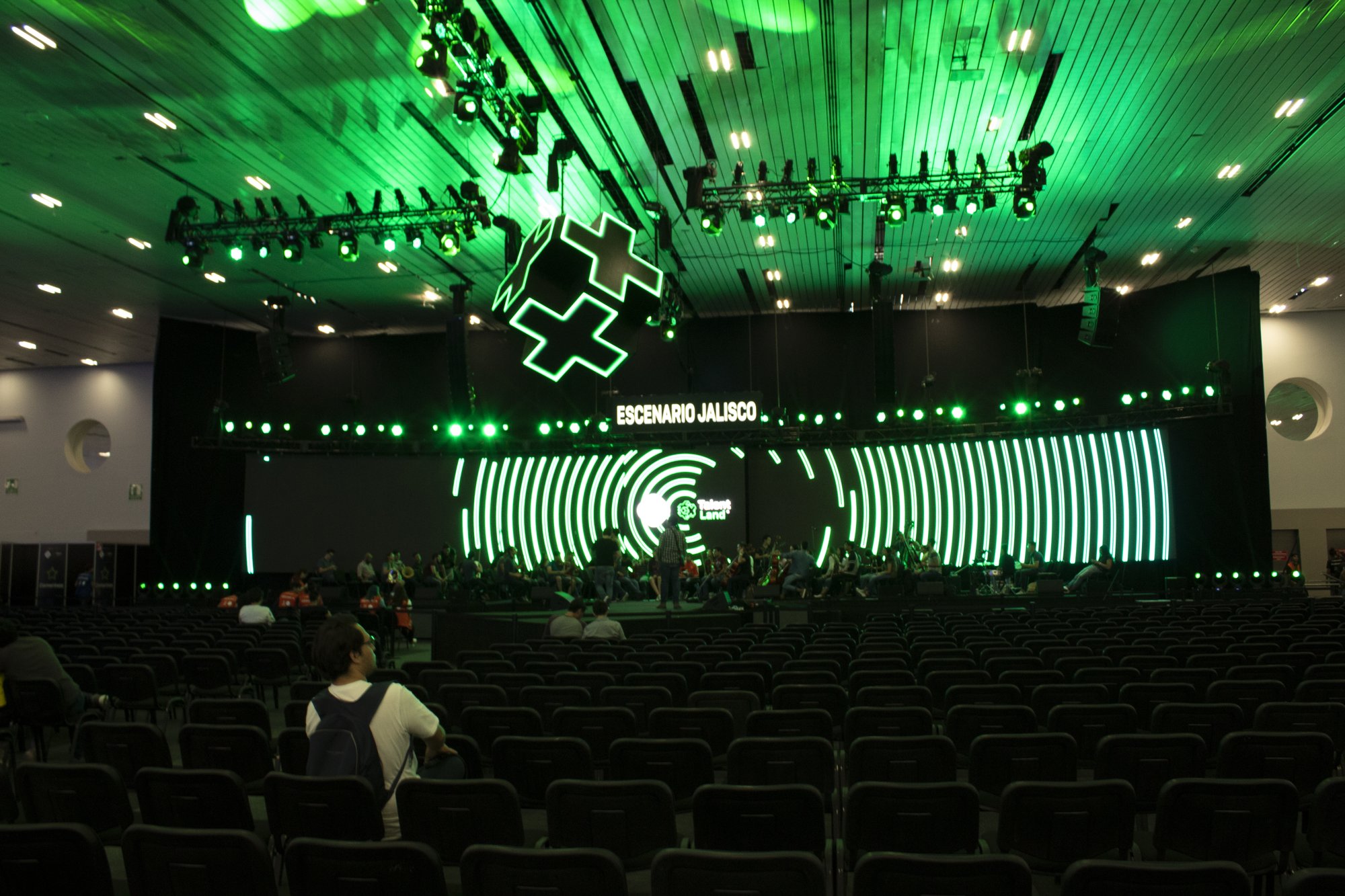
Talent Land España: What Málaga Gets From Three Days of Courting Young Tech Talent
Talent Land España returns to FYCMA from 24 to 26 November for its third edition. Where the Mexican-born event came from, what the 2026 programme and tickets offer, who funds it, and what it can and cannot do for Málaga's talent pool, employers, hotels and housing.
17 NOV 2026
Live from the coast
Related wire dispatches
Malaga Home Sales Fall for a Third Straight Quarter as Foreign Buyers Take Nearly 39%
Home sales in Málaga province fell 3.5% in the 12 months to September, the third consecutive quarterly decline in Colegio de Registradores data. Foreign buyers accounted for 38.83% of purchases, up from 34.3% in the first quarter, making Málaga Spain's second most international market after Alicante.
Marbella Offers Council Land for More Than 500 Price-Capped Rental Homes
Marbella will make municipal land available for more than 500 homes for rent at capped prices and has set aside €6 million in its draft 2027 budget to co-finance protected housing with the Junta de Andalucía. The council aims to mobilise up to €50 million in funding from several administrations.
Malaga Moves San Julian Business Park Closer to Works, 15 Years After Its First Plan
Málaga's Junta de Gobierno Local has admitted for processing the urbanisation project for one of two phases of the San Julián business park in Churriana, the last major step before works. The 227,565 sq m site beside Plaza Mayor allows 62,000 sq m of buildings for business, commercial and industrial use.