Málaga Este Steps Into the Ultra-Luxury Market With a €5.7 Million Penthouse Sale
The €5.7M penthouse sale at Livermore in Málaga Este marks a major shift, proving ultra-luxury demand is establishing a firm foothold inside Málaga capital.
By Anna Kuznetsova · Updated 17 OCT 2026
Málaga Este Steps Into the Ultra-Luxury
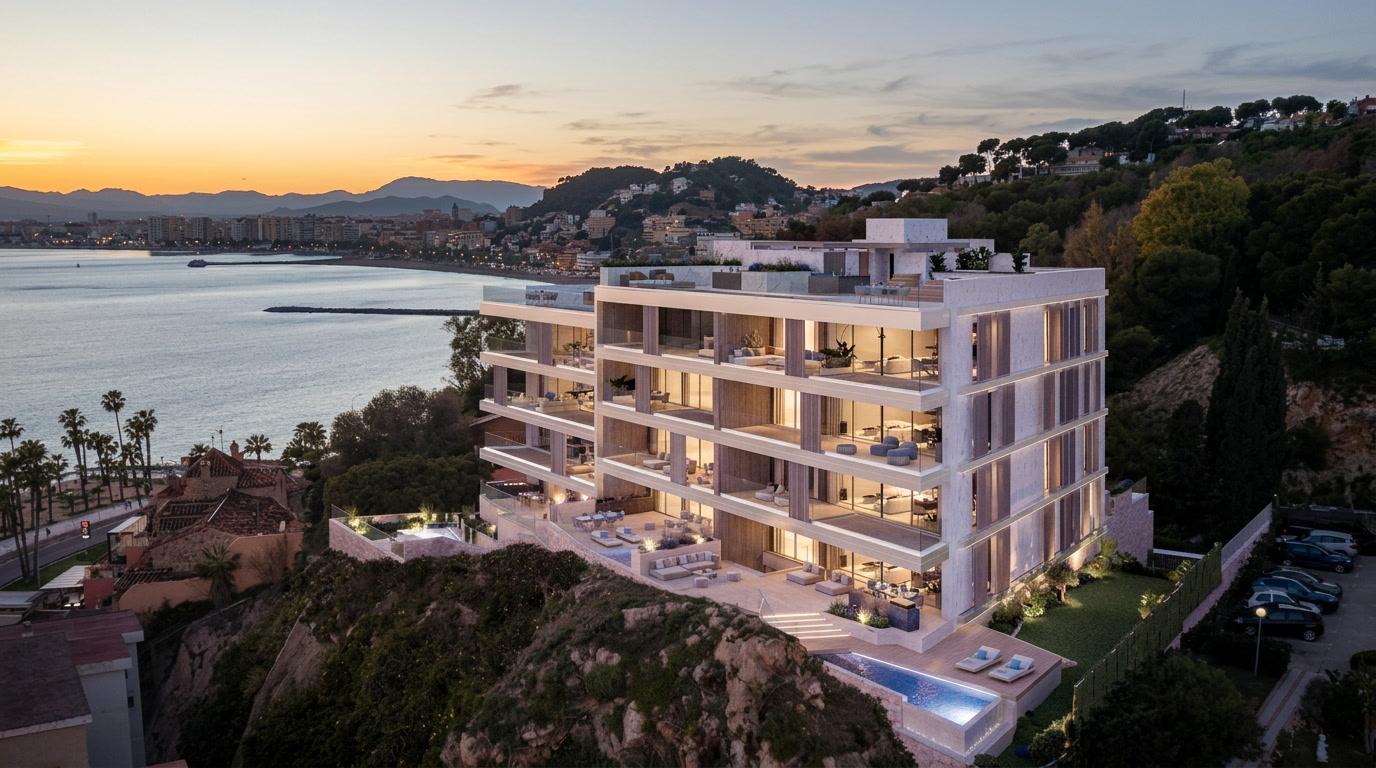
In June 2026, one of three penthouses in the Livermore development near El Morlaco in Málaga Este sold off-plan for €5.7 million. The transaction, handled exclusively by the Málaga firm ON3 Consulting for developer KPC, is one of the highest-value residential deals recorded inside the city of Málaga itself. The project contains only twelve residences. By the time excavation for the basement levels was nearing completion, five of those twelve units had already been reserved—roughly 40 percent of the scheme—before the building above ground had fully advanced. Prices start at €2.5 million. Several of the committed sales exceed four million euros. The result is concrete evidence that a higher-priced residential segment, previously concentrated on the western Costa del Sol, is now forming inside the capital.
Livermore sits on one of the last available plots along Camino de la Desviación, on the approach to the Parque Forestal de El Morlaco. The site is elevated, facing the sea, and bordered by pine woodland. Construction began in late 2025 after the demolition of two existing houses and the removal of diseased pines. Two basement levels will accommodate parking. Above them rises a building of ground floor, three upper floors, and penthouse level. Completion is scheduled for around December 2027, with the construction contract held by San José. Each of the twelve residences has three bedrooms. Every unit includes a private swimming pool—either at roof level or on a lower terrace—an equipped outdoor kitchen, a private leisure terrace with dining and chill-out space, three parking places (one fitted with an electric-vehicle charger), a motorcycle space, and a storage room that doubles as a laundry. Two double-door elevators give direct access from the garage to each residence; the penthouses receive enclosed arrival zones. Intermediate floors, some with double-height ceilings, connect to their pools by staircases. The design is linear and east-facing, intended to capture morning light, with cross-ventilation and fluid indoor-outdoor transitions.
The scheme is marketed under the label ULUX, a designation used by the promoters to distinguish a low-density, high-privacy product from conventional luxury apartment blocks. Materials emphasise stone, wood, and metal. Architecture is by the Chilean studio A4 Arquitectos under Cristián Valdivieso Ruiz-Tagle, working with the Málaga architect José Morente Antolín. The residences carry names drawn from local historical figures and places: Ágreda, Amalia, Asunción, Caroline, Chamoussent, Concepción, Constancia, Flavia, Loring, Minerva, Semíramis, and Silvela. Several had already been reserved by mid-2026, including the €5.7 million penthouse and at least one other at a comparable figure.
The project takes its name from Amalia Heredia Livermore (1830–1902), the tenth child of the industrialist Manuel Agustín Heredia and Isabel Livermore. Married to Jorge Loring Oyarzábal, first Marquis of Casa Loring, she was a prominent figure in nineteenth-century Málaga society. She and her husband created the botanical garden at La Concepción, which remains open to the public, and assembled the archaeological collection that became the Loringiano Museum and later contributed to the holdings of the Museo de Málaga. She supported hospitals and educational foundations in the city. Naming the development after her places a contemporary private project in a longer local history of private wealth that shaped public culture and landscape.
El Morlaco itself has a layered past. For much of the eighteenth and nineteenth centuries, and into the twentieth, the area contained gypsum mines whose underground galleries later served as civilian shelters during the Spanish Civil War. Reforestation with Aleppo pines took place in the 1950s while the land was still private. The present Parque Forestal de El Morlaco covers roughly sixteen hectares between the neighbourhoods of El Morlaco, El Rocío, Parque Clavero, Cerrado de Calderón, and La Viña. It functions as a green wedge between the seafront and the higher residential zones, with paths, viewpoints toward the bay, and residual vegetation from the old estate. The Livermore plot lies immediately adjacent to this parkland, on ground that rises above the Paseo Marítimo. The combination of residual natural cover, sea outlook, and proximity to established high-end neighbourhoods such as El Limonar and Cerrado de Calderón has made the eastern district one of the city’s more constrained and therefore higher-value residential zones.
Málaga Este has long concentrated the city’s older residential wealth. Neighbourhoods such as La Malagueta and Monte Sancha record average asking prices well above €7,000 per square metre in recent data. El Limonar, Pinares de San Antón, and the higher slopes around Cerrado de Calderón and El Morlaco have traditionally attracted families seeking detached or semi-detached houses with gardens. New multi-family projects at the top of the price range have been rarer inside the city limits. Buyers seeking apartments or penthouses above four or five million euros more often looked west toward Marbella, Benahavís, or Estepona, or toward Sotogrande. The Livermore sales indicate that a portion of that demand is now willing to remain inside Málaga capital when the product offers privacy, outdoor space, and a limited number of neighbours.
The broader provincial market supplies context. Málaga province accounts for a large share of Spain’s ultra-luxury listings—properties advertised at €3 million or more. In mid-2026, Idealista data showed Málaga with more such listings than Madrid and Barcelona combined. Within the province, the so-called Golden Triangle of Marbella, Benahavís, and Estepona continues to dominate the highest price points, with new-build examples in prime beachfront locations reaching exceptional figures per square metre. Inside the city of Málaga, average asking prices for used stock have reached historic highs, with the eastern district among the most expensive. New developments on the western seafront, such as the Málaga Towers complex (three residential towers with communal spa, pools, gym, and concierge facilities), have also recorded sales in the multi-million range and attracted international buyers. Those towers, however, are high-rise beachfront products with extensive shared amenities. Livermore is the opposite: low-rise, low-density, each residence with its own pool, and sited inland from the immediate shoreline but still with marine views and park adjacency.
KPC, the developer, is a relatively recent arrival in the Spanish market. Founded by Claudio Stitchkin, Karin Van Bebber, and Patricio Rojas, the company has focused on smaller “boutique” projects on the Costa del Sol after earlier work in Chile and elsewhere. Completed schemes include The Island in Estepona and Alcazaba Lagoon in Casares. Active projects at the time of the Livermore launch included Golden Eight in Marbella, Solenne in Benahavís, and Ykines in Torremolinos. Livermore is the firm’s first project inside Málaga city. ON3 Consulting, the exclusive sales agent, is a Málaga-based firm with more than twenty years of local experience and a track record of several thousand units sold across the region. Its managing partner, Rodrigo Rodríguez, has described the Livermore sales pace as the product of a deliberately limited offering aimed at a qualified buyer pool, with the commercial strategy set at the outset rather than adjusted later.
Buyer interest appears to combine local and international demand. Reports on the wider Costa del Sol market note continued activity from traditional European buyers alongside growth from Latin America, the United States, Eastern Europe, and the Middle East. Inside the city, agents describe a segment of purchasers who prioritise proximity to international schools, medical facilities, the airport, and the cultural and commercial life of Málaga over the resort-style infrastructure of larger western developments. The scarcity of remaining building land in consolidated eastern enclaves such as El Morlaco reinforces the price floor for any new product that can be delivered there. Once the twelve Livermore residences are occupied, comparable new supply in the immediate vicinity will be limited.
The architecture and marketing language emphasise restraint rather than spectacle. Descriptions on the project website and in sales materials stress integration with the pine woodland, the quality of light, and the reduction of density. Each residence is presented as a discrete volume with measured proportions rather than as part of a larger leisure complex. Private pools and outdoor kitchens allow outdoor living without reliance on shared facilities. Direct elevator access and enclosed arrival zones for the upper units reduce contact between neighbours. These features address a buyer preference, frequently noted in high-end coastal markets, for privacy within a built form that still offers the convenience of an apartment rather than the maintenance obligations of a freestanding villa.
Payment terms for off-plan purchases typically require a substantial deposit followed by the balance on handover. For Livermore, marketing materials have indicated a structure of roughly 30 percent down and the remainder at completion. The early reservation of five units, including two high-value penthouses, reduces the developer’s exposure during the construction period and provides evidence of demand before the building is visible above ground. Excavation work was already advanced by June 2026; the superstructure phase was expected to follow and run for approximately two years.
The appearance of a residential segment priced consistently above four million euros inside Málaga city does not displace the western Costa del Sol as the primary locus of ultra-luxury volume. Marbella and its neighbouring municipalities continue to offer larger inventories, higher absolute prices in the most exclusive locations, and a denser ecosystem of related services. What the Livermore transaction demonstrates is that the city itself can now sustain a limited number of projects at those price levels when location, scarcity, and product design align. Eastern neighbourhoods that historically housed the industrial bourgeoisie of the nineteenth century—families such as the Heredias and Lorings—are once again registering transactions that would have been exceptional in the city a decade earlier.
Whether similar schemes will follow depends on the availability of remaining plots and on municipal planning decisions. The eastern district is already densely built in its lower sections; higher slopes and residual parcels near parks face stricter constraints. If further low-density projects materialise, they are likely to remain small in unit count and high in unit price. Larger-scale new supply is more probable on the western seafront or in expanding districts farther from the historic centre. For the immediate market around El Morlaco, Livermore functions as a marker: a twelve-unit building in which more than a third of the residences were committed before the upper floors existed, at prices that begin where many earlier city projects ended.
The sale of the €5.7 million penthouse is therefore both a specific commercial event and a data point in a longer shift. Málaga’s residential market has moved upward across most districts in recent years, driven by population growth, tourism-related investment, technology and services employment, and sustained international demand. Within that rise, the eastern side of the city has retained its position as a preferred location for higher-income households. The Livermore project shows that this preference now extends, for a narrow band of buyers, into the price range previously associated almost exclusively with the western resorts. The physical result will be a compact building on the edge of a reforested former mine, each of its twelve homes equipped with its own pool, and several of them already spoken for at figures that place Málaga capital more clearly inside the ultra-luxury conversation.
From the journal
Related articles
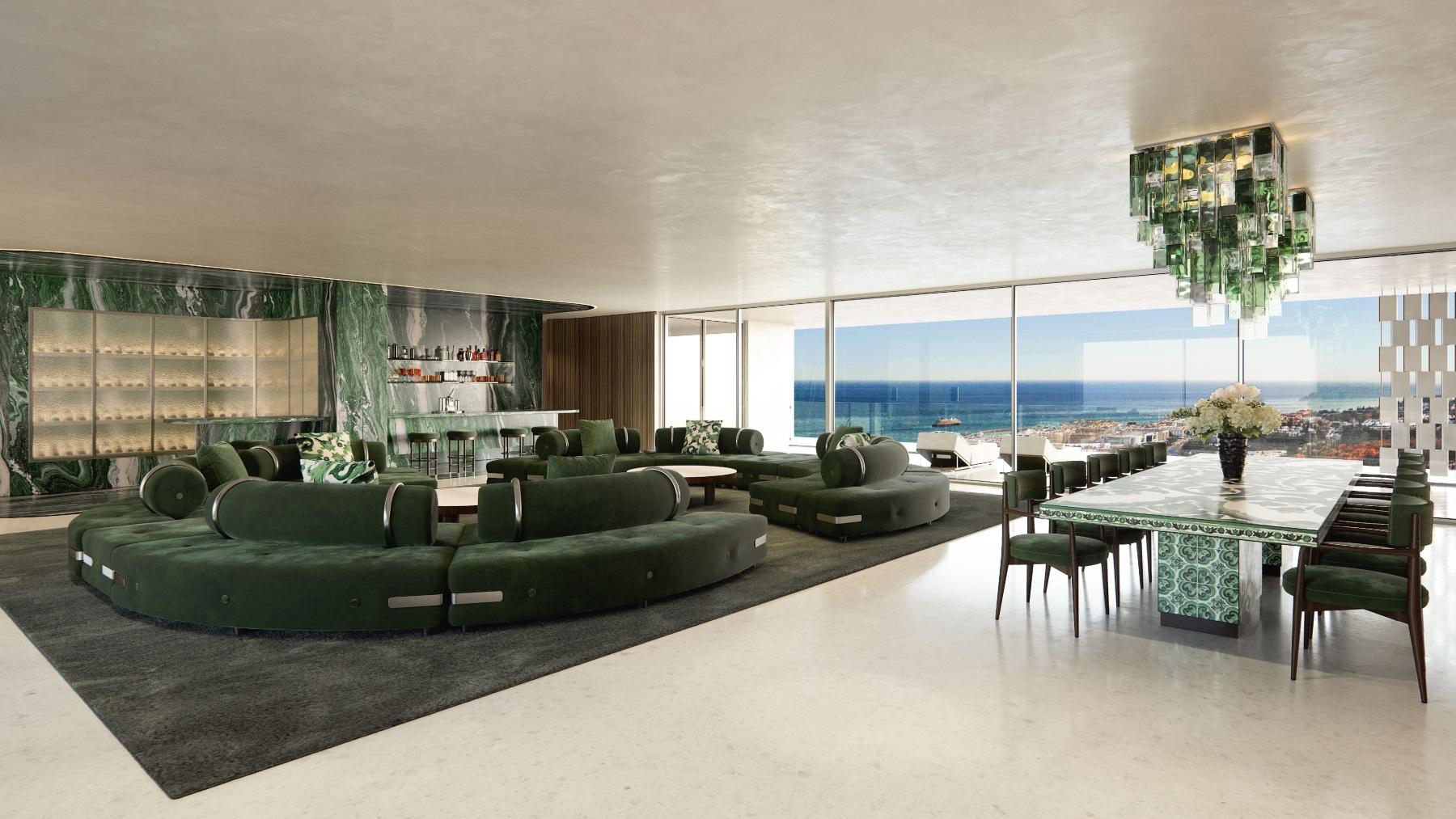
Fashion & Automotive Branding: How Luxury Brands Are Redefining the Value of Real Estate on the Costa del Sol
From Dolce & Gabbana-designed residences in Marbella to Lamborghini-inspired villas in Benahavís, the intersection of fashion, automotive design and luxury property is creating a new category of high-value real estate in southern Spain.
10 NOV 2026
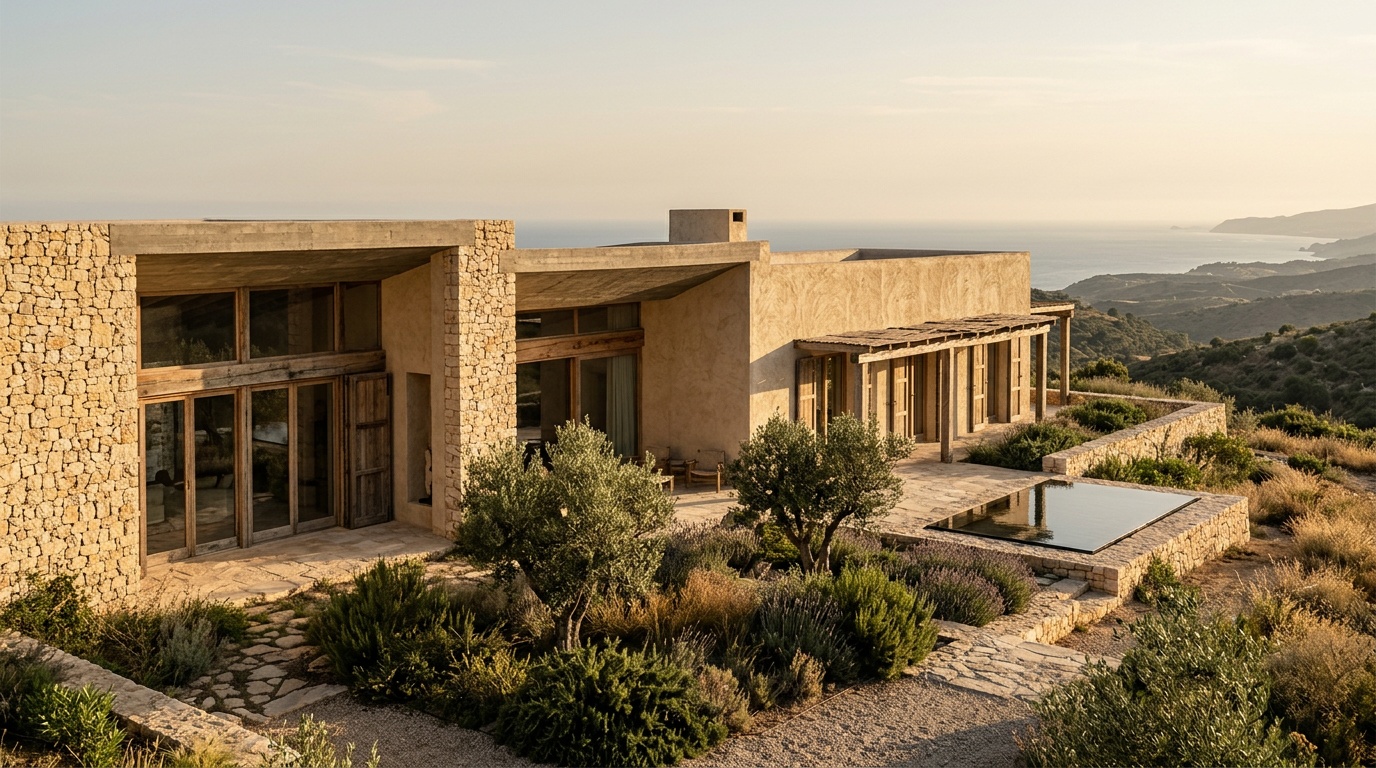
The Death of the White Box: Why Contemporary Mediterranean Luxury Abandoned Flat Render for Dry-Stacked Limestone and Thermal Mass
Why prime Costa del Sol architecture is replacing the glass white box with dry-stacked limestone, thermal mass, and passive climatic design.
21 OCT 2026
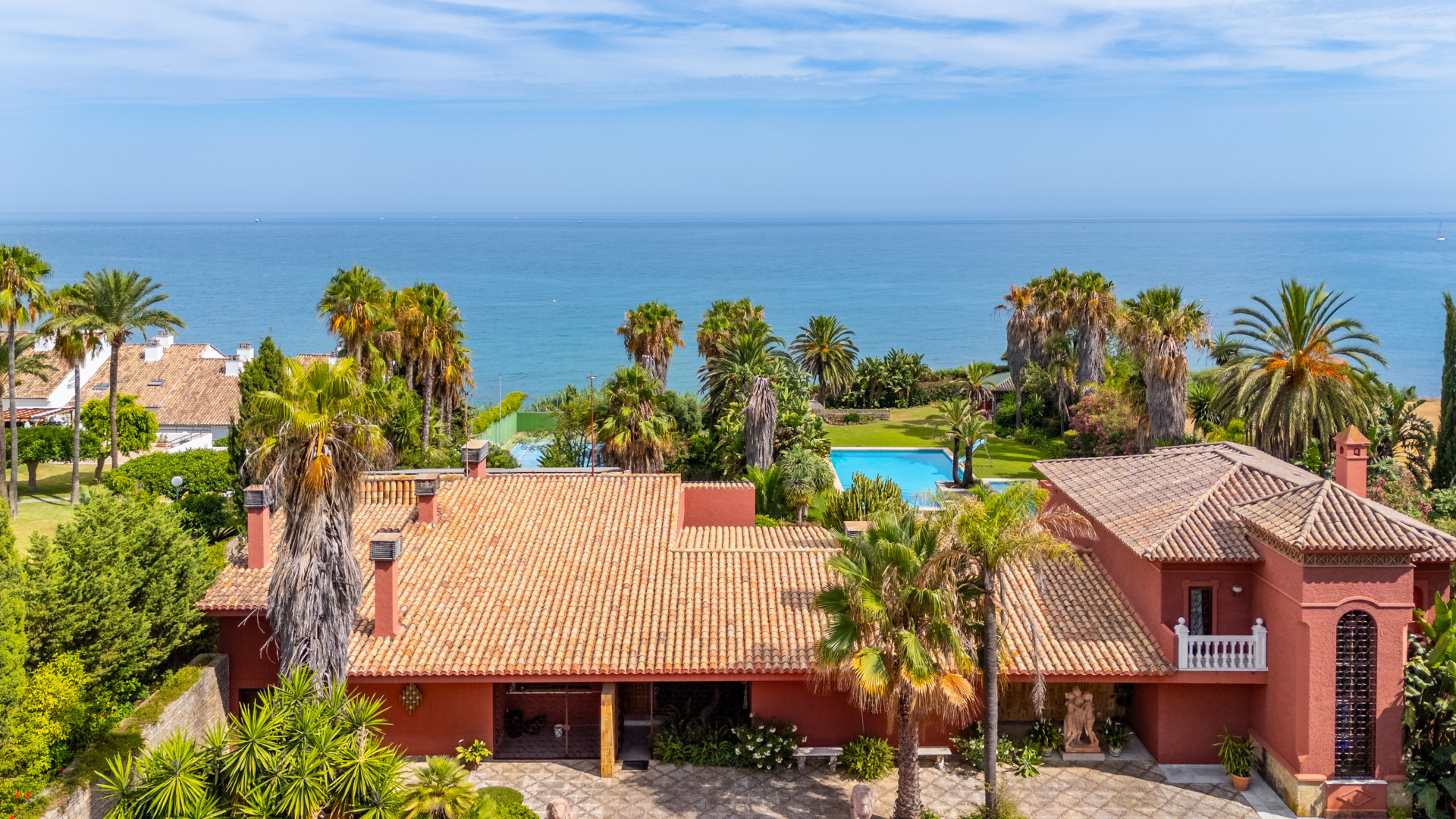
Frontline Privacy on a Grand Scale: Reviewing the €15 Million Villa Estate in Estepona West
Sited across an uncommonly large 7,962 m² frontline beach parcel in Estepona West, a classic nine-bedroom, 1,098 m² Mediterranean villa enters the market at €15 million via EQUA Estates. Defined by mature tropical gardens, a private tennis court, and immediate shoreline frontage, the listing highlights a vanishing class of coastal land: an expansive, private sea-facing perimeter offering immediate occupation alongside the flexibility for a full contemporary rebuild.
19 OCT 2026
Live from the coast
Related wire dispatches
Malaga Home Sales Fall for a Third Straight Quarter as Foreign Buyers Take Nearly 39%
Home sales in Málaga province fell 3.5% in the 12 months to September, the third consecutive quarterly decline in Colegio de Registradores data. Foreign buyers accounted for 38.83% of purchases, up from 34.3% in the first quarter, making Málaga Spain's second most international market after Alicante.
Malaga Moves San Julian Business Park Closer to Works, 15 Years After Its First Plan
Málaga's Junta de Gobierno Local has admitted for processing the urbanisation project for one of two phases of the San Julián business park in Churriana, the last major step before works. The 227,565 sq m site beside Plaza Mayor allows 62,000 sq m of buildings for business, commercial and industrial use.
Malaga Metro Narrows Expansion to 12 Route Options as Hospital Civil Works Advance
The Junta de Andalucía has narrowed options for extending Málaga's metro to 12 routes across three corridors, towards the Andalucía TechPark, Ciudad Jardín and El Palo-Rincón de la Victoria, with a choice due in the first half of 2027. Work on the €244 million Line 2 extension is now under way on all three sections.