Fashion & Automotive Branding: How Luxury Brands Are Redefining the Value of Real Estate on the Costa del Sol
From Dolce & Gabbana-designed residences in Marbella to Lamborghini-inspired villas in Benahavís, the intersection of fashion, automotive design and luxury property is creating a new category of high-value real estate in southern Spain.
By Wellington Almeida · Updated 10 NOV 2026
Luxury Branded Residence
The luxury property market on the Costa del Sol has entered a new phase. Location, architecture, sea views and access to exclusive amenities remain fundamental to property values, but a new factor is increasingly influencing the way premium developments are conceived, marketed and priced: the power of international luxury brands.
Fashion houses, automotive manufacturers and established lifestyle names are extending their identities beyond traditional products and into residential real estate. Their involvement is changing how developers approach architecture, interior design, amenities and the overall experience of owning a property.
Developments associated with names such as Dolce & Gabbana, Karl Lagerfeld and Elie Saab are attracting international attention, while automotive-inspired residential projects, including the Lamborghini-branded villas planned for Benahavís, demonstrate how far this trend has progressed.
For the Costa del Sol, this represents more than an architectural fashion. It reflects a shift in the expectations of international property buyers, particularly those seeking distinctive residences that combine exclusivity, design, privacy and an internationally recognised identity.
Branded residences are no longer simply properties carrying a prestigious name. They are increasingly positioned as lifestyle products, where the brand itself becomes part of the property's commercial proposition.
Understanding this development is important for investors, property owners and anyone following the evolution of the luxury real estate market in Marbella, Benahavís and the wider Costa del Sol.
1. The rise of branded residences in the international property market
Branded residences are properties developed in collaboration with internationally recognised brands. Depending on the agreement, the brand may contribute to the architectural concept, interior design, furnishings, amenities, resident services or the overall identity of the development.
The concept is not entirely new. Hotel groups such as Four Seasons, Ritz-Carlton and St. Regis have spent decades establishing residential developments connected to their hospitality operations. What has changed is the arrival of fashion houses, interior design labels and automotive manufacturers.
The appeal is straightforward: a luxury brand already has an established relationship with a particular audience. Its reputation has been built through years, sometimes decades, of marketing, product development and customer experience. When that identity enters the property market, developers gain access to a recognisable international profile that would otherwise take considerable time and investment to establish.
For buyers, the proposition is different from purchasing an ordinary luxury apartment or villa. They are acquiring a property associated with a particular design philosophy and, potentially, a more extensive package of services.
According to Knight Frank's The Residence Report 2025/26, the global number of branded residential schemes has grown from 169 in 2011 to 611, with forecasts suggesting that the total could exceed 1,000 by 2030.
This growth is not restricted to traditional luxury destinations. It is spreading into markets where international buyers are increasingly interested in combining residential ownership with hospitality, convenience and a recognisable lifestyle.
Spain is particularly well positioned to benefit.
The country offers a combination that is difficult to reproduce elsewhere in Europe: favourable weather, an established tourism industry, international transport connections, sophisticated hospitality infrastructure and a residential market with a strong appeal to overseas buyers.
Within Spain, Málaga province and the Costa del Sol have emerged as important centres of this development.
According to a specialist report published by Branded Residences Monitor in May 2026, the Costa del Sol had 23 branded residential developments comprising 1,559 homes, with an estimated combined market value of approximately €2.467 billion. The average residence measured around 247 square metres and had an estimated value of €2.9 million.
These figures demonstrate the scale of the segment. What was once a relatively unusual marketing concept has become a substantial part of the region's high-end residential pipeline.
It is also important to understand that not all branded residences operate in the same way. Some are primarily residential developments with a designer identity, while others are connected to hospitality operations and offer services such as concierge assistance, housekeeping, security and property management.
The distinction matters because the brand's contribution to the property can be very different depending on the agreement.
A branded interior is not necessarily equivalent to a managed five-star residential experience. Buyers need to understand precisely what is included.
2. Dolce & Gabbana: Italian fashion identity enters Marbella

One of the most significant examples of fashion-led residential development on the Costa del Sol is Design Hills Marbella, a collaboration between Dolce & Gabbana and Marbella-based developer Sierra Blanca Estates.
Announced in September 2023, the project represents Dolce & Gabbana's first residential development in Europe.
Located on Marbella's Golden Mile, the development was conceived as a large-scale residential and lifestyle destination rather than a conventional apartment complex.
The original project announcement outlined 92 large-format residences across a plot of approximately 90,000 square metres. Homes were presented with areas ranging from approximately 280 to 900 square metres, with up to five bedrooms and interiors furnished with creations from Dolce & Gabbana Casa.
The design direction draws on the Italian fashion house's distinctive visual language. Its characteristic relationship with colour, pattern, decorative detail and Mediterranean influences provides a recognisable foundation for the interiors and wider residential identity.
This is an interesting commercial decision.
Dolce & Gabbana has spent decades developing an identity associated with Italian craftsmanship, expressive design and a particular interpretation of Mediterranean luxury. Bringing that identity into residential architecture allows the brand to move from products that customers purchase occasionally into an environment they inhabit every day.
For property buyers, this creates a different relationship with the brand.
Instead of owning a handbag, an item of clothing or a piece of furniture, the buyer becomes associated with an entire residential environment. The architecture, interior finishes, communal areas and services contribute to the experience.
Design Hills also illustrates how modern luxury developments are expanding beyond the private residence.
The original plans include extensive leisure and wellness facilities, outdoor infinity pools, gyms, sports facilities, yoga and meditation areas, a spa, beauty salon, private club, cinema room and dedicated children's facilities. The plans also include a commercial boulevard with restaurants, cafés and luxury retail.
This is significant because international buyers are increasingly evaluating properties according to what happens outside their front door.
A large apartment with beautiful interiors is attractive. However, a development that also provides a private club, wellness facilities, concierge assistance and carefully managed communal spaces offers a more complete proposition.
There is a practical consideration behind this model as well.
Many international owners do not live permanently on the Costa del Sol. They may spend several months in Spain, travel frequently or divide their time between multiple residences. A well-managed development can make ownership easier by reducing the number of everyday responsibilities associated with maintaining a second home.
The commercial appeal of Design Hills is therefore based on several elements working together: the Golden Mile location, the scale of the development, the design identity, the amenities and the international recognition of Dolce & Gabbana.
However, the brand alone should not be considered proof of future investment performance. Construction quality, delivery, maintenance costs, management standards and the eventual resale market remain equally important.
The project demonstrates how a fashion house can become part of the real estate product itself, rather than simply providing decorative inspiration.
3. Karl Lagerfeld Villas: architecture as a statement of identity

Another important project is Karl Lagerfeld Villas Marbella.
The development is particularly interesting because it takes a more limited and architectural approach to branded residential property.
Rather than creating a large residential complex, the project consists of five private villas in Marbella, developed by Sierra Blanca Estates in collaboration with the Karl Lagerfeld brand and The One Atelier.
It was presented as the first architectural residential project carrying the Karl Lagerfeld name. The collaboration reflects the late designer's long-standing interest in architecture, interiors, visual composition and the relationship between fashion and the built environment.
Karl Lagerfeld's creative identity was distinctive. Clean lines, monochromatic contrasts, precision, controlled proportions and a strong appreciation for architectural composition were recurring elements throughout his work.
These ideas translate naturally into residential architecture.
A villa designed around this philosophy does not necessarily need elaborate decoration or an abundance of luxury materials to establish its identity. The architecture itself becomes the defining feature.
This is a particularly relevant approach in Marbella, where the luxury villa market has traditionally placed significant emphasis on large plots, privacy, contemporary architecture and panoramic views.
The five-villa format also creates a different type of exclusivity.
A development containing hundreds of residences can provide extensive shared facilities and a more substantial community environment. A collection of five independent villas offers something else: limited availability, individual outdoor spaces and a more private residential experience.
For buyers accustomed to purchasing properties in prime international locations, this distinction can be meaningful.
The appeal is not simply the name attached to the entrance. It is the combination of architectural authorship, scarcity, location and the identity of the finished property.
There is also a broader point about the future of branded real estate.
Fashion brands do not all need to create the same type of residential product. Some are better suited to large-scale developments with extensive interior design programmes. Others can establish a more compelling proposition through a small collection of architecturally distinctive homes.
Karl Lagerfeld Villas illustrates the latter approach.
4. Elie Saab: couture aesthetics and the residential experience

The presence of Elie Saab in the branded residence market adds another dimension to the relationship between fashion and architecture.
Known internationally for haute couture, eveningwear and intricate craftsmanship, Elie Saab represents a different aesthetic from the more graphic and expressive approach associated with Dolce & Gabbana or the architectural minimalism of Karl Lagerfeld.
Its residential projects draw on an identity built around elegance, material quality, refined detailing and carefully composed interiors.
Elie Saab Villas in Marbella has also been included in the Costa del Sol's branded residential landscape, with the project associated with the Sierra Blanca and Camoján area. Its presence demonstrates that the appeal of fashion-led residential developments extends beyond the Golden Mile itself.
This is important for the geography of the luxury property market.
Marbella is not a single residential destination with one type of buyer. The Golden Mile, Sierra Blanca, Cascada de Camoján, Nueva Andalucía and the surrounding hills each offer different residential environments.
A brand associated with haute couture can be particularly well suited to a private villa environment where architecture, landscaping and interior finishes are central to the property's appeal.
The broader lesson is that luxury branding works best when the product reflects the character of the brand.
An interior design concept based on haute couture principles should feel considered and coherent. It should not simply consist of placing a famous logo on furniture or decorative objects.
The same applies to any fashion-led residence.
Buyers paying a premium expect the brand's creative identity to be translated into tangible details: material selection, proportions, lighting, furniture, textures, architectural decisions and the overall atmosphere of the property.
There is an important difference between a branded development and a property that merely uses designer furniture.
The former should offer a consistent design proposition across the residential experience.
For Marbella, this creates opportunities to attract buyers who may already know the designer from the international fashion market but have not previously considered purchasing property in southern Spain.
5. Lamborghini: when automotive engineering meets residential architecture

If fashion houses bring couture, colour and interior design into residential architecture, automotive brands introduce a different set of associations.
Performance, engineering, precision, materials, technology and mechanical design become part of the architectural vocabulary.
Few manufacturers have an identity as recognisable as Automobili Lamborghini.
The brand's involvement in the Costa del Sol property market is represented by Tierra Viva, a residential project developed by Dar Global in Benahavís.
Announced in 2023, Tierra Viva comprises a planned collection of 53 luxury villas whose design is inspired by Lamborghini's automotive philosophy.
The development was conceived around the hills of Benahavís, with homes positioned at different elevations to take advantage of Mediterranean views.
According to the developer, the villas range from four to six bedrooms and incorporate design references associated with the Lamborghini brand, including bold geometric forms, sculptural architecture and carefully considered materials. The project also features private swimming pools, terraces, landscaped gardens and, in certain property configurations, additional facilities such as car lifts.
The automotive connection is more than a marketing reference.
Lamborghini's design language is built around recognisable proportions, angular surfaces and a strong relationship between form and function. Translating those principles into residential architecture creates an opportunity to develop homes that look and feel different from conventional contemporary villas.
There is a natural connection between the two industries.
A luxury supercar is not purchased solely to provide transportation. Buyers are also purchasing engineering, craftsmanship, design, performance and the emotional appeal associated with the manufacturer.
A branded villa operates on a similar principle.
Its value proposition extends beyond the number of bedrooms or the size of the swimming pool. The architecture, materials, technology and identity of the development become part of the ownership experience.
For Lamborghini enthusiasts, this connection can be particularly appealing.
The residential environment becomes an extension of an existing interest in automotive design. A private garage, sophisticated access systems, sculptural architecture and carefully integrated technology are all elements that can reinforce that relationship.
The location also contributes significantly to the project's identity.
Benahavís has developed a reputation as one of the most attractive residential municipalities in the Marbella hinterland. Its hillside developments offer privacy, larger plots, golf access and panoramic views, while remaining within convenient driving distance of Marbella and Puerto Banús.
For buyers who want proximity to the Costa del Sol's social and commercial centres without living directly within them, Benahavís offers an appealing alternative.
Tierra Viva brings together three important elements: the international recognition of Lamborghini, the residential appeal of Benahavís and the architectural possibilities of a limited collection of luxury villas.
According to Dar Global's published project information, construction is under development, with completion scheduled for June 2028. Buyers should confirm the contractual delivery date and construction progress for their specific unit rather than relying solely on marketing material.
The project is an example of how automotive brands can influence the identity of residential developments without necessarily operating as property developers themselves.
The collaboration allows the property developer to draw on the manufacturer's design philosophy while retaining responsibility for the real estate development.
This distinction is important when assessing what the brand actually contributes.
A Lamborghini-inspired residence is not a supercar manufactured by Lamborghini. The buyer should examine the precise design, licensing and contractual relationship behind the development.
Nevertheless, the association creates a powerful identity that can distinguish the project from other luxury villas in the same geographical market.
6. Why branded residences can command higher prices per square metre
The most commercially interesting aspect of branded residences is the premium buyers may be willing to pay compared with similar unbranded properties.
Luxury property has always been influenced by intangible factors. A sea view, a prestigious address, architectural authorship or a property's history can all influence its market value beyond the physical cost of construction.
Branding adds another layer.
Research from Savills has estimated the average global premium for branded residences at approximately 30% compared with comparable non-branded properties, although the actual difference varies considerably depending on location, brand and development quality.
CBRE's 2024 Luxury Real Estate report also identifies premiums typically ranging from 25% to more than 30% per square metre for branded residences, with higher premiums possible in particularly established luxury markets. These are indicative market estimates, not guaranteed returns or universal pricing rules.
A recognised luxury brand can introduce a development to potential buyers who might never have encountered the project through conventional property advertising.
Consider an international buyer who already owns a Lamborghini or regularly purchases products from Dolce & Gabbana.
The brand is familiar. Its identity is understood. The buyer does not need an extensive explanation of what the name represents.
When that brand enters the residential market, it brings an existing audience with it.
This can be particularly valuable in Marbella, where property demand comes from multiple international markets.
A customer purchasing a premium product expects a certain standard of materials, design and presentation. The same expectations are transferred to branded residences.
Buyers may feel more confident purchasing a development when an established name is associated with its design and overall concept.
However, perceived quality must be supported by actual construction standards. A prestigious brand cannot compensate for poor building execution, inadequate sound insulation, maintenance problems or unreliable property management.
Scarcity is an important element of luxury pricing.
A residential development containing five individually designed villas has a different supply profile from a complex containing several hundred apartments.
When a branded project is genuinely limited in number, the buyer is purchasing access to a relatively restricted residential product.
This can create a stronger sense of distinction and, under the right market conditions, support higher asking prices.
The luxury property market is competitive.
Marbella already has an extensive supply of contemporary villas with swimming pools, large terraces, panoramic windows, landscaped gardens and high-quality interiors.
These features are no longer particularly unusual at the upper end of the market.
A distinctive architectural concept provides another way to separate one development from the next.
The strongest branded projects translate the identity of the brand into a coherent residential design rather than relying on decorative logos.
For international property owners, convenience can be as important as the property itself.
Concierge services, security, maintenance, housekeeping and professional management can reduce the responsibilities associated with maintaining a second home.
In developments with hospitality partnerships, owners may also benefit from access to hotel-style services.
This is particularly relevant to buyers who spend only part of the year in Spain.
The property becomes easier to maintain, organise and enjoy when the management structure is reliable.
Understanding the potential price premium
The following illustration shows how a hypothetical branded residence could compare with an equivalent unbranded property.
Illustrative price comparison
Hypothetical 250 m² residence. This is a mathematical illustration, not a valuation of a specific Costa del Sol development.
Unbranded price per m²
€10,000
Branded residence premium
30%
Unbranded property
€2,500,000
Branded property
€3,250,000
Illustrative price difference
€750,000
Equivalent to €3,000 additional per square metre.
The calculation illustrates why developers are interested in branded partnerships. Even a relatively modest percentage premium can translate into a substantial difference in the total value of a large luxury residence.
However, the premium should never be treated as automatic appreciation.
A property purchased at a 30% premium does not necessarily appreciate 30% faster than an equivalent unbranded property. The premium is a pricing characteristic that must be justified by the quality, desirability and marketability of the finished asset.
7. Marbella, Benahavís and Estepona: the geography of branded luxury
The growth of branded residences is also changing how international buyers perceive different locations along the Costa del Sol.
Marbella remains the most recognisable address in the region's luxury residential market, but branded developments are helping to expand attention towards neighbouring municipalities.
Marbella: international recognition and established prestige
Marbella has several advantages that make it particularly attractive to luxury brands.
It has an established international reputation, a mature hospitality sector, luxury retail, marinas, golf courses, private clubs and a substantial network of property professionals serving overseas buyers.
The Golden Mile is especially important.
Its location between Marbella town and Puerto Banús gives it a combination of accessibility, prestige and established residential demand.
Projects such as Design Hills, Karl Lagerfeld Villas and EPIC Marbella by Fendi Casa reinforce the area's position as a destination for fashion-led residential developments.
The arrival of these brands also creates a new competitive environment.
Developers are no longer competing exclusively on the number of bedrooms, architectural style or proximity to the sea. They are increasingly competing on identity, experience and the wider proposition associated with their developments.
Benahavís: privacy, space and architectural ambition

The municipality is known for its hillside residential communities, golf developments, larger plots and quieter surroundings.
It attracts buyers who want to remain close to Marbella while enjoying more privacy and a residential environment that is less directly connected to the busiest coastal areas.
Tierra Viva by Lamborghini fits naturally into this setting.
The architectural possibilities of Benahavís are particularly interesting for automotive-inspired developments. The sloping terrain allows architects to create multi-level residences, elevated terraces, dramatic entrances and large glazing systems designed to frame distant views.
The result can be quite different from the traditional coastal apartment development.
The villa format also allows more freedom in the integration of private garages, landscaped grounds, swimming pools and bespoke architectural features.
For international buyers, the attraction is a combination of privacy and accessibility.
Estepona: the expanding western luxury market

Estepona is another important part of this evolution.
The municipality has developed considerably over recent years, attracting investment in residential construction, hospitality, infrastructure and lifestyle amenities.
Its appeal extends beyond the traditional perception of a quieter alternative to Marbella.
The New Golden Mile, in particular, has become an important location for contemporary luxury residential developments.
The western expansion of the luxury property market also means that buyers have more opportunities to consider different price points, architectural styles and residential environments.
Developments such as Marea by Missoni demonstrate that international design brands are not exclusively concentrating on Marbella.
This geographical expansion is important for the region as a whole.
Instead of viewing Marbella as the only luxury property destination, international buyers can increasingly consider a wider residential corridor stretching through Estepona, Benahavís, Casares and towards Sotogrande.
The Costa del Sol's luxury market is becoming more geographically diverse, with individual developments targeting different buyer profiles.
8. The buyer profile: who is purchasing branded residences?
Understanding the buyer is essential to understanding why this market is growing.
Branded residences are generally positioned towards high-net-worth and ultra-high-net-worth individuals, but their appeal is not limited to people purchasing their first luxury property.
A significant proportion of potential buyers are international homeowners who already have residential assets in other countries.
For these individuals, buying a property in Marbella may be part of a broader lifestyle decision.
They might own a primary residence in London, Paris, Geneva, Dubai or another international centre, while using the Costa del Sol as a seasonal home.
Their priorities can differ from those of someone purchasing a permanent family residence.
Privacy, security, accessibility, professional management and the ability to leave the property unattended for extended periods may carry considerable weight.
There are several buyer profiles worth considering.
The international collector
This buyer has an existing interest in luxury fashion, automotive design, watches, art or other premium products.
Brand recognition and exclusivity can be important purchasing factors.
A residence associated with a familiar luxury name offers an opportunity to extend an existing lifestyle into property ownership.
The second-home owner
This buyer may spend several months each year in Spain but does not want the responsibility of managing a large property independently.
A branded development with professional services can make ownership more convenient.
The lifestyle investor
This buyer considers the property both a personal asset and a potential source of income.
They may be interested in rental management, seasonal demand and the possibility of reselling the property in the future.
For this group, the financial structure of the development matters considerably.
Rental restrictions, management agreements, operating expenses and the realistic availability of rental income must all be examined.
The design-conscious homeowner
This buyer may be less interested in the commercial value of the brand and more interested in the architectural and interior design concept.
They want a home with a recognisable visual identity, carefully selected materials and a level of design consistency that is difficult to reproduce independently.
These buyer groups can overlap, but they demonstrate why branded residential developments are attracting attention from different parts of the international luxury market.
9. The investment question: does a luxury brand guarantee better returns?
It is important to separate the marketing appeal of branded residences from their investment performance.
The brand can contribute to demand, international visibility and perceived exclusivity. However, the underlying property remains a real estate asset subject to the same fundamental market forces as any other residential development.
Location, supply, demand, construction quality, financing conditions, ownership costs and resale liquidity all remain relevant.
In fact, the additional premium creates an important question for investors:
Will the next buyer be willing to pay the same premium?
This is where careful due diligence becomes essential.
The importance of the brand agreement
Not every branded residence has the same relationship with its associated brand.
In some developments, the brand participates directly in the design process and maintains a significant level of involvement.
In others, the relationship may be more limited, involving licensing, interior design direction or the use of a recognised name in the marketing of the project.
Buyers should establish exactly what the brand is responsible for.
They should also understand how long the agreement lasts, whether the branding continues after completion and what happens if the relationship between the developer and brand changes.
Construction and delivery risk
Off-plan purchases are common in the luxury development market.
They can offer access to new properties and, in some cases, attractive launch pricing. However, they also introduce construction and delivery risks.
A famous name does not eliminate the possibility of delays, design changes or disputes.
Buyers should independently assess the developer's track record, planning permissions, building licences, construction programme and contractual protections.
For larger projects, the ability to deliver extensive amenities and communal facilities should also be considered.
Running costs
Branded residences can involve higher maintenance and management expenses than conventional properties.
Concierge services, private facilities, landscaping, security, wellness areas and extensive communal spaces all require ongoing funding.
These costs can affect the long-term attractiveness of a property, particularly for owners who use it only occasionally.
Before purchasing, buyers should request a detailed breakdown of community fees, reserve funds, service charges and any additional management costs.
Resale demand
The secondary market is perhaps the most important test of a branded residence's long-term value.
Initial buyers may be attracted by launch events, marketing campaigns and the novelty of a development.
A future buyer will evaluate the property according to its actual condition, location, design, running costs and the continuing reputation of the brand.
A strong development should remain desirable even after the initial excitement surrounding its launch has passed.
This is why the best branded residences are those where the architecture and residential experience can stand independently of the marketing campaign.
A prestigious name may attract the first buyer. The quality of the property will influence whether the next buyer is willing to pay the premium.
10. How branded developments are changing luxury property marketing
The emergence of branded residences is also changing the way luxury properties are marketed.
Traditional property marketing has generally concentrated on location, floor area, number of bedrooms, architectural features and amenities.
These remain important, but branded developments introduce a different starting point.
Instead of presenting a property exclusively through its physical characteristics, developers can build a marketing strategy around an internationally recognised identity.
This has several commercial advantages.
A stronger international audience
A development associated with an internationally recognised fashion or automotive brand can attract attention from markets that might not otherwise be actively searching for property in Marbella.
Someone interested in Lamborghini may discover Benahavís through Tierra Viva. A fashion enthusiast may become interested in Marbella after encountering Design Hills.
The brand creates an additional route into the property market.
More distinctive visual marketing
Branded developments offer opportunities for highly recognisable photography, architectural visualisation, video production and editorial content.
Rather than relying exclusively on conventional property photography, developers can create campaigns that communicate a particular lifestyle and design philosophy.
This is especially important in an increasingly competitive digital environment, where luxury developments need to distinguish themselves across international property portals, social media, search engines and private sales networks.
Greater editorial and media interest
International brands can make residential developments more attractive to publications covering fashion, architecture, automotive design, travel and luxury lifestyles.
This expands the potential media audience beyond traditional property publications.
A project associated with an established fashion house may receive attention from design publications. An automotive collaboration may attract coverage from motoring and lifestyle media.
For developers, this creates opportunities to generate visibility through multiple editorial channels.
A more developed sales experience
The presentation of branded residences can also be more sophisticated.
Private previews, architectural presentations, curated events and exclusive showrooms can help potential buyers understand the development before construction is completed.
In this market, the sales experience becomes part of the product.
Developers are not simply selling square metres. They are presenting an architectural and lifestyle concept to an audience that expects a high level of professionalism and attention to detail.
11. What comes next for the Costa del Sol?
The growth of branded residences raises an interesting question: which industries will enter the residential property market next?
Fashion and automotive brands have demonstrated that their identities can be successfully translated into architecture and interior design.
Hospitality companies have already established a strong presence through hotel-connected residential developments.
Other possibilities include luxury furniture manufacturers, watchmakers, wellness brands and companies associated with premium lifestyle products.
However, not every brand will be suitable for residential property.
The most successful partnerships will be those where the brand has something meaningful to contribute to the development.
A recognised name without a clear design philosophy or a genuine commitment to the residential experience may struggle to justify a premium over comparable properties.
There is also a risk of market saturation.
If too many developments begin using prestigious names without delivering a genuinely differentiated product, the exclusivity associated with branded residences could gradually diminish.
Marbella and its neighbouring municipalities will need to maintain a balance between international visibility and the quality of the residential environment.
The region's long-term appeal does not depend exclusively on luxury brands.
Its climate, coastline, golf courses, gastronomy, international community, accessibility and Mediterranean lifestyle remain fundamental reasons why people choose to purchase property here.
Branding can reinforce these advantages, but it cannot replace them.
For developers, this means selecting partnerships carefully and ensuring that the finished product delivers on the expectations created during the sales process.
For investors, it means evaluating branded properties according to their actual fundamentals rather than assuming that international recognition guarantees financial performance.
For property owners, it creates a more diverse market in which architecture, design identity and lifestyle services are becoming increasingly important purchasing considerations.
12. A new definition of luxury property on the Costa del Sol
The arrival of Dolce & Gabbana, Karl Lagerfeld, Elie Saab and Lamborghini in the residential property sector reflects a broader change in how luxury is understood.
For many years, the most desirable properties in Marbella were primarily distinguished by their location, size, privacy and architectural quality.
These characteristics remain essential, but the expectations of international buyers have evolved.
Increasingly, luxury is also associated with identity, convenience, design consistency and the experience of ownership.
A branded residence can bring these elements together in a way that conventional developments may find difficult to reproduce.
Design Hills Marbella demonstrates how a fashion house can extend its creative identity into a large-scale residential environment. Karl Lagerfeld Villas illustrates the appeal of a limited architectural collection. Elie Saab introduces the aesthetics of haute couture into the residential landscape, while Tierra Viva demonstrates how automotive design can influence the architecture of luxury villas in Benahavís.
Each project approaches the concept differently, but they share an important characteristic: the brand becomes part of the property's identity.
The financial implications are equally interesting.
International research suggests that branded residences can command meaningful premiums over comparable unbranded properties. The Costa del Sol's expanding pipeline demonstrates that developers and investors are increasingly confident in this business model.
According to the May 2026 Branded Residences Monitor figures, the region already has an estimated €2.467 billion in branded residential developments, representing 23 projects and 1,559 homes.
Sur in English
That is a substantial market in its own right.
Yet the real significance of this development goes beyond the headline figures.
Marbella, Benahavís and Estepona are increasingly competing in an international luxury residential market where the identity of a development can be almost as important as its geographical location.
For the Costa del Sol, this creates an opportunity to strengthen its position among Europe's most desirable destinations for high-end residential property.
The next stage will depend on execution.
The developments that deliver genuine architectural distinction, reliable construction, excellent management and a coherent residential experience are likely to have the strongest foundations for long-term desirability.
A famous name may open the door, but it is the property itself that ultimately determines whether the premium is justified.
Sources and further reading
The article draws on industry research, developer information and reporting on the Costa del Sol's branded residential market.
SUR in English – The branded residences market on the Costa del Sol exceeds €2.5 billion (May 2026).
Dolce & Gabbana – Design Hills Marbella official project announcement.
SUR in English – Branded residences and the Costa del Sol luxury market.
Editorial note: Development specifications, completion dates and market values are subject to change. Figures concerning branded residence premiums are indicative research estimates, not guaranteed investment returns. Individual projects should be assessed against their latest developer documentation and contractual information.
From the journal
Related articles
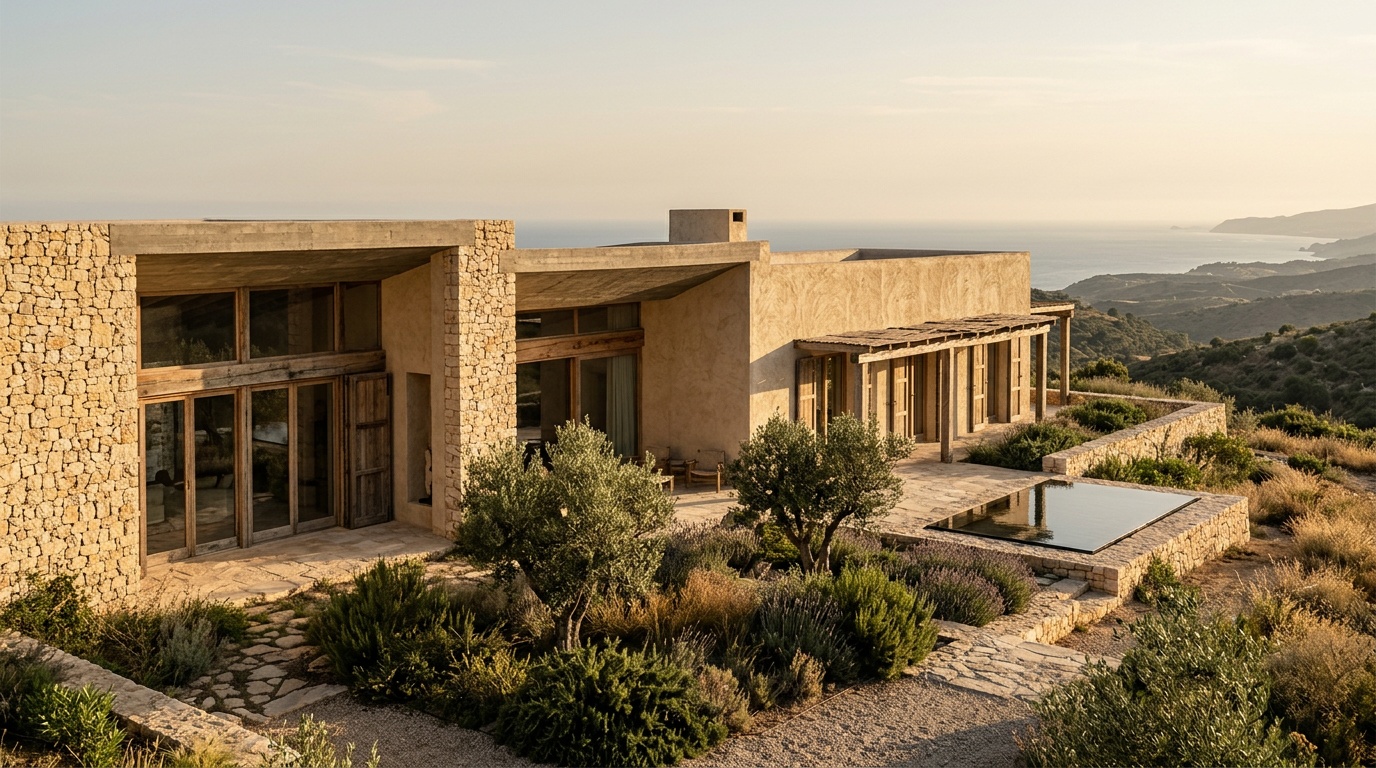
The Death of the White Box: Why Contemporary Mediterranean Luxury Abandoned Flat Render for Dry-Stacked Limestone and Thermal Mass
Why prime Costa del Sol architecture is replacing the glass white box with dry-stacked limestone, thermal mass, and passive climatic design.
21 OCT 2026
Armani, Versace and the Price of a Name on Marbella's Golden Mile
Armani's first Spanish residences and eight Versace Home villas have put fashion labels at the centre of Marbella property talk. The record is narrower than the chatter: Versace has no penthouses here, the Armani ones sit well below the coast's highs, and the top prices per square metre still go to unbranded beachfront flats.
23 NOV 2026
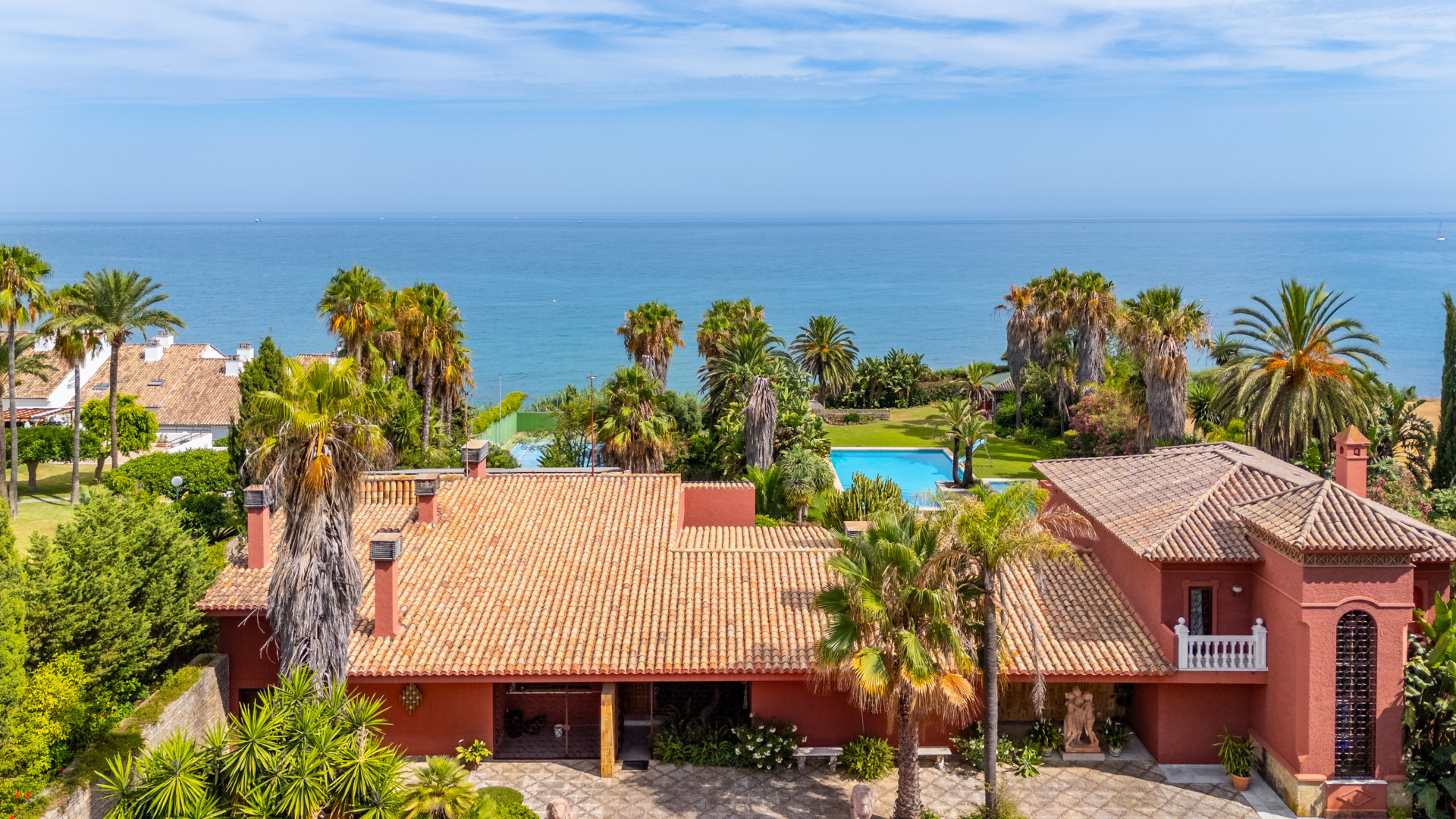
Frontline Privacy on a Grand Scale: Reviewing the €15 Million Villa Estate in Estepona West
Sited across an uncommonly large 7,962 m² frontline beach parcel in Estepona West, a classic nine-bedroom, 1,098 m² Mediterranean villa enters the market at €15 million via EQUA Estates. Defined by mature tropical gardens, a private tennis court, and immediate shoreline frontage, the listing highlights a vanishing class of coastal land: an expansive, private sea-facing perimeter offering immediate occupation alongside the flexibility for a full contemporary rebuild.
19 OCT 2026
Live from the coast
Related wire dispatches
Marbella Remains Málaga's Dearest Market As Coastal Asking Prices Diverge
Idealista's October figures, reported by El Español on 5 November, put Marbella at €5,974 per square metre and Estepona at €5,070, while Cómpeta recorded the province's steepest annual rise, of 31.7 per cent.
Hilton Puts Marbella's First Waldorf Astoria in a Residences Pipeline Set to Nearly Triple by 2030
Hilton plans to nearly triple its Waldorf Astoria Residences portfolio to 34 properties and 3,498 units by 2030, with Marbella among the new projects. Higuerón's scheme will turn Marbella Golf in Las Chapas into a resort with 120 rooms and suites and 120 branded residences, due to open in 2029.
Wyndham Grand Opens 30 Golf Residences Beside La Cala's Fairways
IDILIQ Hotels & Resorts has opened Wyndham Grand La Cala Golf Residences in Mijas: 30 two- and three-bedroom houses with hotel services, private gardens and, in most units, a pool or hot tub.