Costa del Sol Property Market Realignment: Why Estepona and Mijas Continue to Attract Buyers Despite a Changing Market
Why moderating sales volumes do not mean falling prices: an operational breakdown of market realignment, cash buyers, and prime values in Estepona and Mijas.
By Wellington Almeida · Updated 29 OCT 2026
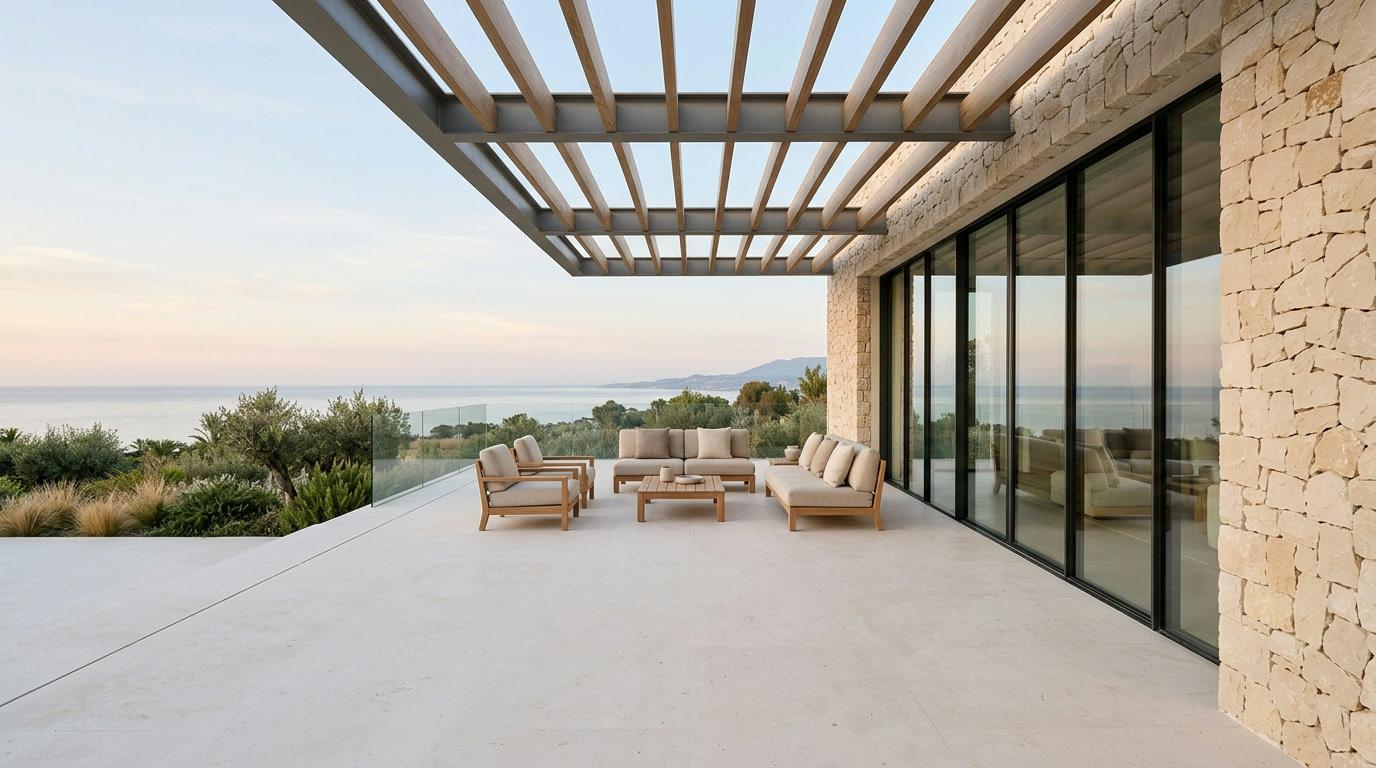
Costa del Sol Property
As the Costa del Sol property market enters the final months of 2026, the relationship between sales volumes, asking prices and buyer demand is becoming more complicated. Interest rate movements are influencing purchasing decisions, yet international cash buyers, luxury residential developments and a growing population of permanent residents continue to support property values in Estepona, Mijas and neighbouring coastal towns.
A Property Market That Is Changing, Not Standing Still
The Costa del Sol property market is entering a different phase of its development. After years in which international demand, limited supply and the appeal of Mediterranean living helped push prices higher, the market is showing signs of a more selective environment. Buyers are taking greater care over their decisions, financing costs remain an important consideration, and not every property is benefiting equally from the region's continued popularity.
Yet there is an important distinction between a market losing momentum and a market undergoing a realignment.
In Estepona and Mijas, the picture described by late-2026 market trends is one of moderated transaction volumes alongside continued upward pressure on prices per square metre. At first glance, these two developments might appear contradictory. If fewer properties are changing hands, why should prices continue to rise?
The answer lies in the composition of demand, the availability of suitable homes and the different financial circumstances of buyers operating in the same market. A household dependent on a mortgage faces a different set of constraints from an international purchaser buying with available cash. A buyer seeking an older apartment for permanent residence has different priorities from an investor purchasing a newly built branded residence. A family relocating to Spain for the long term may also evaluate a property differently from someone searching for a holiday home.
These groups do not respond to market conditions in the same way.
The result is a property market in which the number of transactions, the average asking price and the value of the most desirable homes can move in different directions. The coastal market is becoming less useful to describe through a single headline figure. Location, property condition, energy efficiency, views, accessibility, construction quality and the intended use of a home increasingly determine its position within the wider market.
For buyers, sellers, investors and property professionals, understanding this distinction is essential. The Costa del Sol is not one uniform housing market. It is a collection of interconnected local markets, each with its own supply constraints, buyer profiles and pricing dynamics.
The realignment taking place in late 2026 is therefore less about a simple choice between a boom and a slowdown. It is about identifying which parts of the market retain genuine pricing power, which properties have become harder to sell at ambitious valuations, and how the region's changing population is influencing long-term housing demand.
Estepona and Mijas offer two particularly useful examples of these developments.
Why Moderating Sales Volumes Do Not Necessarily Mean Falling Prices
One of the most important distinctions in real estate analysis is the difference between transaction activity and property values.
Sales volumes measure how many properties change ownership during a given period. Prices measure the amount buyers are willing and able to pay for those properties. Although the two indicators are connected, they do not always move together.
When borrowing becomes more expensive, mortgage-dependent buyers may delay purchases, reduce their budgets or search for smaller homes. Sellers who do not need to move immediately may choose to withdraw their properties rather than accept lower offers. Buyers and sellers can consequently become further apart in their expectations, reducing the number of completed transactions without producing an immediate decline in advertised prices.
This is a familiar mechanism in property markets, particularly in areas where owners have substantial equity and are not under pressure to sell.
Consider a homeowner who purchased an apartment several years ago and has benefited from significant appreciation. If the owner has no urgent financial reason to sell, a weaker month of enquiries may not be enough to persuade them to reduce the asking price. They can simply wait for a more suitable buyer.
The buyer, meanwhile, may be comparing the same apartment with several alternatives, calculating mortgage payments and questioning whether the advertised price reflects the property's actual condition. Negotiations take longer, viewings may generate fewer offers, and transactions become less predictable.
In such circumstances, activity can cool before headline prices respond.
The reverse can also occur. If the properties that continue to sell are predominantly premium apartments, newly completed residences or villas in sought-after locations, the average price per square metre may increase even if the total number of transactions declines. The change could reflect genuine price appreciation, a shift in the types of properties sold, or a combination of both.
This distinction matters when interpreting the Costa del Sol market in late 2026. The reported resilience of prices in Estepona and Mijas should not automatically be read as evidence that every property is becoming more expensive at the same rate. Nor should moderated sales activity be treated as proof that the market is heading towards a broad correction.
A more reliable assessment requires several indicators to be considered together: completed transactions, achieved prices, asking prices, time on the market, available inventory, mortgage activity and the proportion of purchases made without financing.
Without that context, a headline figure can conceal more than it reveals.
For estate agents and sellers, this creates a practical challenge. Pricing a property according to last year's most expensive sale may no longer be enough to attract serious buyers. At the same time, assuming that fewer transactions require immediate discounting could lead owners to undervalue homes that remain scarce and desirable.
The market is demanding more precise pricing rather than rewarding every property simply because it is located on the coast.
Estepona: A Coastal Town Moving Beyond the Holiday-Home Market
Estepona has become one of the most closely watched property markets on the western Costa del Sol. Its appeal extends beyond the traditional holiday-home buyer, drawing people who want to establish a permanent base in southern Spain, investors seeking well-located residential property and international purchasers looking for contemporary homes close to the Mediterranean.
The numbers help explain why the town continues to attract attention.
According to figures published in September 2026 by Spain's Ministry of Housing and Urban Agenda, the average appraised value of housing in Estepona reached approximately €3,518 per square metre in the second quarter of 2026. That represented an annual increase of 12.1%. The same data showed a five-year increase of approximately 96%, illustrating how substantially the town's housing market has changed.
These are appraised values for residential properties of all ages, not a record of every completed sale or a measure of current asking prices. Individual properties can command substantially more or less depending on their location, condition and characteristics. Nevertheless, the figures establish a useful baseline: Estepona has experienced a sustained rise in residential values, and the latest available official data indicate that the upward movement continued into 2026.
The reasons go beyond its coastline.
Estepona offers an established town centre, schools, healthcare facilities, restaurants, sports facilities and everyday services that support year-round living. Its traditional streets and neighbourhoods coexist with newer residential developments, landscaped communal areas and modern apartment buildings. For buyers comparing locations along the coast, this combination provides an alternative to places where residential life is more closely associated with tourism and seasonal occupancy.
That distinction matters when evaluating demand.
Someone purchasing a property for two weeks of summer holidays may prioritise a sea view, a swimming pool and proximity to the beach. A family relocating from another European country may give greater weight to school access, transport connections, workspace, supermarket proximity and the practicalities of living in the area throughout the year.
A retired couple making Spain their permanent home may value walkability, healthcare access and a manageable apartment. A remote professional may look for reliable internet, a spare bedroom that can function as an office and outdoor space that remains useful beyond the summer season.
These buyers can all be interested in Estepona, but they are not competing for exactly the same properties.
The town's changing residential profile also helps explain the interest in newly built housing. Modern developments often provide underground parking, energy-efficient installations, lifts, terraces and shared facilities. For an international purchaser arriving from a country where these features are standard in newer residential buildings, such characteristics can make the transition to Spanish property ownership easier.
However, there is a limit to how far new development can satisfy demand. Construction takes time, planning and infrastructure impose constraints, and the availability of suitable land varies considerably between neighbourhoods. Homes with genuinely attractive locations, useful layouts and strong connections to existing services cannot be created instantly simply because prices are rising.
This is one reason the distinction between price resilience and general affordability has become so important.
Higher property values can attract investment and encourage development, but they also make it harder for households relying on local wages to purchase a home. A market can remain commercially attractive while becoming increasingly inaccessible to the people who work in its restaurants, shops, schools and service businesses.
For Estepona, the long-term question is not simply whether international demand will continue. It is whether the town can accommodate that demand without widening the gap between property ownership and the incomes available locally.
The difference between the town centre and the new-build market
The Estepona market should not be treated as a single pricing category.
A renovated apartment in the historic centre, an older property requiring substantial work, a contemporary residence close to the beach and a luxury villa in an exclusive residential enclave all serve different buyers. Their prices may move differently even when they share the same municipal address.
The premium attached to new construction is particularly relevant. Ministry data for the second quarter of 2026 placed the average appraised value of Estepona homes up to five years old at approximately €4,046 per square metre, compared with €3,518 across homes of all ages.
The gap reflects differences in age and property characteristics, although it should not be interpreted as a pure measure of the premium for new construction: the two groups do not necessarily contain comparable homes in equivalent locations.
Even so, the figures illustrate an important point. Buyers are not merely paying for floor space. They are also evaluating the expected cost of maintenance, building condition, amenities, energy performance and the convenience of moving into a completed property.
An older apartment might initially appear more affordable but require a new kitchen, updated electrical installations, improved insulation or repairs to communal areas. A newer property may have a higher purchase price but reduce some of those immediate expenses.
Neither option is automatically the better investment. The decision depends on the acquisition price, the cost of improvements, the building's long-term maintenance requirements and the value buyers are likely to place on its features when the property is eventually resold.
For sellers, this makes realistic comparisons essential. A renovated apartment should not be valued against an unmodernised property simply because both have the same number of bedrooms. Equally, a developer cannot assume that every new apartment will command a premium just because it has contemporary finishes.
The strongest properties are those whose price can be justified by features that buyers actually value.
Mijas: Different Neighbourhoods, Different Sources of Demand
Mijas offers another perspective on the Costa del Sol's evolving housing market. Its municipality includes the traditional hillside village of Mijas Pueblo, residential districts and urbanisations inland, and coastal areas associated with Mijas Costa and La Cala de Mijas.
This geographic diversity creates several overlapping property markets rather than one consistent local price level.
Mijas Pueblo attracts buyers drawn to traditional Andalusian architecture, elevated views and a quieter village setting. La Cala de Mijas combines a coastal environment with restaurants, shops, beaches and an established residential community. Other parts of Mijas Costa offer apartments, townhouses and villas at a wide range of prices, with access to the wider transport network and neighbouring municipalities.
The official appraised value for homes of all ages in Mijas reached approximately €3,365 per square metre in the second quarter of 2026. That was an annual increase of around 11.6%, while the five-year increase stood at approximately 77%, according to figures derived from the Ministry of Housing's data.
As in Estepona, these figures describe a broad municipal average. They do not mean that every neighbourhood, property type or price segment experienced identical growth.
The difference is significant for buyers and property professionals.
A flat near the coast may compete directly with similar apartments in Fuengirola or Benalmádena. A family home in an established inland urbanisation may be assessed against properties with larger gardens, private parking and easier access to schools. A traditional village property may appeal to a much narrower group of buyers who are willing to accept different maintenance requirements in exchange for character and location.
Consequently, the strongest demand in Mijas may not necessarily occur in the same segments as in Estepona.
For some buyers, the attraction is the ability to obtain more living space than they might find in the most expensive parts of Marbella. For others, the priority is a residential environment that offers access to the coast without requiring them to live directly on the busiest beachfront streets.
Mijas also benefits from its position within the wider Málaga metropolitan and coastal economy. Employment, education, transport and commercial services across neighbouring towns influence where residents choose to buy. A purchaser does not necessarily need to work within the municipality to consider Mijas a practical home.
This makes the area relevant to permanent relocations as well as second-home ownership.
Why Mijas appeals to year-round residents
The growth of remote and flexible working has changed the way some international buyers evaluate property in southern Spain. A home that once served mainly as a summer base can now become a permanent residence, provided it meets the practical requirements of everyday life.
Mijas is well placed to serve different versions of that lifestyle.
A buyer who needs regular access to Málaga may prioritise transport links. Someone working from home may be more interested in a quiet room, outdoor space and a reliable internet connection. A family may focus on school access and the distance between home, activities and essential services.
These requirements also influence property demand beyond the most expensive coastal developments.
The market for permanent residences can support neighbourhoods that are not directly on the beach or marketed as luxury destinations. Such locations may offer useful space, established communities and a more practical daily environment. For sellers, the potential audience includes people who are not necessarily searching for a holiday home but want to build a life in the region.
That does not make Mijas immune to affordability pressures. Rising values still affect buyers whose budgets depend on wages and mortgage lending. Nor does every inland property automatically offer better value: commuting costs, building condition, community fees and the availability of services can change the overall calculation.
The important consideration is the relationship between price and practical usefulness.
As the market matures, buyers may become more discerning about the difference between a property that looks attractive during a short viewing and one that works well throughout the year.
International Cash Buyers: An Important Source of Price Resilience
International buyers have long played a substantial role in the Costa del Sol property market. Their importance becomes particularly visible when borrowing costs influence purchasing decisions.
A purchaser relying on a Spanish mortgage must consider the deposit, the interest rate, the amount a lender is willing to advance and the resulting monthly repayments. A cash buyer is not exposed to those financing constraints in the same way, although the buyer still faces opportunity costs, taxes, maintenance expenses and the possibility of future price declines.
This difference can influence which transactions continue when borrowing becomes more expensive.
A report covering the second quarter of 2026, drawing on Spanish Land Registrars' statistics, put the foreign share of residential purchases in Málaga province at approximately 37% for that quarter. The corresponding national share was around 16%.
These figures indicate the importance of international demand to the provincial market, but nationality alone does not establish whether a purchaser paid cash, used a mortgage or obtained financing outside Spain. It would therefore be misleading to assume that all foreign buyers are cash buyers.
What the figures do show is that Málaga has a much larger international component than the Spanish housing market overall. That broadens the range of incomes, currencies, financing arrangements and purchasing motivations affecting the region.
A buyer arriving from another European country may have sold a property elsewhere and hold enough capital to purchase without a Spanish mortgage. Another may have accumulated savings over many years. A third may finance the purchase through a bank in their home country. Some international buyers remain dependent on Spanish lending, just as many domestic purchasers are.
The result is not a single group behaving in the same way, but a varied pool of demand that can help sustain activity in particular segments.
How cash purchases affect negotiations
Cash can provide a practical advantage during negotiations because it removes the need to secure a mortgage approval for the purchase. It can also reduce uncertainty around financing delays and, in some cases, make a transaction easier to complete.
That advantage should not be exaggerated. Cash does not eliminate legal due diligence, property inspections, title checks or the need to establish that the seller has the authority to transfer the property. Nor does it guarantee that a seller will accept a lower offer.
In a competitive market, a well-prepared cash buyer may be able to offer certainty and a relatively straightforward completion process. A seller who needs to move quickly may value those characteristics. Another seller may be prepared to wait for a higher offer from a mortgage-backed purchaser.
The influence of cash buyers is particularly relevant to premium properties. When buyers have substantial available capital, the interest rate on a Spanish mortgage may have little bearing on their immediate ability to purchase.
This can create a two-speed market. In one segment, mortgage affordability limits the price a household can pay. In another, the purchase decision depends more heavily on the property's location, design, scarcity and perceived long-term value.
That division helps explain how transaction activity can soften without a corresponding decline across every price bracket.
It also raises an important question for property valuations. If the homes attracting the most financially resilient buyers continue to sell, their performance may conceal weaker conditions elsewhere in the market.
Agents and investors should therefore look beyond the overall average. The relevant question is not simply whether international buyers remain active, but which types of homes they are purchasing, at what prices and under what financing arrangements.
Interest Rates and the New Reality of Mortgage Affordability
The financial environment remains one of the strongest influences on the direction of Spain's housing market. Even when property values remain resilient, the cost of financing can determine how many households are able to participate.
The latest available figures underline the pressure.
Spain's National Statistics Institute reported that the average interest rate on newly constituted residential mortgages stood at 3.08% in August 2026. The average mortgage amount reached €181,285, an annual increase of 7.7%, while the number of residential mortgages registered during the month rose by 2.3% year on year.
These national figures are not specific to Estepona or Mijas, and they should not be mistaken for the rate offered to every borrower. Individual mortgage offers depend on the lender, the borrower's financial profile, the loan-to-value ratio and whether the interest rate is fixed or variable.
Nevertheless, the figures illustrate why financing deserves close attention.
Consider a hypothetical purchaser borrowing €250,000 over 25 years at a fixed annual interest rate of 3.08%. Using a standard repayment calculation, the monthly principal-and-interest payment would be approximately €1,196. At 4%, the payment would rise to approximately €1,320.
Illustrative calculations only. They exclude arrangement fees, insurance, taxes and other ownership costs.
A difference of roughly €124 a month may not appear decisive in isolation. Over a year, however, it represents almost €1,500 in additional payments. For a household already managing rent, childcare, transport and other living expenses, that difference can influence the maximum purchase price it can reasonably afford.
The effect becomes more pronounced when the loan is larger.
A prospective buyer may respond to higher financing costs by reducing the budget, increasing the deposit, searching farther inland or postponing the purchase. Each decision affects a different part of the market.
For developers, mortgage affordability influences the size of the audience capable of purchasing new apartments. For sellers, it affects the pool of qualified buyers and the likelihood that an initial offer will translate into a completed transaction. For investors, it changes the calculation of rental yields and the cost of holding a property.
Higher rates do not automatically produce falling prices. If the supply of suitable homes remains limited and enough buyers can purchase without substantial borrowing, prices may remain firm. However, the market becomes more sensitive to changes in employment, confidence and the willingness of owners to negotiate.
The key issue is how financing costs interact with local supply and the composition of demand.
Branded Luxury Residences: Paying for More Than an Address
Branded residences have become an increasingly visible part of the luxury property conversation along the Costa del Sol. These developments associate residential property with a recognised hospitality, lifestyle or design brand, offering a product that may include concierge services, managed amenities, wellness facilities and professionally maintained communal spaces.
For some international buyers, the attraction is straightforward. Purchasing a home abroad can involve unfamiliar regulations, contractors, maintenance arrangements and local service providers. A professionally managed development can reduce some of that complexity.
Brand recognition can also provide a familiar reference point for purchasers who have limited experience with the local market. Someone comparing properties from another country may find it easier to evaluate a development with clearly defined services and an established operating model than an unfamiliar building with limited information.
Yet branding does not automatically justify a higher purchase price.
A buyer must establish what the premium actually includes. Are the services permanent contractual commitments or marketing promises? Are the facilities included in the community fees? Is there an additional charge for concierge services? Who is responsible for long-term maintenance? Does the brand have an ongoing operational role, or is its name primarily associated with the original development?
These questions matter because a property is a long-term financial commitment, not simply a lifestyle purchase.
A development can have impressive communal facilities but also carry substantial annual costs. Those expenses affect the affordability of ownership, the property's appeal to future buyers and its potential rental returns.
The resale market is particularly important. A purchaser may be willing to pay a premium for a branded residence today, but the future value depends on whether other buyers recognise and are willing to pay for the same benefits.
The underlying location remains critical. A prestigious name cannot compensate indefinitely for poor access, an inconvenient layout, weak construction quality or a lack of nearby services.
For Estepona and Mijas, branded and premium developments contribute to the diversity of available housing. They may attract buyers with substantial capital who are less sensitive to mortgage rate movements, helping support prices in the upper segment.
However, their influence should be assessed carefully. The presence of luxury projects does not establish that the entire municipality is experiencing equivalent demand or that every new development will achieve its projected sales prices.
The strongest projects will be those that combine a credible brand proposition with good architecture, practical layouts, sound construction, appropriate management and a location that retains its appeal beyond the initial marketing campaign.
Permanent Relocation Is Changing What Buyers Want
The Costa del Sol's property market has traditionally benefited from second-home purchases and holiday accommodation. Those remain important sources of demand, but permanent relocation creates a different set of housing requirements.
A person buying a holiday apartment may be satisfied with limited storage, a compact kitchen and facilities designed around outdoor leisure. A household intending to live in the same property for ten years may have different expectations.
It may need additional bedrooms, workspace, storage, efficient heating and cooling, access to schools and convenient transport. The quality of the surrounding neighbourhood becomes more important because the buyer will experience it during every season, not only during a summer visit.
This shift broadens the meaning of an attractive property.
A home that is less than five minutes from the beach may command a premium, but a property farther inland could be more practical for a family whose priorities include space, parking and everyday services. An apartment in a lively tourist district may appeal to one buyer while a quieter residential neighbourhood attracts another.
For estate agents, this means understanding why a client is moving rather than relying exclusively on a list of preferred features.
The questions that matter include whether the buyer plans to live in Spain full-time, whether the property will be occupied by children or older relatives, whether the buyer expects to work remotely and whether the purchase must accommodate future changes in household needs.
Those details influence the type of property worth showing.
The importance of infrastructure and everyday services
Permanent relocation also places greater emphasis on infrastructure.
Road connections, public transport, schools, healthcare, reliable utilities and local commerce all contribute to the practical value of a neighbourhood. A development with attractive architecture may struggle to meet the needs of permanent residents if access to essential services is inconvenient.
This is particularly relevant when comparing different parts of Estepona and Mijas. A property's position on a map does not always reveal how easy it is to reach nearby facilities, especially when steep roads, traffic patterns or limited transport options affect daily routines.
Buyers should evaluate travel times at the hours they are likely to use them. They should also investigate whether planned developments or infrastructure changes could affect the surrounding area.
For families, proximity to a school is only one consideration; the availability of places and the journey involved matter too. For remote workers, a property should be assessed for internet connectivity and the suitability of its interior space. For older buyers, the distance to shops, pharmacies and healthcare facilities may be more important than access to nightlife.
The property market's longer-term resilience depends partly on whether the region continues to provide the conditions that encourage people to stay.
The Supply Problem: Why Desirable Housing Remains Difficult to Replace
Property prices are influenced by demand, but supply determines how easily that demand can be accommodated.
When more buyers want homes in a particular location, prices may rise if the number of suitable properties cannot increase at the same pace. This is especially relevant in established coastal neighbourhoods where attractive plots are scarce or where planning, infrastructure and construction costs limit new development.
The supply issue is not simply a question of counting properties.
A municipality may have thousands of homes available, yet only a small proportion may suit a particular buyer. A household seeking a three-bedroom apartment near schools, a couple looking for a single-level home with outdoor space or an international purchaser wanting a modern property within walking distance of the town centre may all face limited choices.
The number of listings is therefore less informative than the availability of properties that meet actual requirements at realistic prices.
New construction can add housing, but it takes time to move from planning and land acquisition to completed homes. The pace of delivery can be affected by permitting, financing, labour availability, material costs and infrastructure capacity.
In the meantime, demand continues to compete for existing housing.
This can support prices in well-established neighbourhoods even when the broader market becomes less active. Sellers with desirable properties may have little incentive to reduce their asking prices if comparable alternatives are limited.
However, scarcity should not be used to justify every valuation.
A property can remain expensive relative to its condition or rental potential, even in a location with limited supply. Buyers should distinguish between genuine scarcity and marketing claims designed to create urgency.
The more useful questions are whether comparable homes are actually selling, how long they remain on the market and whether recent transactions support the asking price.
Housing affordability and the local population
The supply question also has a social dimension.
When property prices rise faster than local incomes, residents may find it increasingly difficult to purchase homes near their employment. Some may remain in rental accommodation for longer, move farther inland or leave the municipality altogether.
The consequences extend beyond individual households. Hospitality businesses, restaurants, retail shops and other employers depend on workers who need somewhere affordable to live. If housing costs become disconnected from local earnings, employers may face greater recruitment and retention difficulties.
The success of a coastal property market cannot therefore be measured solely by the prices achieved in its most expensive developments.
Investment and construction can generate economic activity, but a sustainable housing strategy also needs to consider the availability of homes for people who live and work in the area throughout the year.
For local authorities, that raises difficult questions about planning, infrastructure, public services and the balance between different types of housing. For developers, it creates a challenge to deliver projects that meet more than one narrow segment of demand.
For buyers, it is a reminder that a neighbourhood's long-term attractiveness depends partly on the strength and diversity of its local community.
What the Market Realignment Means for Sellers
For homeowners considering a sale in late 2026, resilient property values are encouraging, but they should not be mistaken for a guarantee of an easy transaction.
The number of buyers who can afford a property at a particular price remains limited. A home may have appreciated considerably over five years while still being difficult to sell at the owner's preferred valuation.
Sellers should begin with recent evidence rather than the highest advertised price they can find online.
Asking prices show what owners hope to receive. Completed transactions provide stronger evidence of what buyers have actually paid. Even then, comparisons need to account for location, condition, floor area, outdoor space, building amenities and the date of the transaction.
A newly renovated apartment with a terrace and parking should not be compared directly with an older property lacking those features. Nor should an exceptional sea-view villa be used as the benchmark for an average apartment several streets inland.
Presentation matters, but it cannot correct a fundamental pricing mismatch.
Professional photography, accurate floor plans, clear property descriptions and complete documentation help buyers evaluate a home. Addressing visible maintenance issues can also reduce objections during viewings. For international purchasers, providing straightforward information about community fees, energy performance, legal documentation and ownership costs can make the buying process easier.
The aim should be to reduce uncertainty.
In a market where buyers are taking more care over their decisions, properties that are clearly presented and realistically priced may be better positioned to attract serious offers than those relying on aggressive marketing.
Sellers should also consider the cost of waiting. Holding a property for several additional months may be worthwhile if demand remains strong, but the decision should account for mortgage payments, maintenance, taxes, community fees and alternative uses of the capital.
A sound selling strategy is based on the owner's circumstances and the evidence available for the specific property, not a general prediction about the direction of the Costa del Sol market.
What Buyers Should Look for Before Committing
For purchasers, the current environment offers reasons for both caution and confidence.
The resilience of property values in Estepona and Mijas suggests that demand remains meaningful in these locations. At the same time, higher financing costs and the divergence between property segments make careful due diligence particularly important.
A practical assessment should cover five areas.
First, establish a defensible purchase price. Compare recent sales of genuinely similar properties rather than relying on broad municipal averages or asking prices alone. Where evidence is limited, allow for greater uncertainty.
Second, calculate the complete cost of ownership. Include taxes, notary and registration expenses, legal fees, community charges, insurance, maintenance and any renovation work. For financed purchases, account for interest rate changes and the possibility that future repayments may differ from initial estimates.
Third, investigate the building. Review the condition of communal areas, the maintenance history, planned works and the financial position of the owners' community. A relatively inexpensive apartment can become costly if major repairs are approaching.
Fourth, assess the location as a permanent home. Visit at different times of day, investigate access to essential services and consider traffic, noise and seasonal changes. If the property will be rented, research the applicable regulations rather than assuming that short-term letting will be permitted.
Fifth, consider resale flexibility. A property with a practical layout, useful outdoor space, good access and broad appeal may be easier to sell than one whose value depends heavily on a specialised design or a narrow buyer profile.
Cash purchasers should not ignore these checks simply because they do not require a mortgage. Avoiding financing delays is an advantage, but it does not protect a buyer from overpaying or acquiring a property with legal or structural problems.
Similarly, mortgage-backed buyers should seek financing clarity early enough to avoid committing to a purchase they cannot comfortably fund.
The best opportunity is not necessarily the cheapest property or the one advertised with the most impressive amenities. It is the property whose price, condition, location and long-term usefulness make sense together.
Is a Market Correction Still Possible?
No serious analysis of the Costa del Sol property market should rule out a correction.
Strong historical appreciation does not guarantee continued growth. If employment weakens, international demand declines, financing becomes more expensive or new housing supply increases significantly, price growth could slow. Some properties might require reductions to attract buyers, particularly where asking prices have moved ahead of what the market can support.
The impact would probably vary by segment.
Homes with unusual layouts, high maintenance costs or prices based mainly on optimistic investment assumptions may be more exposed than properties serving a broad range of permanent residential needs. Luxury developments could remain attractive to wealthy buyers while some mainstream properties encounter affordability constraints, although the premium market is not immune to economic shocks.
There is also a difference between a decline in advertised prices and a decline in completed transaction values. Sellers may initially resist reducing their expectations, causing listings to remain on the market for longer. If financial pressure eventually forces sales, recorded transaction prices may adjust later.
Conversely, a reduction in transaction volumes does not automatically mean a correction is underway. Buyers may simply be taking longer to make decisions, while sellers wait for offers they consider acceptable.
The distinction can only be established by examining the data over time.
For now, the official figures available for the second quarter of 2026 show that appraised residential values in Estepona and Mijas remained higher than a year earlier. They do not, by themselves, establish what happened to every property segment in the third and fourth quarters.
That limitation matters. A late-2026 assessment should not present second-quarter statistics as though they were a complete record of current market conditions. The latest completed transactions, subsequent appraisal releases and updated lending figures will be necessary to determine whether the market's direction has changed.
The prudent conclusion is that a broad correction is possible, but it should not be assumed merely because sales activity has moderated.
Outlook for 2027: Selectivity Will Matter More Than Headlines
As the Costa del Sol approaches 2027, the key question is whether the factors supporting prices can continue to outweigh the pressures affecting affordability.
International demand, the appeal of Mediterranean living and limited supply in desirable locations remain important considerations. Permanent relocations add another source of residential demand, while modern developments provide options for buyers seeking contemporary facilities and lower immediate maintenance requirements.
At the same time, mortgage costs influence purchasing power, and rising prices place pressure on households whose incomes have not kept pace. Not every buyer will be willing to pay the premium attached to a desirable coastal address, and not every seller will achieve the price they expect.
The most useful indicators to monitor over the coming months are therefore not limited to average price growth.
Transaction volumes will help show whether buyers are returning or continuing to delay decisions. New mortgage figures will offer insight into the financing environment. Time on the market and reductions in asking prices can reveal where sellers are struggling to meet buyer expectations. New construction completions and available listings will help establish whether supply is becoming less constrained.
Foreign purchase shares will also deserve attention, but they should be interpreted alongside information about residency, financing and property type. International buyers are not a single group, and changes in their activity can affect different parts of the market in different ways.
For Estepona and Mijas, neighbourhood-level information will be especially valuable. Municipal averages may show continued appreciation while individual districts experience slower demand, or a small number of high-value transactions may lift average prices without indicating widespread gains.
Investors should consequently be wary of projections based on a single growth rate. A property that has appreciated rapidly over the past five years may still offer an unattractive investment if the purchase price leaves little room for rental income, maintenance expenses and future market uncertainty.
Long-term owner-occupiers face a different calculation. They may place greater weight on quality of life, access to services and the cost of renting an equivalent home. For these buyers, a well-chosen property can remain a sensible purchase even if short-term price growth slows, provided the financial commitment is sustainable.
The distinction between buying a home and speculating on price appreciation has rarely been more useful.
Conclusion: The Costa del Sol Is Entering a More Discerning Phase
The property market realignment taking shape in late 2026 is not adequately described by saying that the Costa del Sol is either booming or slowing down.
Both developments can occur at once. Transaction volumes can moderate while values remain resilient in locations where demand exceeds the supply of suitable homes. International purchasers with substantial capital can continue to support premium properties, while mortgage-dependent households face tighter budgets. Branded developments can attract buyers willing to pay for services and convenience, even as affordability becomes a growing concern elsewhere.
Estepona and Mijas demonstrate why these distinctions matter. Official second-quarter figures placed average appraised residential values at approximately €3,518 and €3,365 per square metre, respectively, with annual increases of about 12.1% and 11.6%.
Those figures establish that the upward movement had continued in the latest official data available for the period. They do not guarantee further appreciation or suggest that every property is worth more than it was a year ago.
The next phase of the market will depend on the interaction between financing costs, international demand, new housing supply and the ability of local communities to accommodate permanent residents.
For sellers, realistic valuations and strong presentation will be increasingly important. For buyers, careful due diligence and a clear understanding of the total cost of ownership will matter more than promotional claims. For developers and local authorities, the challenge will be to respond to demand without losing sight of affordability and the infrastructure needed to support year-round living.
The Costa del Sol remains attractive for many of the same reasons that brought buyers to the region in previous years. What is changing is the way those buyers assess value, manage risk and decide where to commit their money.
In that environment, the strongest properties will not necessarily be those with the most ambitious asking prices or the most impressive marketing. They will be the homes whose location, quality, price and practical benefits stand up to closer examination.
That is the real meaning of the market realignment: a shift away from treating coastal property as a uniformly appreciating asset and towards a more selective market in which the details of each property matter.
Editorial note: This article uses the latest official municipal appraisal figures available for Q2 2026, published in September 2026, alongside national mortgage statistics and property-market reporting available by 29 October 2026. Appraised values, asking prices and completed sale prices are different measures and should not be treated as interchangeable.
The Real Difference Between a Broker and an Advisor in Marbella Real Estate
From the journal
Related articles

International Buyers Continue to Shape the Luxury Property Market on the Costa del Sol
International buyers continue to shape the Costa del Sol's premium property market. From Marbella's exclusive villas to Estepona's growing residential developments, discover the locations, buyer profiles and market trends attracting overseas property investors.
03 NOV 2026

The Real Difference Between a Broker and an Advisor in Marbella Real Estate
An operational guide to Marbella real estate: understanding the critical differences between brokers and advisors in inventory filtering, fees, and legal risk.
19 OCT 2026
Frontline Privacy on a Grand Scale: Reviewing the €15 Million Villa Estate in Estepona West
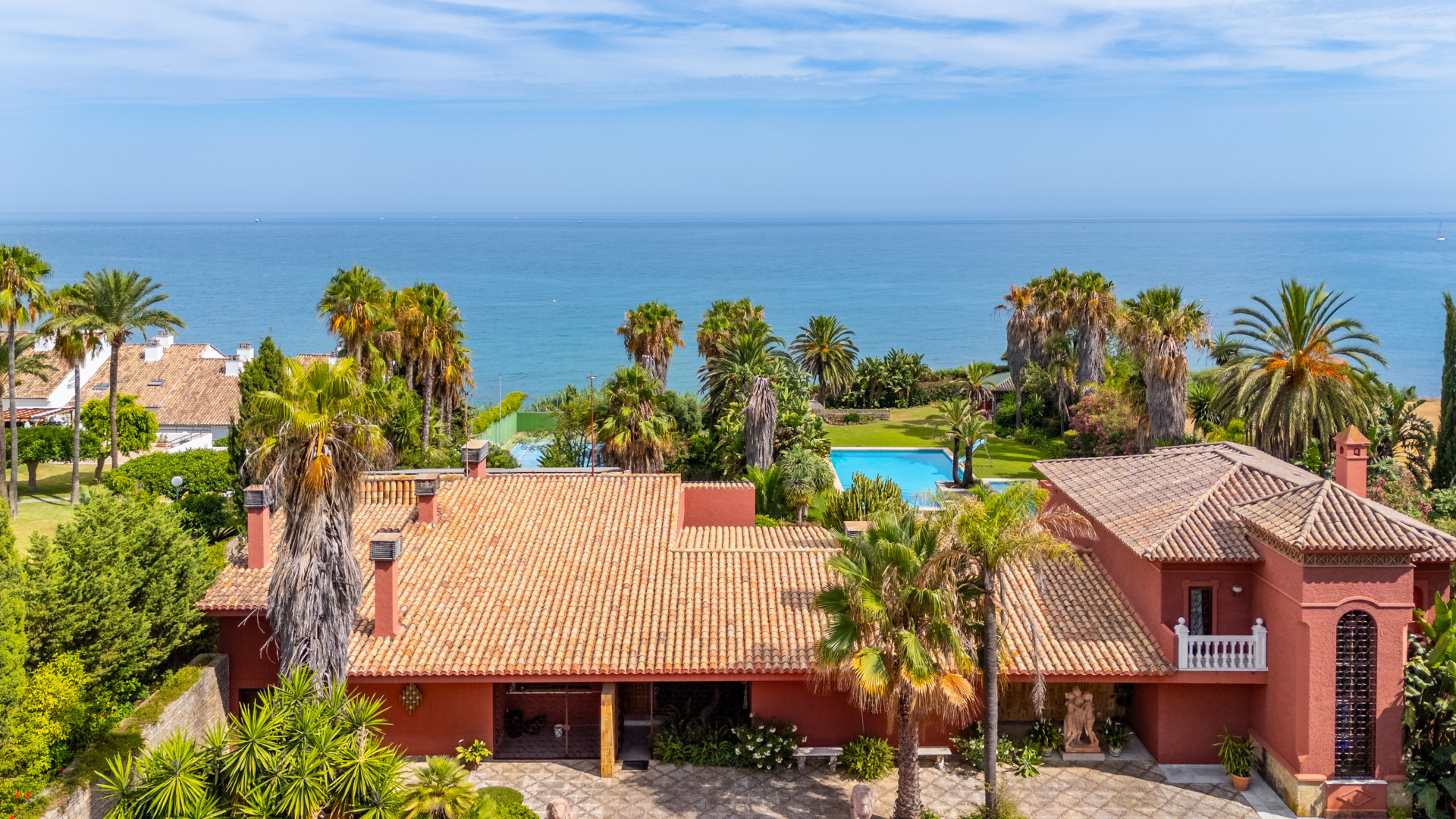
Sited across an uncommonly large 7,962 m² frontline beach parcel in Estepona West, a classic nine-bedroom, 1,098 m² Mediterranean villa enters the market at €15 million via EQUA Estates. Defined by mature tropical gardens, a private tennis court, and immediate shoreline frontage, the listing highlights a vanishing class of coastal land: an expansive, private sea-facing perimeter offering immediate occupation alongside the flexibility for a full contemporary rebuild.
19 OCT 2026
Live from the coast
Related wire dispatches
Tyrian Residences In Estepona Named Outstanding Property Project For 2026
The 40-home seafront scheme by Grupo BZH and Prestige Expo Group received Andalucía Inmobiliaria's outstanding project award in Seville on 4 November, with handovers scheduled for the first quarter of 2027.
Malaga Home Sales Fall for a Third Straight Quarter as Foreign Buyers Take Nearly 39%
Home sales in Málaga province fell 3.5% in the 12 months to September, the third consecutive quarterly decline in Colegio de Registradores data. Foreign buyers accounted for 38.83% of purchases, up from 34.3% in the first quarter, making Málaga Spain's second most international market after Alicante.
Marbella Offers Council Land for More Than 500 Price-Capped Rental Homes
Marbella will make municipal land available for more than 500 homes for rent at capped prices and has set aside €6 million in its draft 2027 budget to co-finance protected housing with the Junta de Andalucía. The council aims to mobilise up to €50 million in funding from several administrations.