The Weight of White: Masonry and Light in Estepona
Estepona's architectural identity is defined by the thermal mass of lime-washed masonry and the persistent, unforgiving intensity of the Mediterranean sun.
By Mistral & Marea · Updated 14 OCT 2026
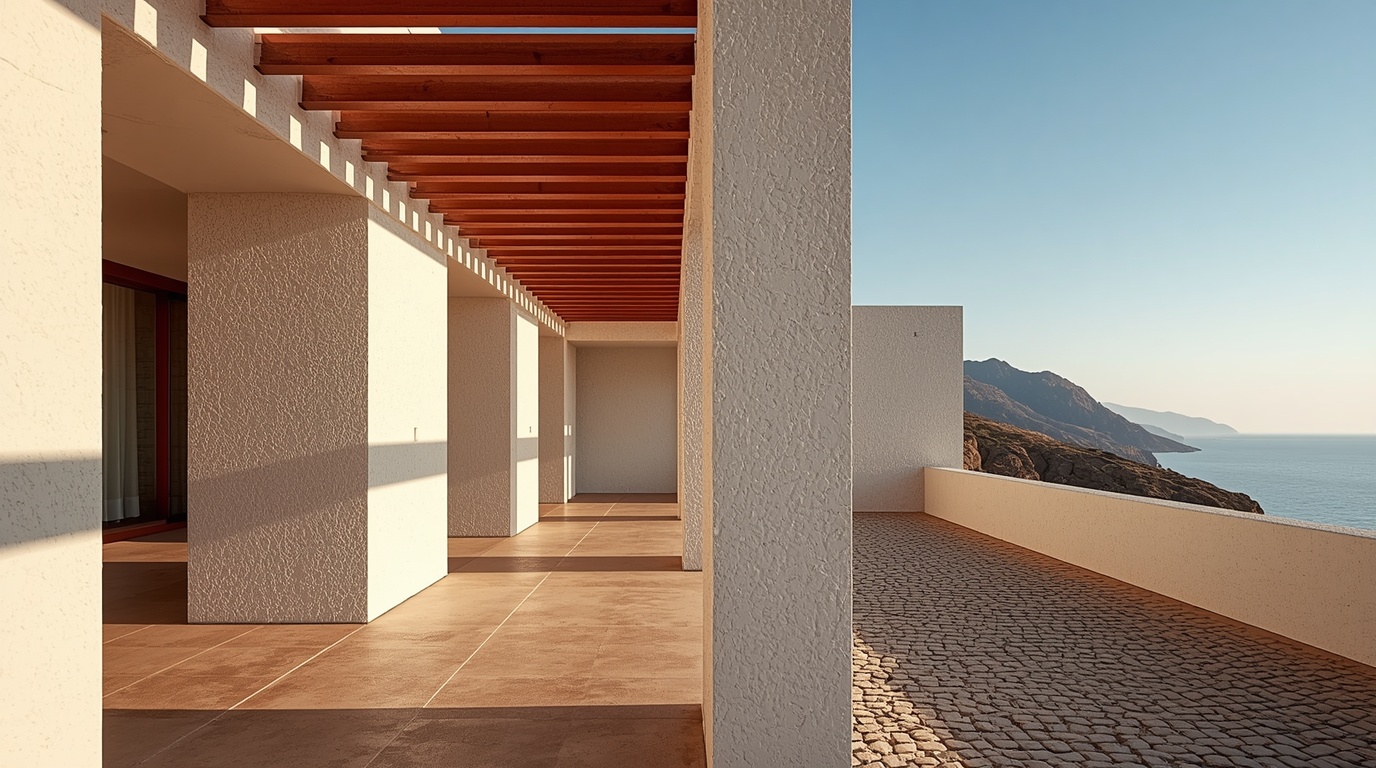
Masonry and Light in Estepona
The Thermal Logic of the Coastal Wall
In Estepona, the vernacular is dictated by the sun. The town, situated at the edge of the Sierra Bermeja, operates on a thermal economy that has remained largely unchanged for centuries. Modern luxury developments, often criticized for their glass-heavy profiles, struggle against the same climate that the original whitewashed masonry of the old town masters with ease. The use of thick, load-bearing walls serves as a primary environmental filter. By utilizing lime-based mortars and porous brickwork, the local builders have long understood that breathability is as vital as insulation. The current planning documents from the Estepona Ayuntamiento emphasize the preservation of these traditional facades, yet the tension between modern glass-curtain requirements and the historical performance of the building envelope is palpable.
Materiality in the Contemporary Climate
When architects like those at the local practice A-Cero look at the Estepona coast, the challenge lies in reconciling the desire for transparency with the need for shade. The coastal light in this region is high-contrast, reflecting off the Alboran Sea with enough intensity to render thin-film glazing inadequate. Consequently, we see a rise in the use of brise-soleil and deep-recessed porticos. These are not merely aesthetic choices; they are structural responses to the local irradiation levels documented by the AEMET (Agencia Estatal de Meteorología). The shift toward high-performance ceramics and sustainable, locally sourced stone reflects a pivot in the luxury sector away from imported marble and toward materials that bear a closer relationship to the red peridotite rock of the nearby mountains.
The Geometry of the Streetscape
Walking through the casco antiguo, one observes the deliberate narrowing of streets, a design tactic employed to maximize shade during the peak of the day. This configuration creates a natural ventilation corridor, drawing cooler air down from the mountains toward the sea. Modern urban planning in Estepona has attempted to replicate this flow in newer residential zones, though the success is variable. The reliance on heavy stone paving rather than asphalt helps in heat dissipation, a practice encouraged by recent municipal urban design guidelines. These surfaces act as thermal sinks, cooling the environment as the sun sets behind the mountains.
Limewash and Maintenance
The upkeep of the Estepona white aesthetic is a perpetual cycle of maintenance. Traditional limewash, or cal, acts as a disinfectant and a reflective barrier. Its application is not merely for color; it is a structural necessity for the preservation of the masonry beneath. In the context of the luxury lifestyle sector, this has evolved into high-end synthetic coatings that mimic the look of traditional lime while offering greater durability against the salt-laden air. Yet, the loss of the physical texture of hand-applied lime is a subtle degradation of the town's tactile identity.
The Sierra Bermeja as a Backdrop
The topography of Estepona is defined by the abrupt rise of the Sierra Bermeja. This mountain range, with its unique serpentinite composition, provides a dark, mineral contrast to the white town below. Architecturally, the most successful projects are those that acknowledge this juxtaposition. By echoing the reddish hues of the mountain in the base of buildings or in landscaping choices, architects ground the luxury residential developments within the geological reality of the site. It is a dialogue between the built form and the raw earth.
The Future of Coastal Masonry
As regulations tighten around carbon emissions and embodied energy, the return to masonry and stone in Estepona seems inevitable. Glass-intensive structures are becoming increasingly difficult to permit under the updated building codes of the Junta de Andalucía. Architects are being pushed toward more traditional, high-mass solutions that require less mechanical cooling. This shift toward a more restrained, material-focused architecture is a welcome development. It signals a maturation of the market, where the luxury of a residence is no longer defined by how much glass it contains, but by the quality of the thermal environment it provides.
Sources and notes
The technical observations regarding thermal mass and local building envelopes are informed by the Estepona Ayuntamiento's Plan General de Ordenación Urbanística (PGOU); meteorological data is sourced from the AEMET regional climate reports for the Costa del Sol; architectural typology analysis is derived from structural performance studies published by the Colegio Oficial de Arquitectos de Málaga (COAM).
“The daily record is where a place reveals its actual rhythm.”
Mistral & Marea · field note
Related live wire