The Art of the Courtyard: A Rebirth in Estepona
An examination of the central patio as the heart of Estepona's traditional domesticity, reimagined for contemporary life.
By Mistral & Marea · Updated 13 OCT 2026
The Art of the Courtyard: A Rebirth in Estepona
Reviving the Traditional Patio
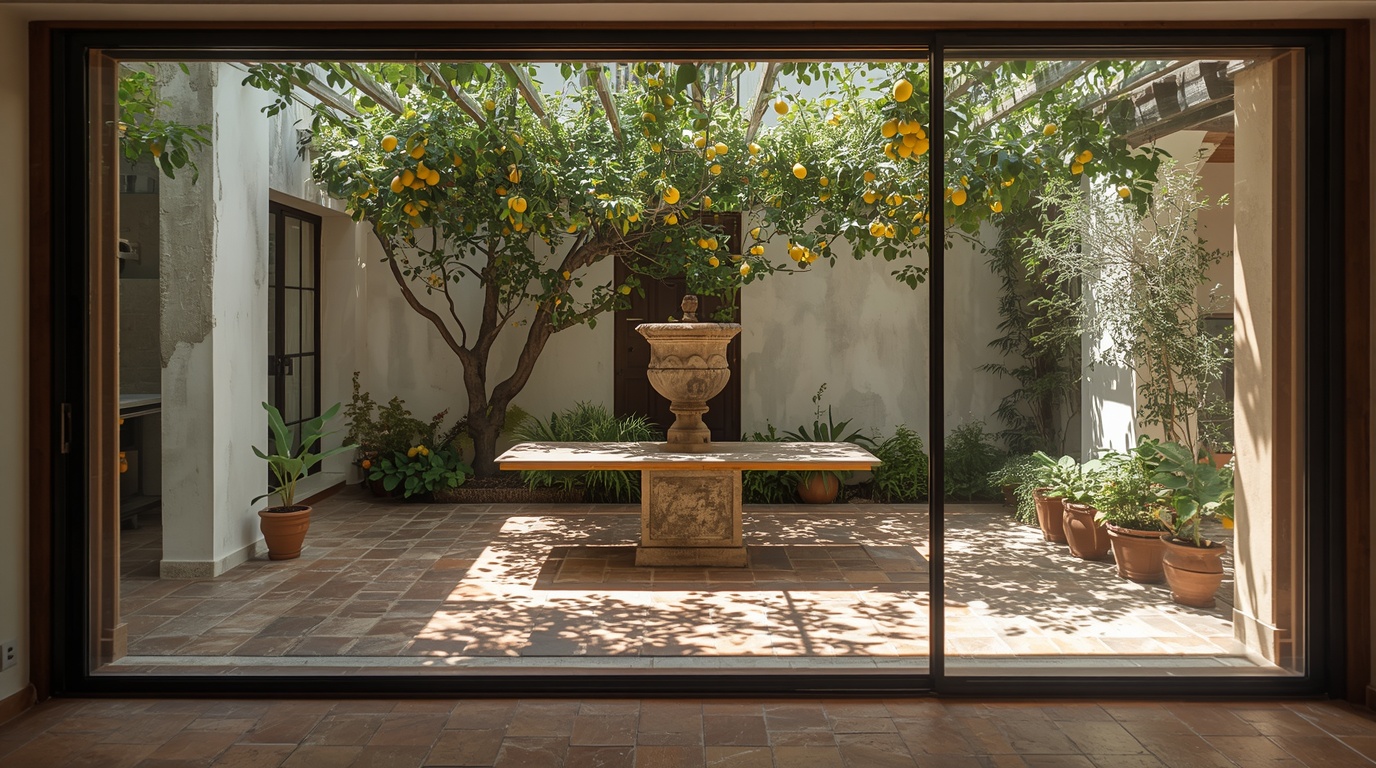
For centuries, the courtyard—or patio—has been the lungs of the Andalusian house. In the dense urban fabric of Estepona, this central void is more than a garden; it is a climate-control mechanism and a sanctuary from the bustle of the street. In a recent interior project, a crumbling courtyard house was saved from erasure by placing this central space at the literal and metaphorical center of the domestic layout.
The renovation focuses on the reconnection of the interior rooms to the courtyard. By replacing solid partitions with structural glass and reintroducing the traditional fountain—a vital element for cooling the air through evaporation—the architects have restored the house’s internal respiration.
Material Continuity and Climate
The interior design utilizes materials that bridge the transition from the exterior garden to the interior living space. Terracotta tiles, traditionally fired in the nearby hills, flow from the patio into the kitchen and dining area, creating a seamless visual plane. The plaster walls, finished with a traditional lime-based stucco, provide a textured, breathable surface that mitigates the humidity of the coastal environment.
- Thermal regulation: The courtyard acts as a thermal chimney, drawing cool air into the house.
- Natural light: The central void acts as a light well, illuminating the deeper rooms.
- Vegetation: Native citrus and jasmine provide shade and fragrance, integrating the landscape into the design.
The furnishings are intentionally understated, favoring pieces that carry the patina of age. A weathered wooden table stands beneath the shade of a lemon tree, serving as the house’s primary workstation. Inside, the design remains sparse to highlight the interplay of leaf-shadows against the white plaster walls. It is an interior that thrives on the slow, deliberate pace of the Mediterranean.
The courtyard remains the most sophisticated architectural device for living well in Southern Spain.
This project proves that contemporary interior design does not necessitate the abandonment of tradition. By refining the historic typology of the patio, the designers have created a home that is perfectly calibrated for the Estepona climate—a space that prioritizes the health of the inhabitant and the architectural integrity of the past.
“The daily record is where a place reveals its actual rhythm.”
Mistral & Marea · field note
Related live wire