Marbella’s Closed Circuit: DUCO, the Advisors, and the Properties That Still Set the Terms
Inside DUCO Spain & Portugal 2026: 225 hoteliers and 160 advisors convene across Marbella and Benahavís for high-stakes, single-destination luxury trade.
By Mistral & Marea · Updated 20 OCT 2026
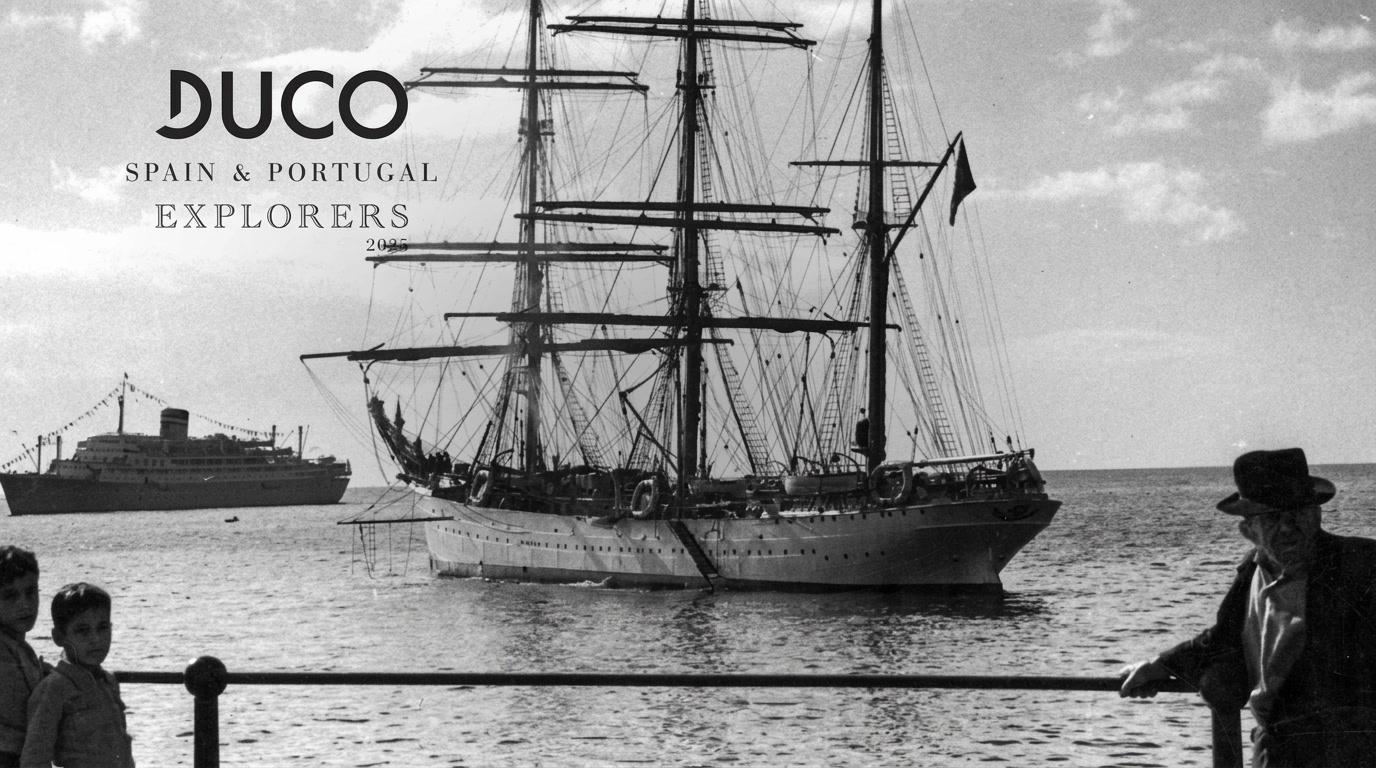
DUCO Spain & Portugal 2026
Marbella’s Closed Circuit: DUCO, the Advisors, and the Properties That Still Set the Terms
The Floor at Villa Padierna
The appointments run on a strict twenty-minute cadence inside Anantara Villa Padierna Palace. There is no central stage, no podium, no panel debate, and no open exhibition floor designed for casual strolling. Tables are arranged across dedicated meeting halls with military symmetry, stripped of corporate banners and digital marketing collateral. At Table 42, a hotelier from a sixteenth-century quinta in the Douro Valley sits opposite an independent travel advisor from Dallas whose client roster books six or seven itineraries a year into Portugal and southern Spain. Across the tabletop, the conversation bypasses introductory greetings. Within two minutes, they are discussing shoulder-season room allotments for early November, the precise configuration of three interconnected suites, and whether the estate’s private skipper can moor directly alongside a terraced vineyard without transferring guests by road.
Outside, across the rolling foothills of Benahavís, the three eighteen-hole golf courses enclosing the property remain motionless under the Mediterranean autumn sun. Inside, the sound is a steady, low hum—the ordinary, unromantic machinery of high-end travel. A digital chime sounds; twenty minutes have elapsed. Papers are folded, contact sheets updated, and the advisor stands to cross the room toward a family-owned palacio in Seville. The next supplier is already seated, pen uncapped.
This is the operational core of the second edition of DUCO Spain & Portugal, convened from 19 to 23 October 2026 across the coastal corridor between Marbella, Estepona, and Casares. Over five working days, the summit brings together 225 hospitality operators and bespoke experience purveyors alongside 160 travel advisors—the majority originating from the United States, alongside select representation from the United Kingdom, Canada, and Australia. The commercial model is deliberate, rigid, and unapologetically transactional: daylight hours are devoted entirely to pre-scheduled one-on-one appointments; evenings transfer the entire room into the host region’s operational flagships, where properties prove through direct culinary and logistical execution what their commercial directors presented across the desk hours earlier.
The edition carries the thematic title “DUCO Cantares”—an explicit reference to Andalusian poetry, rhythm, and oral tradition. In trade terms, the theme serves a concrete commercial purpose: it forces buyers and operators to treat the Iberian Peninsula not as an interchangeable sun-and-sea destination, but as a territory of distinct micro-regions, distinct architectural histories, and non-fungible luxury product. Backed by institutional sponsorship from the Andalucía Tourist Board, Turismo Costa del Sol, and Marbella Tourism, the summit is completely closed to the general public. Entry requires accreditation that is vetted months in advance. In an industry flooded with mega-expos where thousands of delegates trade business cards without qualifying purchasing power, DUCO operates as an intentional bottleneck.
The Architecture of the Trade Bottleneck
The modern travel industry is dominated by high-volume conglomerates and sprawling international trade shows. Fairs like WTM in London, ITB in Berlin, or FITUR in Madrid assemble dozens of halls where regional tourism offices erect multi-million-euro pavilions to distribute brochures to generalist agents, tour operators, and public crowds. While those exhibitions serve macroeconomic branding and bulk leisure contracts, they are functionally useless for the top tier of private travel. Ultra-high-net-worth (UHNW) itineraries are not assembled from bulk catalog allocations or negotiated over generic exhibition counters. They are transacted through personal relationships between hoteliers who control non-public villa inventories and advisors who manage the private travel budgets of family offices, institutional leaders, and high-earning individuals.
DUCO’s operational blueprint, developed by Brazilian-Italian travel entrepreneur Carolina Perez, was built specifically to eliminate the friction of the mega-fair. Perez spent sixteen years directing her family’s luxury travel firm, Teresa Perez Tours, in São Paulo, before founding Travelweek São Paulo (which was later acquired by Reed Exhibitions and rebranded as ILTM Latin America). Having observed the structural limitations of global trade shows from both sides of the table, Perez established DUCO in 2016 around three non-negotiable operational principles: single-destination focus, strict host-destination location, and aggressive supply-and-demand caps.
The summit’s first iteration, DUCO Italy, launched in Florence in 2018, later rotated to Milan, and is scheduled for Rome in March 2027. The French portfolio followed with DUCO France in Paris in 2021. Spain and Portugal were formally integrated into the group’s footprint in October 2025 with an inaugural gathering in Marbella.
The mechanism that preserves the summit’s utility is its rotation rule for buyers. Travel advisors who secure an invitation to a given regional summit are permitted to attend only once every three years, with narrow exceptions reserved for the managing partners of high-volume consortia agencies. The commercial logic is straightforward: when the same buyers and suppliers sit across from each other annually, meetings deteriorate into social catch-ups, diminishing return on investment for the exhibitors paying significant registration fees. Forcing a two-year hiatus ensures that when an advisor returns to the room, their client roster has expanded, their booking patterns have evolved, and the suppliers have delivered physical renovations, new culinary partnerships, or fresh off-market inventory to discuss.
The scale of the event reflects this discipline. The inaugural 2025 edition hosted approximately 175 suppliers and 125 buyers. Expanding to 225 brands and 160 advisors in 2026 represents measured, controlled growth of roughly 28 percent—a figure designed to maintain buyer-to-seller parity without forcing the introduction of secondary meeting halls or dilute appointment schedules.
In August 2026, the corporate foundation of the summit underwent a strategic transition. An entrepreneurial private investment consortium led by Rebeca Pinheiro acquired DUCO. Pinheiro, an executive with an institutional finance background and a founding partner at the Spanish search fund RNP Growth, stepped into the chief executive role, while Perez retained an equity stake and assumed a seat on the board as strategic director focusing on geographic expansion. Crucially for the market, the operating team and the rigorous destination screening process were preserved without structural alteration. Pinheiro’s institutional backing coincides with an international luxury hospitality sector expanding from $115 billion toward an estimated $150 billion, supported by an appetite for ultra-exclusive, customized experiences. The capital injection is directed toward rolling out new geographic summits—including a planned UK & Ireland edition in London scheduled for April 2027—while treating the boutique Iberian summit as a high-margin recurring trade asset.
The Staging Ground: Palatial Restraint at Villa Padierna
To host an event structured entirely around discrete, high-stakes negotiations, the venue must operate as an isolated garrison rather than an open urban hotel. Anantara Villa Padierna Palace, located in the municipality of Benahavís just north of the coastal N-340 artery, was designed from its inception as a private enclave.
Conceived in the late 1990s and delivered in the early 2000s by Andalusian developer Ricardo Arranz alongside classicist architect Eddie Gilbert and interior designer Jaime Parladé, the property was modeled after an Italian neo-Palladian villa. The palatial exterior is finished in dusty-pink Venetian plaster, flanked by Tuscan cypress stands, tiered fountains, and formal citrus courtyards. Internally, the estate functions as a museum; more than 1,200 cataloged antique paintings, marble busts, Roman archaeological fragments, and carved limestone reliefs line the public corridors, private salons, and library suites.
The hotel comprises 125 keys, divided between palatial deluxe rooms, expansive suites, and nine freestanding private villas with dedicated plunge pools and butler quarters. The physical isolation of the estate—nestled in an amphitheater of scrub-covered Andalusian hills and bounded by three championship courses (Flamingos, Alferini, and Tramores)—creates a natural security perimeter. For three solid days, the property’s conference wing and inner courtyards are cordoned off into an uninterrupted operational trading room.
The infrastructure required to support the summit is substantial. The Portuguese luxury linen and home textile manufacturer Lameirinho constructed a dedicated, fully styled mock-up suite on the premises, showcasing the thread counts, bespoke weaves, and tactile finishes that supply Europe’s leading five-star operators. An entire wing is assigned to member properties of The Leading Hotels of the World (LHW), allowing the consortium’s affiliated European hoteliers to coordinate collective pitches to North American agencies. Logistics across the complex are managed through structured protocols: self-parking in the palace perimeter is capped at a negotiated flat trade rate of €30 per day, while buyer transit between coast and hillside is executed exclusively by Chabé Spain, the summit’s official executive fleet partner, which runs timed Mercedes-Benz shuttles from host properties across Marbella and Estepona.
On the evening of 21 October, the center of gravity shifts from the negotiation desks to the property’s life-size Roman amphitheater. Sited into the natural slope behind the main palace gardens, the stone arena hosts the annual DUCO Awards. The categories mirror the inaugural 2025 program, honoring five distinct operational pillars: Best Spanish Hotelier, Best Portuguese Hotelier, Unique Experience Provider, the Estrella de España (awarded to the standout Spanish hotel), and the Joia de Portugal (recognizing the preeminent Portuguese property).
The historical precedent of the awards reflects the tension between historic lineage and contemporary repositioning. In 2025, the Estrella de España was claimed by the Marbella Club, validating seven decades of Golden Mile heritage, while the Joia de Portugal went to Six Senses Douro Valley, acknowledging the property’s mastery of agro-luxury and immersive regional viticulture. Individual leadership awards went to Thomas Moons, general manager of Belmond La Residencia in Deià, Mallorca, and Mafalda de Bragança of Six Senses Douro Valley. Announcing these honors within a classical amphitheater on Andalusian soil reinforces the summit’s thesis: recognizing that in the UHNW bracket, a general manager’s operational dexterity is as critical to closing reservations as the underlying physical real estate.
The Golden Mile Lineage: Marbella Club as Living Proof
If Villa Padierna represents the grand architectural set piece of the Costa del Sol’s interior, the Marbella Club Hotel is the historical foundation of its luxury economy. On the evening of Tuesday, 20 October, the entire delegate body is shuttled down from the hills to the Golden Mile for the summit’s official opening gala.
The history of the Marbella Club is the history of modern European resort culture. In 1947, Prince Alfonso von Hohenlohe and his father, Prince Maximilian Egon, were traveling south through Andalusia in an early Rolls-Royce with a wood-gas generator strapped to the back. Seeking shade for an afternoon picnic, they turned off the dirt coastal road into an olive grove and coastal pine plantation known as Finca Santa Margarita. Struck by the microclimate generated by the towering limestone wall of La Concha mountain, which blocks cold northern winds and creates year-round maritime stability, Alfonso purchased the estate.
In 1954, Hohenlohe converted the original farmhouse and outbuildings into an informal seaside inn with twenty modest guestrooms. To direct the daily operations, Alfonso brought in his cousin, Count Rudi von Schönburg, a graduate of the prestigious Lausanne Hotel School. Count Rudi replaced aristocratic informality with Swiss operational rigor, establishing a style of hospitality that rejected gold-leaf ostentation in favor of whitewashed Mediterranean simplicity, terracotta floors, open fireplaces, and mature subtropical foliage.
Through the late 1950s and the 1960s, the Marbella Club operated as the private playground for an international social elite. The guestbook of the era bridged old-world nobility and mid-century Hollywood: Cary Grant, Audrey Hepburn, Grace Kelly and Prince Rainier, Sean Connery, Aristotle Onassis, the Duke and Duchess of Windsor, and Maria Callas were regular residents. The photographs of Slim Aarons from this era—capturing European countesses sunbathing by the saltwater pool in linen robes and bespoke gold cuffs—established Marbella’s visual lexicon for the next half-century.
The property has repeatedly proven its capacity to survive real estate cycles. When Alfonso sold his controlling interest in the late 1970s, the estate navigated a turbulent transitional period before being acquired in the early 1990s by the late British-Iraqi businessman David Shamoon. Shamoon understood that the hotel’s asset value resided in its low-density layout and mature landscape architecture. Rather than razing the grounds for high-density apartments, Shamoon invested capital into expanding the footprint with discreet private villas, restoring the iconic seaside Grill restaurant beneath the maritime pines, and introducing a state-of-the-art seawater thalassotherapy spa.
Today, under the stewardship of Shamoon’s children, the Marbella Club encompasses 115 rooms and suites along with fifteen private walled villas. In 2024, marking its seventieth anniversary, the property executed its most significant territorial expansion in decades by acquiring Finca Ana María, the historic adjacent estate belonging to Princess Gunilla von Bismarck. Adding thousands of square meters of mature botanical gardens, citrus groves, and classical villas to the northern boundary, the acquisition doubled the perimeter without adding commercial density. For the visiting DUCO advisors—many of whom are placing multi-generational American and Middle Eastern families who demand absolute privacy, private pools, and five-bedroom footprints—walking through the Marbella Club’s botanical paths at the opening party is not entertainment; it is a real-time site inspection of the region’s premier hospitality asset.
The Circuit: Logistics, Gastronomy, and Coastline Geography
The physical organization of DUCO Spain & Portugal demonstrates how a closed-circuit summit uses geography to reinforce its commercial value. The delegates are not housed in a single corporate hotel block; they are distributed strategically across the finest keys in the region.
The summit begins on 19 October with delegate check-ins and the opening gastronomic evening hosted at Finca Cortesin Beach Club in Casares. Sited on the sands just west of Estepona, Cortesin’s beach club presents a distinct contrast to the traditional Golden Mile: clean, whitewashed Andalusian pavilions, teak decking, an infinity pool flanked by mature date palms, and Mediterranean cuisine that emphasizes local catches, wild herbs, and raw crudos. Simultaneously, Finca Cortesin’s primary inland estate—a sprawling white-walled resort built around expansive interior courtyards and one of Spain’s premier golf resorts—hosts the early sessions of the summit’s curated international press delegation.
That press track operates on an independent, non-sales trajectory. Over three days (18–20 October), fifteen lifestyle and travel journalists from key international markets are routed through a continuous physical showcase: architectural walk-throughs of the newly repositioned Gran Marbella, coastal tastings at METT Marbella, wellness masterclasses and site tours at Villa Padierna, and a culminating luncheon at Lanserhof Finca Cortesin, the cutting-edge medical longevity facility that established Casares as a major hub for European preventative healthcare. The press program does not intersect with the buyer appointments; its role is macro-narrative construction, while the Villa Padierna tables handle bottom-line room-night distribution.
For the buyers, the evenings provide a masterclass in the region’s luxury diversity:
Finca Cortesin (Casares): Showcasing expansive rural space, championship-tier grounds, and contemporary Andalusian residential vernacular.
Marbella Club (The Golden Mile): Illustrating established heritage, discreet bungalow layouts, botanical privacy, and legacy social cachet.
Puente Romano & Villa La Serrana: Handling the concluding ceremonies on 22 October. Puente Romano presents the active, culinary-driven Mediterranean village concept—home to two-dozen signature dining spaces, lively nightlife, and premier tennis facilities—while the exclusive enclave of Villa La Serrana provides a study in ultra-prime private estate staging.
Secondary Key Hosts: Boutique and beachfront hotels across the coastline—including Nobu Hotel Marbella, Don Carlos, and the historic, recently renovated El Fuerte in Marbella center—accommodate delegations and function as designated collection hubs for the Chabé executive shuttles.
By dispersing delegates across these distinct operational environments, the summit proves the maturity of the Western Costa del Sol’s infrastructure. In an hour’s journey, an advisor can experience an ultra-contemporary medical retreat, a traditional mountain-foothill palace, an aristocratic seaside finca, and a high-energy urban resort.
The Economic Model: Why Intermediaries Still Own the Market
In an era defined by direct-to-consumer software, automated booking engines, and mobile hotel applications, the continued reliance of luxury hoteliers on travel advisors appears paradoxical to outside observers. For standard commercial aviation or corporate city hotel bookings, automated software has largely displaced the travel agent. But above the $2,500-a-night threshold, the market operates on an entirely different set of economic rules.
UHNW clients rarely book their own travel. Their trips are assembled by professional advisors who function more like private portfolio managers than traditional booking agents. These advisors oversee annual leisure budgets exceeding several hundred thousand dollars per family. When planning a multi-week Iberian itinerary—perhaps combining a private yacht charter along the Algarve, a rented estate in the Alentejo, a high-floor suite in Madrid, and a beachfront compound in Marbella—the client does not search consumer aggregators. They demand precision:
Guaranteed early check-ins at 08:00 following transatlantic flights.
Complete clarity on which specific villas have undergone physical renovation within the last twelve months.
Direct access to the general manager to ensure high-security protocols, vetted private drivers, and specific dietary logistics are managed seamlessly.
For a luxury hotelier, acquiring this profile of client through open digital marketing channels is extraordinarily expensive and inefficient. Running targeted digital ads produces inquiries from aspirational travelers rather than verified high-spenders. By contrast, a twenty-minute meeting at DUCO with an advisor who controls thirty multi-millionaire households in Manhattan or Silicon Valley provides the hotel with direct access to hundreds of thousands of euros in qualified, low-cancellation, high-spend bookings.
Furthermore, the Iberian market presents unique geographical synergies that make the joint Spain-Portugal format exceptionally lucrative. Historically, national tourism boards have operated in defensive silos: Turespaña promotes Spanish regions, while Turismo de Portugal markets Lisbon, Porto, and the islands. But in the reality of international high-end travel, American and Australian visitors do not treat the Iberian border as a wall. They view the peninsula as a cohesive geographic canvas. A traveler landing in Lisbon frequently explores the capital for three days, retreats to the vineyards of the Douro, transfers south through the Alentejo, and crosses into Andalusia to spend a week along the Marbella-Estepona coastline before departing via Madrid or Málaga.
By placing Portuguese quintas and Andalusian fincas in the same room, DUCO reflects the actual itineraries written by elite travel desks. An advisor can step from a morning meeting with a boutique hotelier in the Azores straight into an afternoon session with a luxury palace in Granada, stitching together multi-city itineraries with suppliers who have agreed on shared standards of service and operational communication.
The Post-Acquisition Landscape: The Future of Curated Luxury
As the final day of appointments concludes and delegates prepare for the farewell gala at Puente Romano’s Villa La Serrana, the overarching question facing DUCO is the trajectory of its corporate ownership.
Search funds and private investment partnerships operate under clear mandates: identify stable, high-margin niche businesses and implement operational structures to scale enterprise value. Rebeca Pinheiro’s acquisition of DUCO via RNP Growth signals that boutique travel summits are no longer viewed merely as lifestyle ventures run by charismatic founders, but as institutional-grade trade infrastructure.
The challenge of scaling an enterprise like DUCO, however, lies in its fundamental paradox: its commercial value is derived entirely from what it excludes.
If the new ownership capitulates to market pressure to maximize short-term delegate fees—expanding buyer slots from 160 to 400, admitting secondary tour operators, or relaxing the three-year buyer rotation rule—the summit will sacrifice the very friction that makes it effective. The moment an exhibition floor feels crowded, the moment an advisor encounters suppliers who do not operate at the true luxury threshold, the top tier of agencies will quietly walk away. The platform’s value depends on maintaining an impenetrable velvet rope.
The planned rollout of DUCO UK & Ireland in London for April 2027 provides the first test of this balancing act. London is one of the most saturated luxury travel capitals in the world, home to major global trade events and headquarters for multinational hotel groups. For DUCO to replicate its Mediterranean success along the Thames, it will have to prove that its intimate, single-destination model can cut through the noise of a major financial center just as effectively as it does inside the secluded valleys of Benahavís.
For Marbella, hosting the summit for a second consecutive year serves as an objective validation of its regional positioning. The Costa del Sol has worked deliberately over the past decade to decouple its international reputation from mass-market summer tourism. By anchoring its economy in branded private residences, master-planned private communities like La Zagaleta, championship golf infrastructure, and historic legacy resorts, the region has positioned itself as the preeminent luxury hub of Southern Europe.
Hosting 385 of the most influential operators and power-brokers in high-end travel inside its estates for an intensive week of trading does more than fill hotel rooms in the third week of October. It embeds Marbella directly into the global luxury supply chain. As the meeting tables at Anantara Villa Padierna Palace are packed away, the real transactions are only beginning: contracts signed across dusty-pink terraces, summer villa dates locked into private calendars, and the quiet, continuous movement of global wealth across the southern Iberian shore.
From the journal
Related articles

Luxury Property Technology: Software for Lead Generation, Client Management and Post-Sale Service
An operational breakdown of how prime agencies, developers, and branded residences deploy software to qualify buyers, control private inventory, and manage post-sale estates without compromising discretion.
17 OCT 2026
AI Agents and Business Automation in Marbella: From Luxury Destination to Intelligent Enterprise Hub
In Marbella’s high-stakes tourism and real estate sectors, AI agents are quietly automating repetitive multilingual inquiries, overnight bookings, and due-diligence prep. A deep look into the practical economics, regulatory hurdles, and persistent human oversight shaping the region's pragmatic shift toward "Costa del Tech."
16 OCT 2026
Build a Business That Sells Itself: The Principles of Time, Trust, and Real Entrepreneurship
A practical framework for founders: why durable businesses are built on customer trust, operational literacy, and real utility—not the curated appearance of success.
25 OCT 2026
Live from the coast
Related wire dispatches
ICG Nears Deal for Puerto Banús, With Signing Reported for December
British fund Intermediate Capital Group is in advanced talks to buy the company that runs Puerto Banús, El Confidencial reported, putting the value at about €150 million including earn-outs. The marina confirms advanced talks with a strategic investor but has not named it or confirmed terms.
Marbella Offers Council Land for More Than 500 Price-Capped Rental Homes
Marbella will make municipal land available for more than 500 homes for rent at capped prices and has set aside €6 million in its draft 2027 budget to co-finance protected housing with the Junta de Andalucía. The council aims to mobilise up to €50 million in funding from several administrations.
Hilton Puts Marbella's First Waldorf Astoria in a Residences Pipeline Set to Nearly Triple by 2030
Hilton plans to nearly triple its Waldorf Astoria Residences portfolio to 34 properties and 3,498 units by 2030, with Marbella among the new projects. Higuerón's scheme will turn Marbella Golf in Las Chapas into a resort with 120 rooms and suites and 120 branded residences, due to open in 2029.